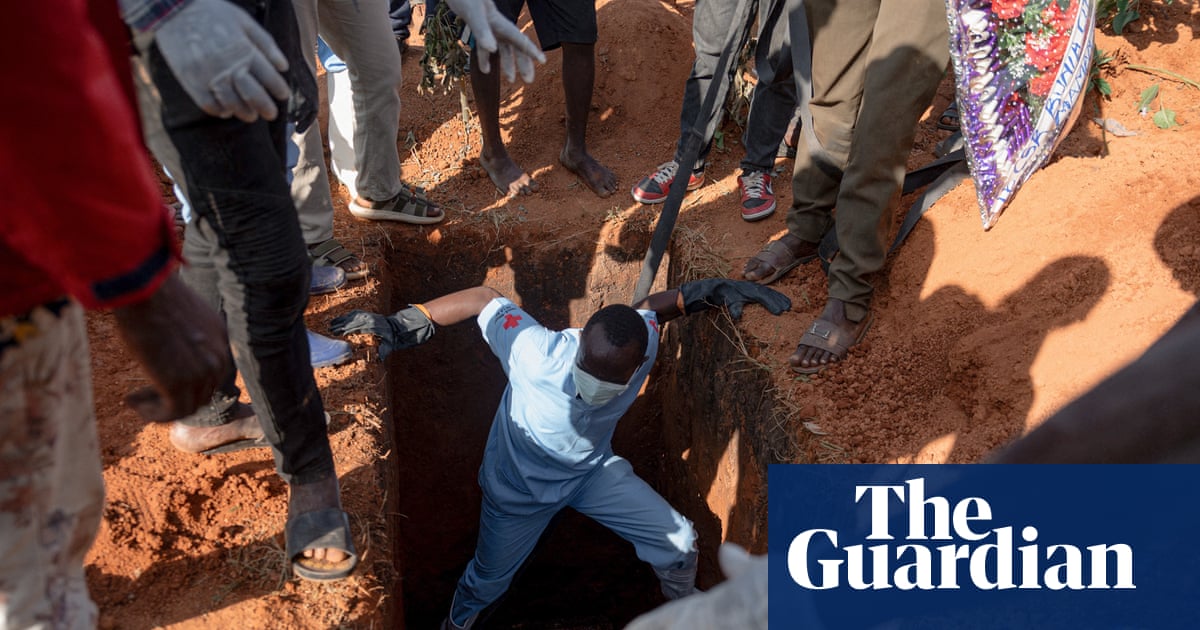
Six months into an Ebola outbreak in eastern Democratic Republic of the Congo, Sylvain Kabona Tibasima is warning relatives about the virus after 46 members of his family died. The outbreak is caused by the rare Bundibugyo strain.
Tibasima’s sister, Sylvie Bongerize Tibasima, was diagnosed with Ebola on the day her daughter, Birungi Nembe, was born in a hospital in Bunia. Sylvie, 46, died a week later. Her newborn daughter also contracted the virus and died two weeks later, in early September.
More than 11,000 cases have been confirmed in DR Congo, with nearly 5,400 deaths reported. Aid groups estimate the actual figures may be much higher. Children account for more than a third of deaths, according to the Africa Centres for Disease Control and Prevention. Cases have also been confirmed in Kenya and Nigeria.
The Bundibugyo virus has a reported fatality rate of almost 50%. There is no specific treatment or approved vaccine yet, although clinical trials are continuing, according to the World Health Organization.
Bunia, in eastern Ituri province, has been one of the outbreak’s centres. Since the epidemic began, Sylvie’s younger brother, Tibasima, 44, has worked to educate relatives about Ebola and protect his own family, including his six children.
“It’s been incredibly difficult,” he tells the Guardian. “When Ebola began spreading, many people in this town and in my extended family believed it was sorcery.”
“When someone fell ill, relatives would visit them in hospital or at home. And when people died, it was customary for family members to touch the body before burial,” he says. “That’s exactly how the virus continued to spread.”
Tibasima works as a driver for the German aid organisation Welthungerhilfe and has received extensive training in prevention measures. He says his immediate family has taken strict precautions: avoiding funerals, weddings and family gatherings, keeping their distance from others, washing their hands frequently and using disinfectant when outside. All of them have stayed healthy.
“I keep warning my relatives about the dangers, explaining how Ebola spreads and detailing the precautions they need to take. I keep telling them we need to protect ourselves,” he says.
Tibasima shares photographs of his relatives on social media, with crying and sad-faced emojis and messages about how much he misses them. They include his brothers and sisters, aunts and uncles, cousins and other relatives, some of whom have left children orphaned.
“For my children, the situation is especially stressful. They used to play outside with their friends and cousins. Now they spend most of their time indoors, hearing about their friends and cousins dying. It’s very scary,” he says.
Schools remain open in Bunia, and markets are busy with traders and labourers who depend on daily income. Conflict continues to drive displacement across the impoverished region. More than 100 armed groups operate across eastern DR Congo, many in Ituri, fuelling overlapping conflicts, fighting between different ethnic groups and repeated cycles of violence.
Bunia, the provincial capital, is home to more than one million displaced people, many living in overcrowded camps on the city’s outskirts, according to the International Organization for Migration.
“Displacement, insecurity and distrust of authorities are all major obstacles to containing Ebola, as they complicate diagnosis and contact tracing,” says Pascal Cishibanji Cabwine, Welthungerhilfe’s Ebola coordinator and Tibasima’s colleague. He adds that “communities have experienced years of violence and neglect, and many are now suspicious of outsiders, including government actors and international aid organisations”.
More than 80 attacks on healthcare workers and treatment centres have been documented since the outbreak began in May, putting medical staff at risk and disrupting contact tracing and efforts to contain the virus. Between 400 and 500 new cases continue to be reported each week.
New infections have begun to decline in some areas, including Bunia, but the outbreak remains far from under control.
A few months ago, Tibasima’s daughter Malaika, 18, fell ill with symptoms that could indicate Ebola. “I immediately took her to the Ebola treatment centre,” he says. The rest of the family isolated at home while Malaika was tested and kept in isolation at the centre. After several anxious days, the family learned that she had tested negative.