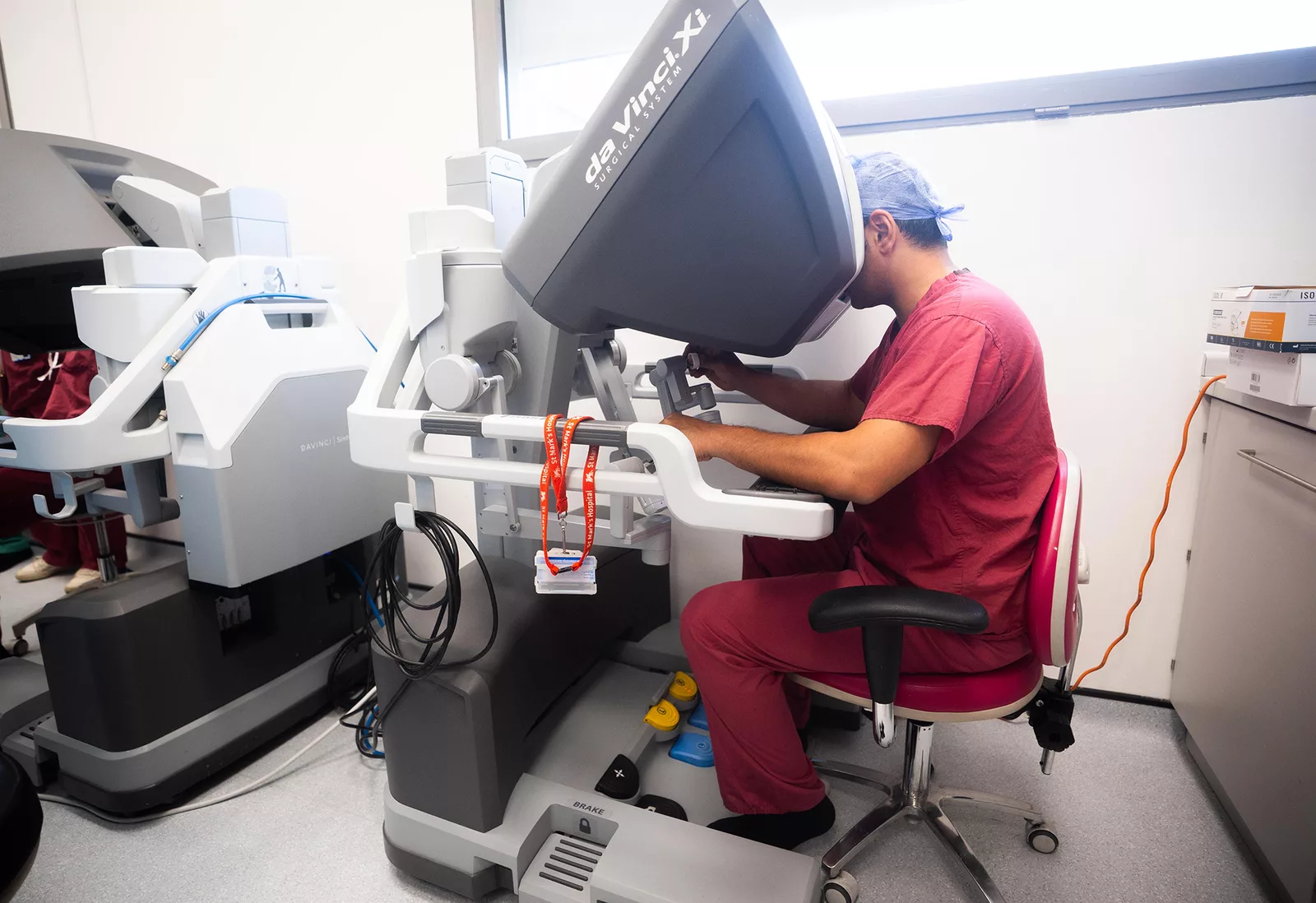
AI-related contract work is expanding from data labeling to tasks for physicians, lawyers and other highly qualified workers, while platforms retain control over pay and working conditions. Outlier, a recruiting platform run by Scale AI, advertises up to $180 an hour for U.S. physicians to develop cardiac scenarios, review AI-generated reports and rank model outputs. It advertises up to $7.50 an hour for Tagalog work in the Philippines and up to $12.50 an hour for Swahili in Tanzania for the same job.
Companies that once outsourced data work to lower-cost labor markets are now recruiting specialists to create and annotate data, assess model answers and verify outputs. Higher credentials can bring higher advertised rates, but the article argues that platforms can still change rates or end tasks with little notice.
For six years, the author has interviewed people doing this work, many of them in Venezuela. Rogelio, a former computer science teacher, turned to online data labeling after economic collapse and the pandemic left his family without work. His 13-year-old son found image-labeling tasks on Hive and Scale AI’s Remotasks. The boy earned 18 cents for a few hours; Rogelio made just over $2 on his first day.
The family later earned more from a task called Beast Mode, labeling objects in people’s homes. In December 2020, while schools were closed and the whole family worked, it brought in $20 in one day—their highest earnings. By early 2021, the task had disappeared, and their income fell below Hive’s $5 weekly payout threshold.
The article describes this as a recurring platform pattern: pay more at first to attract workers, then cut rates or move on. Remotasks ended its hourly program in Venezuela in 2021 and expanded in Kenya that year. In March 2024, it discontinued operations in Kenya, Nigeria and Pakistan. Scale AI attributed the closures to “enhanced security protocols,” saying notices had gone out three weeks ahead. It later acknowledged Kenyan workers did not receive them “due to operational errors.” Most workers who spoke to Rest of World said the platform had frozen them out.
The author calls the pattern extractivism: taking resources and value from people and places for accumulation elsewhere, on terms set by buyers. The article links Venezuela’s online workforce to the legacy of an oil economy that built little else. One woman interviewed there received a state oil company pension worth about $1 a month by 2021, which she said couldn’t buy half a dozen eggs. She labeled data on Hive to supplement it, but that income was less secure.
The article says AI-related extraction includes not only existing books and artwork used to train models, but also new examples, evaluations and corrections commissioned to improve them. Those tasks are paid at rates set by platforms, from $2 for a teacher in Venezuela to up to $180 an hour for a U.S. cardiologist.
Outlier’s terms allow it to delay or suspend payment while investigating a worker’s tasks and withhold “some or all amounts accrued” if it finds a violation “in the company’s sole determination.” The company may also deactivate an account “immediately without prior notice for any reason.” The article says the same language appeared word for word in the Remotasks terms Rogelio’s family worked under in 2021.
The article also cites Josh Dzieza’s reporting earlier this year on laid-off lawyers, scientists and screenwriters joining such platforms. Nearly all of more than 30 workers he interviewed described rising demands, shorter target times and falling pay as projects continued. One designer tagged videos for Meta at $21 an hour until the project ended for “scope changes.” Days later, the same job reappeared under a new name at $16 an hour.
Workers can leave, the author writes, but those who stay may have few alternatives. One woman interviewed during the Covid-19 pandemic said a health condition confined her to her home and she could not risk losing the job. “This is my only source of income,” she told the author. The rate can change suddenly, the task can disappear without warning, and they have no say over any of it.
The author describes a 2024 meeting convened by the nonprofit Partnership on AI and the Fairwork project, which rates platform companies. AI companies said they did not employ the data workers; outsourcing firms said their operations depended on the prices AI companies expected. Participants agreed pay should be better, but the room went quiet when representation was raised, with no workers present.
Workers have also taken action. In March 2023, a judge in Kenya temporarily halted the dismissal of 260 Facebook content moderators, prevented Meta from moving their work to another contractor, and barred Meta and contractor Majorel from blacklisting workers. As workers fought in Kenya, Meta moved the work to West Africa.
In the United States, claims by workers on Scale AI’s platforms led to a proposed settlement that received preliminary approval in San Francisco. Scale AI denies wrongdoing. A separate class action alleges Mercor misclassified more than 30,000 lawyers, doctors and engineers while setting their pay and reviewing their work. Mercor’s clients have included OpenAI, Anthropic and Meta, but they are not named as defendants. The case is ongoing.
A cardiologist offered a three-digit hourly rate is not in the same position as Rogelio and his family, the author writes. What connects them is that rates can change suddenly, tasks can disappear without warning, and workers have no say over those decisions. The work will keep moving, while the companies commissioning it set the rules, wherever the next worker logs on—including Kenya, Venezuela or the Philippines.