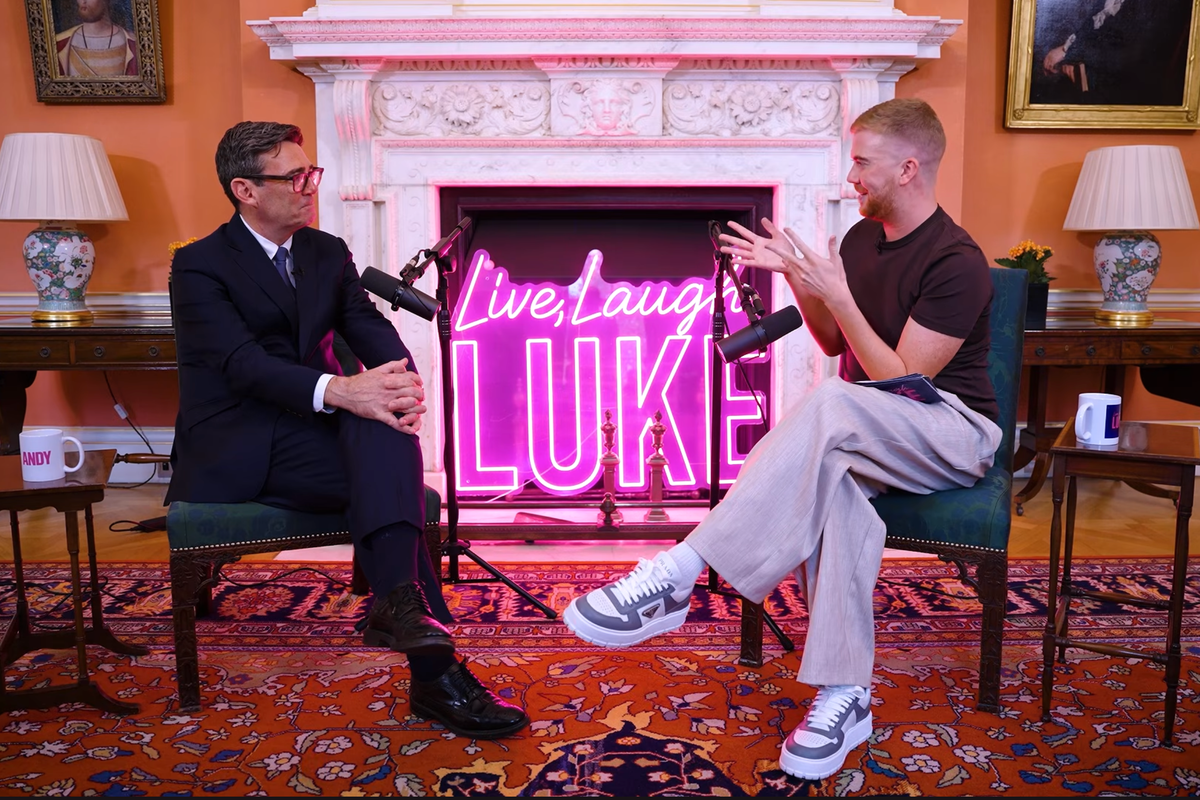
Andy Burnham’s influencer videos are turning one admirer against him, with Sam Fishwick arguing that the prime minister’s social media strategy risks feeling forced and distracting from serious issues.
Over the past fortnight, Fishwick writes, videos of Burnham have appeared repeatedly on Instagram. In one, he is asked whether he has “a dream” while walking up Downing Street; in another, he enters the Number 10 foyer to find a content creator doing the Hugh Grant dance from Love Actually. A third shows him on a park walk, where he is asked to have a cup of tea and say how many cups he drinks a day: “it’s double figures”.
Fishwick says the videos irritate her despite liking Burnham and wanting him to succeed. She sees the logic of presenting a more expressive prime minister after voters found Keir Starmer remote. A Downing Street source told the BBC in July that the plan was to take a “more social-first” and “authentic to Andy” approach, with “less high-production, polished” content than previous prime ministers might have had.
But Fishwick argues that a prime minister whose supposed strength is reading the room should not keep inviting influencers into Downing Street to perform skits. She objects to the staged question, “Excuse me, prime minister, can I just ask one question ... do you have a dream?”, delivered as piano music swells, while people are trying to reach the PM with serious questions.
Burnham does not need “cheap gimmicks” to seem authentic, Fishwick writes. She describes him as warm and charismatic, but says the videos suggest insecurity and resemble “a dad trying to be down with the kids”. Her advice: “Just be the dad, Andy. You’re good at being the dad. Put the skateboard down.”
Fishwick recalls a conversation in which a powerful celebrity PR asked a friend: “Why should someone like Rihanna answer questions when she could just put her favourite snack on Instagram, and that’s all people care about anyway?” Her friend accused him of contributing to the dumbing down of culture. Fishwick says politicians may now be caught in the same trend, adding that “everyone ends up conniving at their own irrelevance eventually”.
She acknowledges “a definite whiff of professional jealousy” in her reaction, comparing it to a horse and cart driver finding the automobile industry “a bit gauche”. New audiences could be reached through such interviews, she concedes, and Gen Z support for Burnham might be substantial, although polling cannot establish it if young people do not respond. “Doing interviews and reaching new audiences, that is obviously fine.”
Fishwick says Burnham’s videos risk influencing her not to vote for him. She sees a similar approach in a recent street interview with foreign secretary Ed Miliband, who was “ambushed” by an influencer in New York while travelling between engagements at the UN General Assembly. The influencer told him, “Excuse me, you have an amazing outfit,” before asking, “What do you do for a living?” Miliband then said he sees himself as “like the Marco Rubio of Great Britain”.
Fishwick says the exchange may be worth it, but describes her reaction as “a kind of second-hand cringe so strong it makes me want to fire myself into the sun”. She compares the effect of the PM’s communications to a novelist’s description of a book that makes readers want to throw it across the room: “The PM‘s comms give me the urge to get up and throw my phone across the room. I suppose that means they’re really that good.”