Anthropic Uses Claude to Show Bacterial and Phage Proteins Form Vaults - Unite.AI
By Google News AI ·
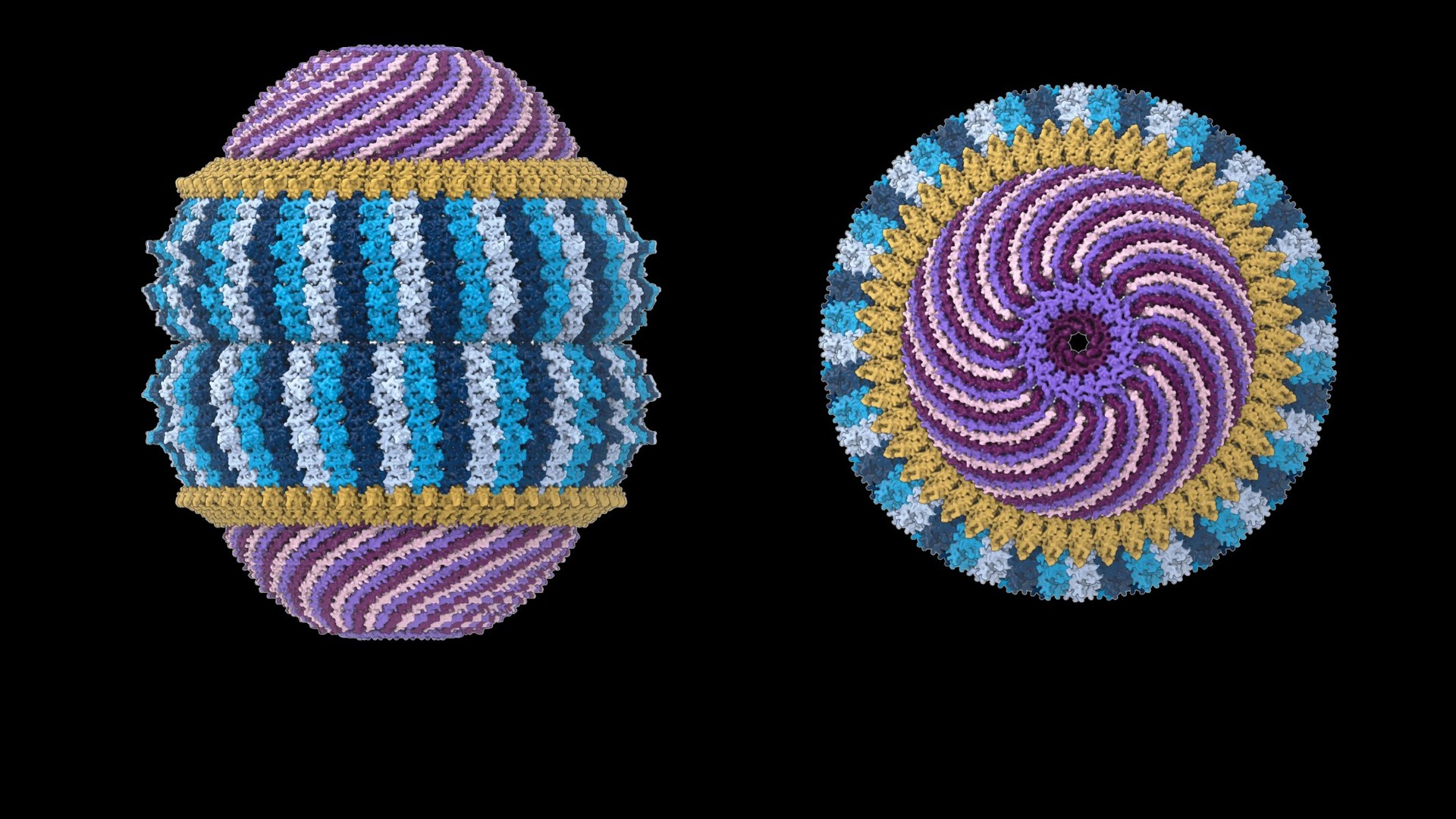
Anthropic reported the results on November 4, 2026, showing that prokaryotic and bacteriophage relatives of the major vault protein can assemble into vault particles when produced in E. coli. Claude helped the team map one bacteriophage-derived shell at a nominal resolution of 3.2 angstroms.
Vaults are large, hollow protein shells whose biological function remains unknown. Producing related particles in bacteria gives researchers a faster-growing system for investigating their assembly, contents, and origins. Anthropic describes the L05 result as the first 3D structure of a vault particle found in prokaryotic cells. The work establishes assembly and architecture while leaving biological function unresolved.
Using Claude Science, the researchers searched a database of approximately 15 billion predicted proteins. They found major vault protein homologs in 29 bacterial phyla and four archaeal phyla, although these proteins appeared in less than 1% of species with sequenced genomes. The search therefore showed that the proteins are rare but broadly distributed.
The researchers selected 44 proteins for cell-free expression testing before moving leading candidates into E. coli. Fifteen of 24 candidates produced soluble protein, and seven of those 15 formed vault-like particles under electron microscopy. Cryo-electron microscopy confirmed the vault shape in four of them, two derived from phages and two from bacteria.
The phage-derived L05 particle was selected for detailed structural analysis because it was among the best at forming complete, closed particles. That selection moved the project beyond detecting barrel-shaped objects in microscope images to examining how individual protein chains fit together and where the shell could be modified.
L05 contains 96 copies of…
Originally published by Google News AI