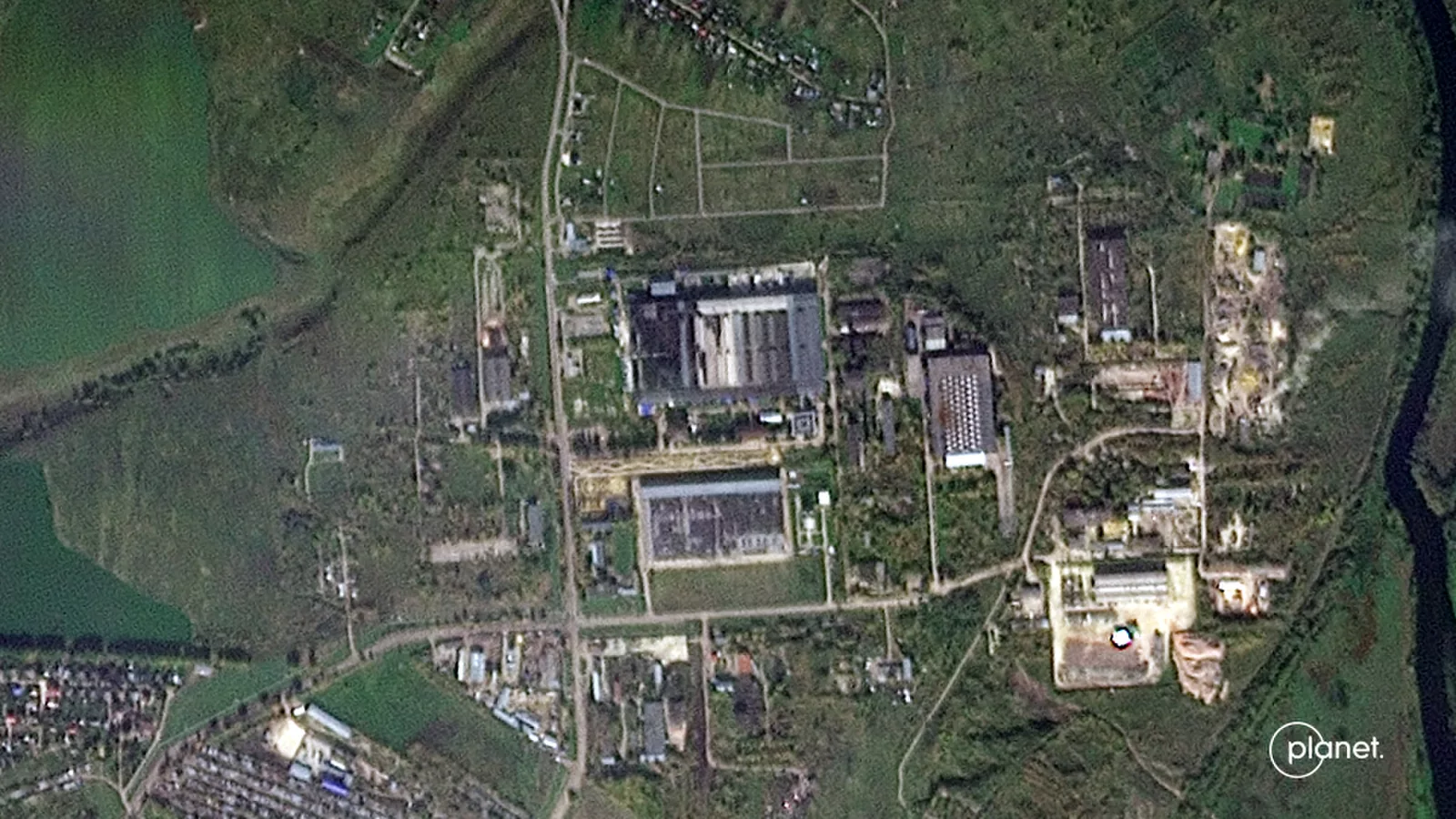
Amazon data centers were attacked by the military in the Middle East for the first time this year, while Russia and Ukraine exchanged an unprecedented flurry of drone strikes on each other’s data centers. Ars Technica hosted a live discussion about what these attacks mean for cloud services that modern societies depend on.
In a conversation with Ars Technica Tech Reporter Jeremy Hsu, Joseph Jarnecki of the Royal United Services Institute discussed why public cloud data centers have increasingly become military targets during the 2026 Iran war and Russia’s ongoing full-scale invasion of Ukraine.
“We see an increasing acknowledgement and fact of dual use in particularly the public cloud, but also just across the board in private cloud data centers as well. The dual use that I refer to is the utilization of compute functions within these data centers—within cloud services—by militaries, for example, to run battlefield management systems, to do their HR, to do their resource management. Once a military uses a piece of civilian infrastructure, at least under international law or in terms of the principles of targeting that are taken forward by militaries, it can sometimes become a military object and is therefore of interest to an adversary, and there’s an incentive to target it.”
Jarnecki also said relatively inexpensive kamikaze drones can impose substantial economic costs and disrupt cloud services when they strike data centers. He cited attacks on some of Russia’s largest public cloud data centers, including Yandex, and on American hyperscalers in the Gulf.
“The second reason that we’ve seen targeting particularly in Russia’s largest data centers or some of Russia’s largest public cloud data centers like Yandex, as well as American hyperscalers that are based in the Gulf, is to impose economic cost in a way that would be disadvantageous for an adversary and would otherwise be quite difficult to impose in other ways. So it’s relatively low cost of munition to high cost of disruption. If you think about the amount of investment that’s been put forward by AWS and other companies in the Gulf to build out these data center installations relative to the cost of the amount of Shahed drones that are manufactured, produced, and utilized by Iran to target these data centers, I would put it very, very conservatively at 100X or even more. The cost ratio is really very lucrative for the adversary, and it provides the opportunity to really degrade the economic outcomes of who you are targeting.”
The discussion also considered how governments and hyperscalers could make cloud services more resilient. Hyperscalers include large cloud and data center operators such as Amazon, Google, Microsoft, and Meta. Jarnecki pointed to Ukraine’s efforts to protect its cloud infrastructure after Russian President Vladimir Putin ordered Russian military forces to launch the full-scale invasion in February 2022.
“I think that Ukraine anticipated this problem set very effectively. They anticipated and understood that Russia would not be discriminating necessarily in its targeting of civilian digital infrastructure particularly, and therefore conducted a large-scale cloud migration at the onset of the full-scale war in part in reaction to the anticipated targeting but then also actual targeting that took place through kinetic means.”
Jarnecki said data center attacks are likely to continue beyond 2026. Despite efforts to harden some facilities, he said, they can be relatively easy to find and damage, with the potential for cascading risks inside a facility or more widely.
“Unfortunately, I think that this really does indicate a continuation of this kind of targeting, not just because data centers are, despite efforts to harden some of them, relatively squishy, relatively easy to find, and have the potential, because of their complexity, to induce cascading risks within the facility or more widely if they are hit particularly by kinetic munitions. So at present, I would say it’s a dangerous trend that is likely to crop up again.”