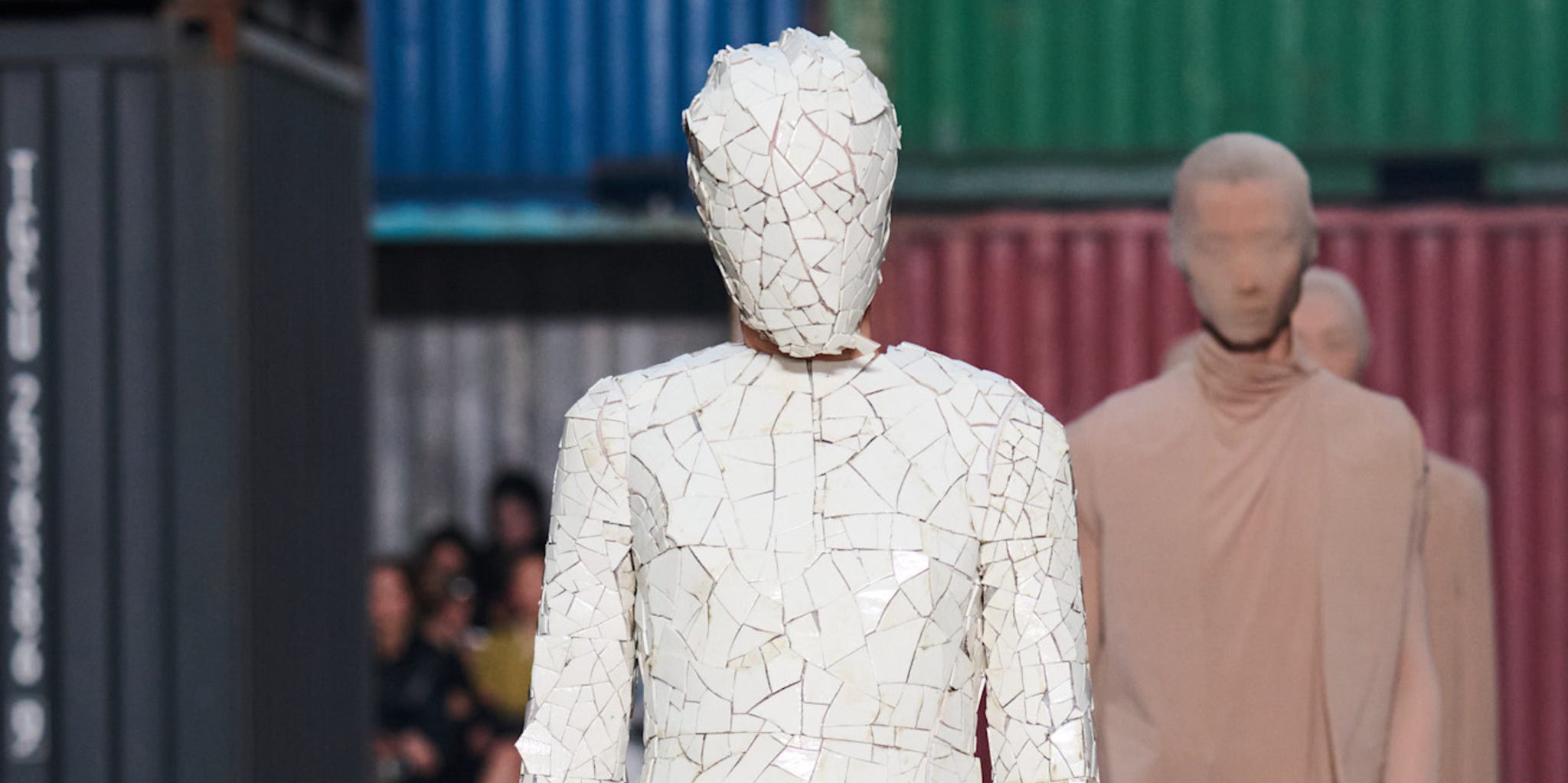
At Yuima Nakazato’s spring/summer 2026 haute couture show in January, the clothes supplied the soundtrack. Models moved slowly through an old church as hulking, hand-sculpted ceramic beads chimed. The effect reflects a growing interest in ASMR on the runway: in 2024, Paloma Wool placed microphones near models presenting its clothes; Simone Rocha has shown shoes topped with bells, while Celine’s oversized embellished paillette dresses rustled as they moved. Jean Paul Gaultier’s recent collections feature softly jingling bells, and earlier this year Maison Margiela presented a shattered porcelain dress that sounded like broken glass as it was worn.
The sounds offer a moment of calm amid the chaos, the article suggests. At Nakazato’s show, the quiet made the clinking garments stand out. Between the models’ footsteps and the swaying of their heavy gowns, the audience could hear camera shutters and people breathing—sounds usually difficult to pick out at fashion shows.
“I chose not to add music to this show,” Nakazato wrote in his show notes. “Today, we live surrounded by electronic sounds streaming through headphones and by the glow of screens, constantly absorbing information. That is why, during the fifteen minutes of this fashion show, I invite you to direct your attention to the unstable, subtle sounds created by the garments before you, and to the breath of the bodies wearing them.”
Clothing’s capacity to engage the senses predates the current interest in ASMR. Viktor & Rolf famously covered garments in bells for their fall/winter 2000 couture collection, turning the runway into what the article describes as a symphony of sound. In medieval Europe, women wore small bells sewn onto garments to signal presence and status. In the 1850s, the rustle of a large, full, colorful skirt was widely regarded as an audible sign of fashionable wealth and social standing.
Jean Paul Gaultier’s bell-covered dress for spring/summer 2027 drew inspiration from a JPG glove in the 1989 archive, covered in tassels and bells. “When we started adding bells on things, it made an amazing sound,” creative director Duran Lantink said immediately following the show. “So we started thinking about that woman, or that person who is quite loud—she’s there, and she’s present.”
Fashion’s sensory appeal extends beyond sound, the article argues. It points to intricately woven bags and designs resembling antique tapestries or grandma’s couch, as well as Monse’s kinetic fringe, Bottega Veneta’s fiberglass jackets and Valentino’s pleated mermaid-tail gowns, wrapped with a black bow.
Noir Kei Ninomiya’s “exploding garden” dresses feature dynamic flowers, both real and synthetic, and highly tactile silhouettes.
The article sees fashion’s invitation to put phones aside and experience the real world—its sounds, smells and textures—as part of the appeal of what is now appearing on runways. The clothes, it says, are meant to make people feel alive.