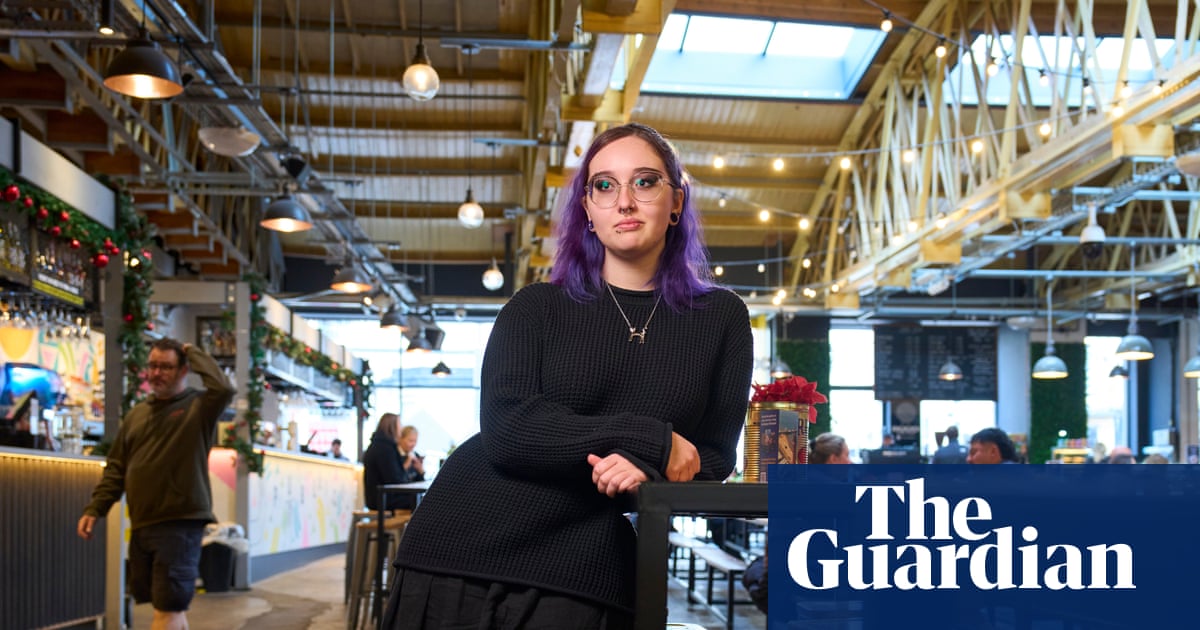
Blackpool has the highest proportion in England of 16- to 24-year-olds out of work and education, with more than one in five in that position. Young jobseekers say they face intense competition and are often told they need experience to get hired.
Amy Butterworth, 19, had to complete a series of checks, including filming herself and sharing a picture of her passport, before applying for a job at Marks & Spencer. She received an email offering interview slots, but they were all gone within two minutes. “I just felt kind of stupid,” she said.
Butterworth described the challenge facing young applicants: “You need to get a job, but to have a job you need some experience. And you can’t get experience if no one’s employing you.”
Blackpool was followed by seven other local authorities in the north or Midlands among England’s 10 areas with the highest Neet concentrations. The town also faces longstanding problems involving poor health, housing and addiction.
At Blackpool’s annual jobs fair earlier this year, more than 4,000 jobseekers queued along the promenade for 2,000 available jobs. A local official called the turnout a “sad indictment” of the British economy; 1,200 jobs were offered on the spot.
Some young people find seasonal work in hotels or serving food to day-trippers, but the shortage of year-round jobs means competition is high. Some employers receive 200 applications for each vacancy. A Social Mobility Commission report in September said some firms use “postcode screening” to block applicants from parts of Blackpool. Labour MP for Blackpool South Chris Webb called the practice “abhorrent”.
After completing an art diploma at Blackpool and the Fylde College, Butterworth submitted many job applications and volunteered at a local primary school, but faced repeated rejections. “It really knocked my confidence a lot and I felt really disadvantaged, because nearly everyone I knew had got their first job because they knew someone,” she said.
Butterworth’s autism was diagnosed in February after a years-long wait. She said the Covid pandemic left her isolated at school, as her mother had recently finished cancer treatment and was considered highly vulnerable. “It was very isolating,” she said. “It made me very socially anxious, which definitely didn’t help when I was originally trying to find a job.”
Blackpool has among England’s highest rates of school exclusion and absence, and one of the lowest levels of GCSE attainment. According to Blackpool council, the number of pupils excluded or suspended has fallen by 33% and 29% respectively since headteachers began adopting less punitive measures last November.
The Platform, a youth skills hub launched in 2022 with £5m from the UK’s shared prosperity fund, offers 16- to 24-year-olds support with CVs, training, interviews and finding work or volunteering. The council says it has helped more than 2,350 young people into learning, training or work.
Butterworth was among those supported by the Platform. She has found training to work behind a bar while pursuing a career as a tattooist, and pulled her first pint last month at Abingdon Street Market. She hopes to start an apprenticeship at a tattoo parlour where she showed her artwork.
“I just feel very grateful that I was in a situation for once where I actually know someone that can give me an ‘in’ somewhere,” she said.
Alan Milburn, the former Labour minister, this week called for a “full throttle” overhaul of policy across healthcare, education, benefits and employment regulation, as Britain faces a crisis of nearly 1 million young people not in education, employment or training.