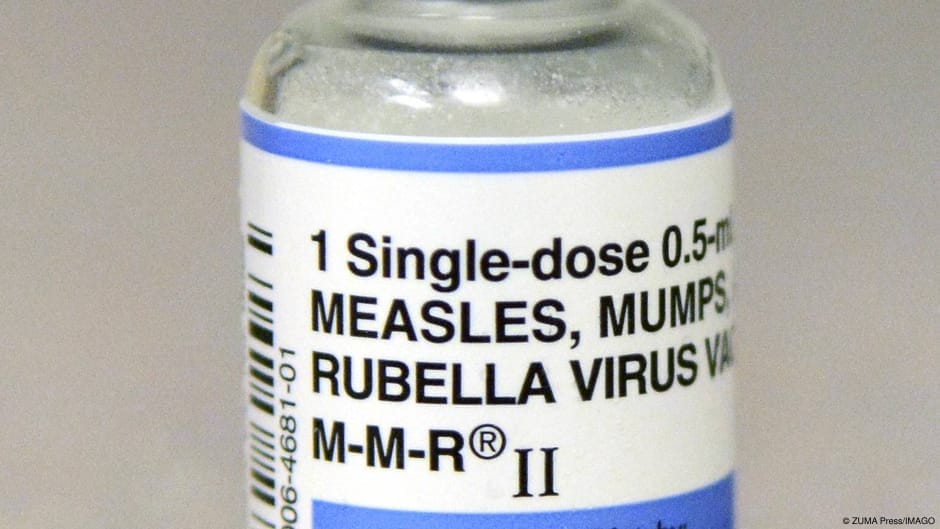
The United States lost its measles elimination status on November 17, 2026, alongside Mexico and Bolivia, after the same strain of the virus spread in the country for 12 months or more, according to the Pan American Health Organization (PAHO). Brazil regained its measles-free status within five years of losing it in 2019, offering a possible model for responding to the disease.
Brazil recorded more than 21,000 measles cases in 2019. Since 2024, it has remained measles-free, even as infections spread across the rest of the Americas. In 2026, based on data available when the article was written, Brazil had recorded 70 cases, all linked to infections brought from abroad, often from neighboring Peru.
Brazil has about 213 million people, compared with nearly 350 million in the United States, and the countries are similar in size. Brazil’s response includes rapid action after suspected cases, door-to-door and community visits to find people who may be sick, targeted mass vaccination days, and tracing and vaccinating contacts and nearby residents.
Under a program called “Dia S,” health workers visit homes, schools, daycare centers and churches to find people who may be sick but have not seen a doctor. Brazil also holds targeted mass vaccination days known as “Dia D”; one was held in November in the area where Brazil borders Colombia and Peru. The country provided more than 16 million measles vaccine doses in 2026 and donated 500,000 doses to Peru.
Brazil still faces gaps in coverage. World Health Organization estimates say 76% of children received both required vaccine doses in 2025, below the 95% target. PAHO Director Jarbas Barbosa said: “Elimination is not a trophy that we win once and put on a shelf. It must be protected every day.”
The United States had more than 5,400 measles cases in 2026 at the time of writing, more than twice the total for all of 2025 and about 19 times the 2024 figure. Nearly everyone who became ill was unvaccinated or had an unknown vaccination status.
Before the COVID-19 pandemic, 95% of US kindergartners had received measles shots. The figure is now 92%, according to the US Centers for Disease Control and Protection (CDC), leaving about 280,000 kindergartners unprotected. In the Texas counties where a 2025 outbreak began, vaccination coverage was as low as 77%.
US children usually need vaccinations to attend school, but most states allow religious or personal exemptions without a doctor’s involvement. In 24 states, exemptions were so numerous that those states could not reach the 95% threshold even if every other child were vaccinated.
In August 2026, President Donald Trump signed an executive order on new vaccination recommendations for children. The measles vaccine remained in a top category of vaccinations recommended for every child, but the administration’s broader position on vaccination was unclear. Health Secretary Robert F. Kennedy Jr. has often opposed vaccination, including against measles, and advised people to take vitamin A instead. In Texas, children were hospitalized with toxic levels of the supplement and left without protection against measles.
Measles vaccination rates have also fallen elsewhere, including in Europe. In Germany, where infections have risen, experts blame anti-vaccination rhetoric that emerged during the COVID-19 pandemic.
A person with measles can infect up to 18 unprotected people. Two doses of the MMR vaccine, which protects against measles, mumps and rubella, provide 97% protection. Preventing an outbreak requires about 95% of a community to be vaccinated and/or immune, and coverage needs to be high across individual communities, not just nationally.
“For some diseases like measles, even a small decrease in vaccination rates can lead to more outbreaks of disease [so] community immunity requires over 95% of susceptible individuals to be immunized,” said Andrew Racine, president of the American Academy of Pediatrics. A school where only 70% of children are vaccinated can be vulnerable even when the national average is higher.
Worldwide, measles deaths have fallen by 88% since 2000, but progress has stalled. About three in four children receive both vaccine doses. The biggest outbreaks are currently in Bangladesh, Indonesia and Guatemala.
European Union cases fell from more than 35,000 in 2024 to about 2,300 in 2025, with no measles-related deaths. Romania’s cases dropped from more than 30,000 to about 4,200 over the same period. Hungary, where 99% of children are vaccinated, had no cases in the past year. However, six European countries, including the UK, Spain and Austria, lost measles-free status in January; across Europe, eight out of ten people who had measles in 2025 were unvaccinated.
The Americas recorded more than 58,000 measles cases in 2026, over four times as many as by November 2025. Guatemala had almost 35,000 cases. African Union countries reported nearly 1,800 measles deaths in 2026, about 1,650 of them in the Democratic Republic of Congo. Sudan, despite the war, increased first-dose measles coverage by 22 percentage points in 2025, the world’s largest gain.
Measles can linger in the air for up to two hours after an infected person leaves a room. People can spread it for four days before the rash appears and four days after. About one in five unvaccinated people in the United States who get measles ends up in hospital, and the disease can weaken the immune system for years. Two doses of the MMR vaccine protect 97% of people for life.