Canadian Prime Minister Mark Carney has said Canada could consider automakers from countries including China if trade discussions with the United States fail, a possibility that could affect Michigan’s auto industry and wider economy.
Carney told reporters that Canada has the “best auto workers in the world” and that he wants them “fully deployed” in an integrated North American market. But he said trade actions during President Donald Trump’s administration have made the market “less integrated.” He said he continues to discuss the issue with Washington, which he believes is best for Canadian workers, but Canada has other options if negotiations do not succeed.
“Depending on where that settles, there will be other options. European options, Asian options, of course. Chinese. Japanese,” Carney said.
His remarks came before a meeting with Chinese President Xi Jinping, where the leaders discussed tariff relief and closer coordination on electric vehicles. Trump has threatened to impose a 100 percent tariff on Canada if it makes a deal with China.
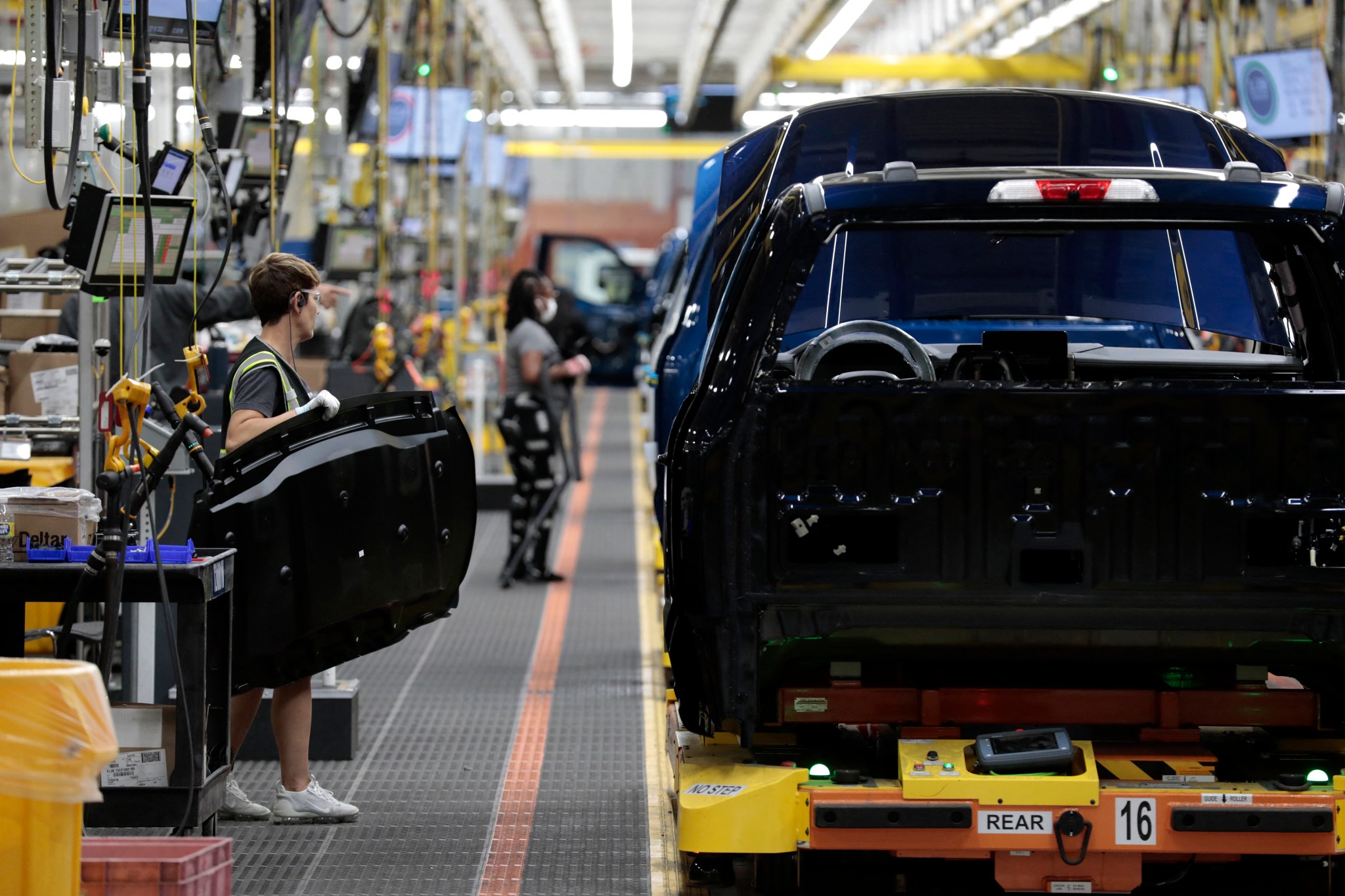
Michigan’s auto industry is closely linked to Canada, according to Paul Isely, a Grand Valley State University professor of economics. Vehicle components can cross the border multiple times during production, he told Newsweek, making Canadian suppliers integral to building cars in Michigan.
Michigan exports between $21 billion and $22 billion worth of vehicles and transportation equipment to Canada, Isely said, calling it a “very large part” of the state’s economy. The sector employed 156,100 people as of June 2026, according to a report from the Center for Automotive Research.
The consequences for Michigan would depend on what Carney means by turning to automakers elsewhere, said Jason Miller, a professor in Michigan State University’s Department of Supply Chain Management. If Canada imports more cars made in Asia or Europe instead of U.S.-produced vehicles, that would be “bad news” for Michigan auto-parts suppliers. But attracting assembly operations from non-U.S. automakers to Canada could benefit those suppliers, he told Newsweek.
Isely said increased Canadian imports of non-American cars could put Michigan jobs at risk. Earlier this year, Canada announced that 49,000 electric vehicles could be imported from China at the most-favored-nation tariff rate. That number could rise to 70,000 by 2030. Isely said the change could deal a billion-dollar blow to Michigan’s market.
“A billion dollars to our economy is a lot of jobs and a lot of ancillary jobs across Michigan. So, it has the potential to cost jobs here in Michigan,” Isely said.
Jeff Rightmer, a Wayne State University professor of supply chain management, said foreign partnerships could create more competition for General Motors, Ford and Stellantis, known as the Detroit 3, and disrupt supply chains. He said slower job growth could affect small businesses and increase costs for Michigan households. Citing The Michigan Economic Outlook for 2025-2027, Rightmer said every direct job in the auto industry creates another three jobs, and layoffs at assembly plants and suppliers affect local employers.
Erik Gordon, a professor at the University of Michigan’s Ross School of Business, said Michigan could face “negative short-term effects” for companies supplying parts to larger automakers. In the long run, however, he believes Michigan could gain autoworker jobs if production of cars for the U.S. market moves from Canada to Michigan.
“The U.S. is a much bigger auto market than Canada, so Canadian autoworkers have more to lose than U.S. autoworkers from reduced trade between the countries,” Gordon said.
Any effects could also have political consequences in Michigan, an evenly divided swing state that backed Trump in 2016 and 2024 and former President Joe Biden in 2020.
U.S.-Canada relations have grown strained during Trump’s second term. Earlier this year, his administration announced 50 percent tariffs on $20 billion worth of Canadian goods. Canada responded with retaliatory tariffs on American goods, including steel, dairy products, appliances and farm equipment.
Trump has repeatedly suggested Canada should become the 51st state and changed the name of Lake Ontario to Lake America. Carney likened the tensions to a “war” in August, telling reporters, “You’re at war when you’re attacked, and we got attacked.”
Isely said shifts in U.S. policy have affected Canada’s business decisions and its confidence in the United States as a trading partner. “Over the last 20 years, U.S. policy in relationship to overseas entities have taken wild swings to the left and to the right. As it does that, it decreases the confidence that you have a consistent, reliable trading partner,” he said. Canada is considering ways to diversify that risk, he said.
Trump criticized Canada at a press conference on Friday. “Canada has been very difficult to this country for 50 years. For some reason, they feel emboldened, and we can’t let them feel this way anymore because we can make our own cars. We have more energy than they do,” he said.
The two countries have been negotiating in recent months to end the trade war, and Canada has sought an interim agreement on some tariffs. Dominic LeBlanc, Canada’s minister of internal trade, said in a CBC interview on Thursday that negotiations had made progress but had not yet produced a deal that met the country’s economic interests.
“We’re not yet at a point where we think we have a deal that is good enough for the economic interests of the country, but we have made progress,” LeBlanc said. He said he wants “the best deal” for Canada “as soon as possible.”
Canada is seeking an agreement to reduce Section 232 tariffs on steel, aluminum and automobiles and remove Section 338 tariffs completely. LeBlanc said he wants a “comprehensive” deal that provides relief to all sectors and that Canada is willing to move “quickly.”
“But we need a partner that’s willing to arrive at a negotiated outcome that…puts us on a better economic trajectory than we are on right now,” he said.
Rightmer said capital investment, binding legal changes and physical supply-chain moves could indicate significant shifts. He added that the Detroit 3’s decisions over the coming years may show how they view potential disruptions.
“Capital allocations, plant announcements, quarterly earnings and investment announcements. If investments are still being made to support cross border programs, they are viewing it as temporary,” Rightmer said.