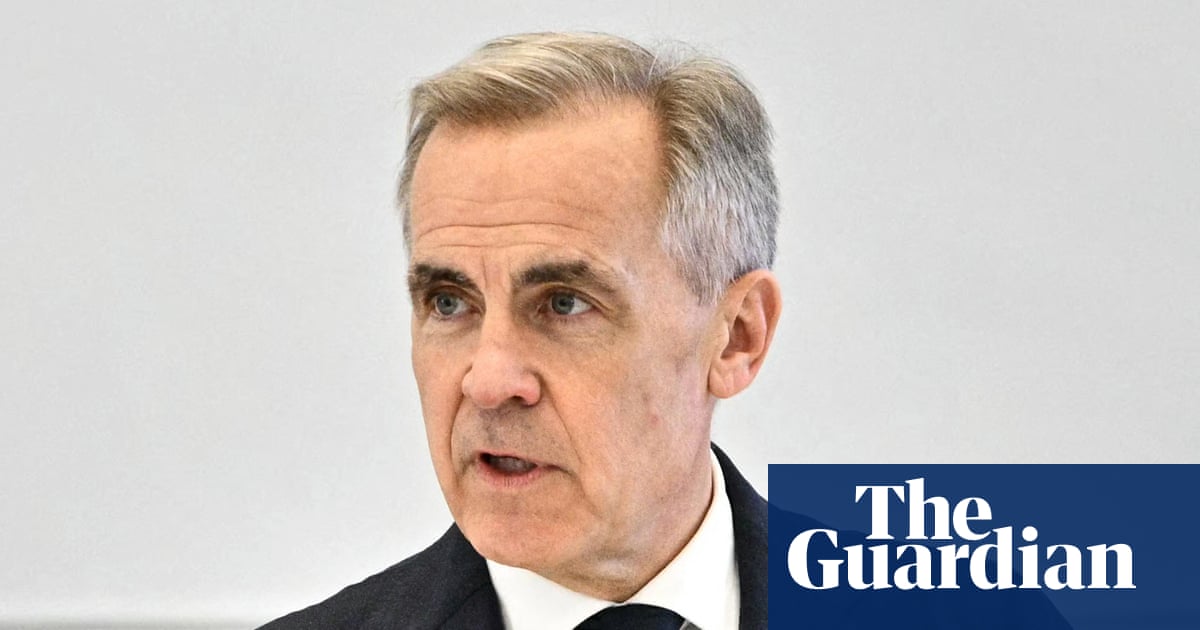
Canadian Prime Minister Mark Carney has built broad public support by presenting himself as a counterweight to Donald Trump, giving him room to pursue an ambitious domestic agenda. But political observers question whether that goodwill will last if the trade war ends or Trump leaves office.
After polls closed in the US midterm elections and Trump’s party was rebuked, Ontario premier Doug Ford, a prominent critic of American tariffs, said: “I was doing cartwheels down the street, and have you ever seen a big guy like me doing cartwheels?” Carney responded more cautiously.
Canada has faced tariffs on key industries, threats of annexation and social media feuds launched by the US president. Carney has argued the current US administration cannot be trusted to honour an agreement, saying its signature was “written in pencil”. He has pledged to rebuild Canadian manufacturing and industrial capacity, make Canada a global energy super power and reduce its reliance on the US.
The article says Carney has built support across political divides: he is popular in both francophone Quebec and historically conservative Alberta. In April, he became the first prime minister to turn a minority government into a majority, drawing members from rival parties and winning key byelections. Pollsters say his Liberals could win one of the largest raw seat counts in Canadian parliamentary history if an election were held soon.
Scott Reid, a political adviser and former communications director to former Liberal prime minister Paul Martin, said: “Newly elected political leaders soar high in polls. They enjoy honeymoons. But Carney’s popularity is wholly different.” He added: “He is poaching from both the left and the right. This popularity is of a character that we’ve not witnessed before.”
Political analyst Philippe Fournier said current seat projections were “insane” in their scope, adding: “I don’t even believe them.” He warned that calling an election could damage Carney’s image as a leader focused on economics and trade rather than partisan politics. “The Liberals would be perceived as opportunists if they called an election now, and I’m pretty sure they would face blowback from voters. Trying to convert his immense popularity into seats could backfire,” Fournier said.
Carney’s political capital has helped him advance contentious policies with relatively little resistance. His government approved an oil pipeline to the Pacific, which Carney has framed as an issue of national sovereignty and economic security. Former prime minister Stephen Harper’s push to expand oil and gas production had triggered fierce opposition from environmentalists and Indigenous communities.
Carney has also pursued large deficits. In early November, the government’s budget announced C$140bn (£74bn) in new spending, including commitments to tackle homelessness and invest in homes, roads, bridges, schools, health facilities and water systems in First Nations communities. Carney and his finance minister have promoted a C$36bn (£19bn) business tax credit over five years.
The government’s Bill C-39 aims to speed up major infrastructure projects. Nearly 60 scientists from the Royal Society of Canada warned that rushing environmental reviews could risk “costly and potentially irreversible” ecological harm. A new analysis says Canada is not on track to meet its 2030 or 2035 emissions targets, while the government has cancelled the consumer carbon tax and paused a requirement for electric vehicles to make up a greater share of future auto sales.
Canada’s environment commissioner reported last month that the government abandoned work in 2024 on a pledge to ban exports of thermal coal. “No other prime minister could have gutted our environmental protections and promised to pay for a pipeline with such little pushback,” said Julia Levin, a senior campaigner with Environmental Defence.
Levin said Canadians were anxious about Trump’s threats and had given Carney “a lot of grace” and trust, but might be paying less attention to policies “incredibly at odds with Canadian values”. Labour groups have criticised rules that could let the labour minister intervene in work stoppages and restrict many workers’ right to strike. Carney has also proposed selling parts of Canada’s four largest airports, a politically fraught idea for years.
Reid questioned whether Carney’s domestic appeal depends on the circumstances that brought him to power: “There’s a real question mark as to whether his domestic popularity can sustain beyond the circumstance that gave birth to this unique political career: if Trump were to vanish, if the trade war were to end, where does that leave him?”
Levin said some supporters viewed the pipeline as a political tool, believing “the pipeline will never happen”. She added: “People are now starting to really contort themselves to try to justify an agenda that was not part of his election platform. They’ve put their trust in him. But there are limits to that trust.”
Reid warned that Carney’s rise could leave him vulnerable to a sudden loss of public goodwill. “Permission structures from the public in times of war are powerful – until they’re not,” he said.