Claude can design electronic prototypes from start to finish
By Google News Technology ·
A little over a year ago, we began testing how well Claude could design basic electronic circuits. We collaborated with Diode Computers,1 a company that designs and manufactures circuit boards, to train Claude on simple tasks—for example, on reading a chip’s datasheet and working out which parts a chip needs in order to run.
The models we experimented with back then couldn’t reliably lay out a circuit board; they also struggled to design components that fit together. Now, Claude can both design and prototype electronic hardware from start to finish.
Engineering an electronic device requires working through many complex steps and practical constraints. You have to not only design and simulate a circuit board, but also reason about the board’s physical layout and how it will behave, model the mechanical components, and write firmware—all while keeping track of which parts are readily available and what a factory is set up to build.
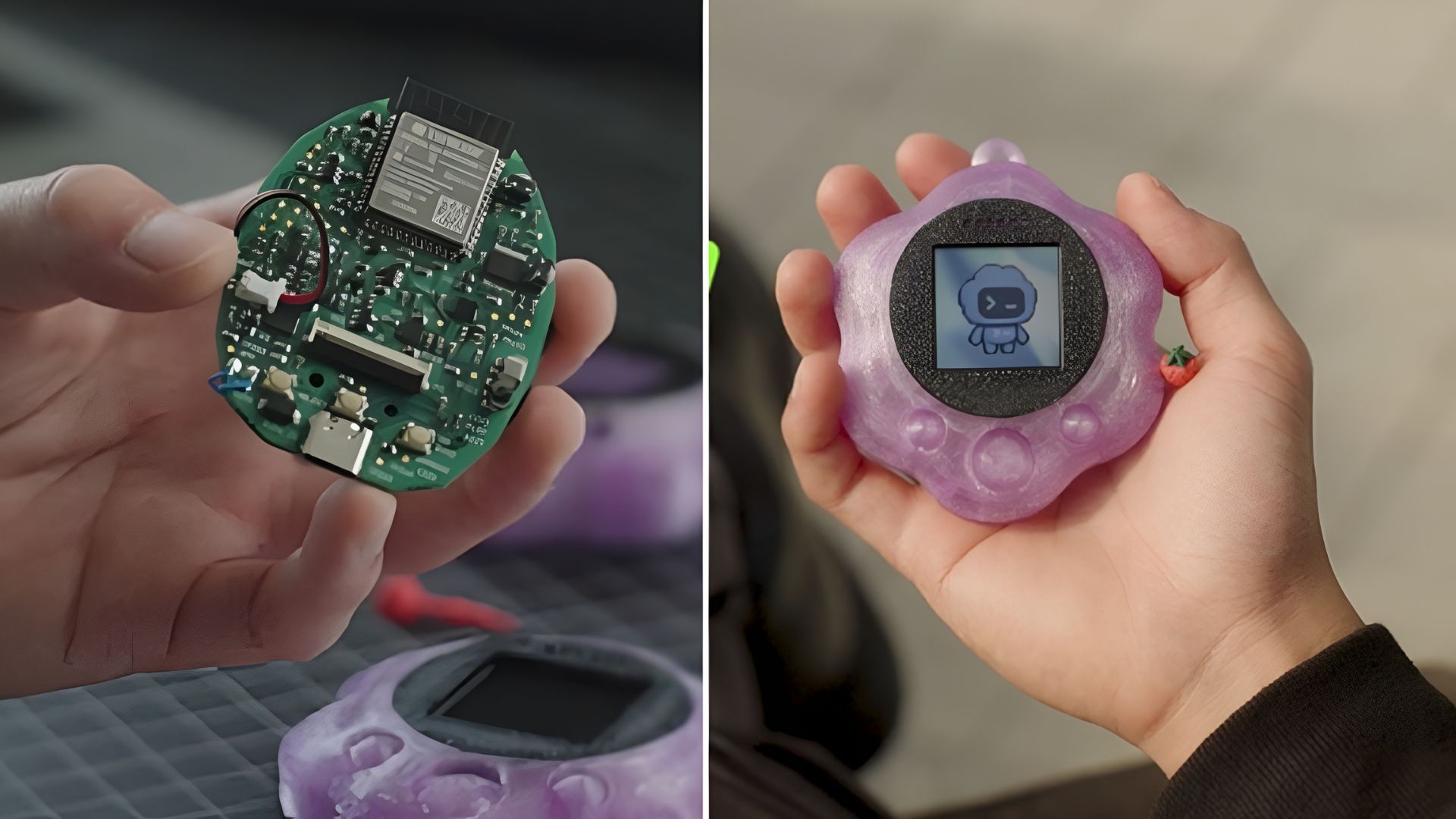
To see how newer Claude models have improved in this area, we collaborated with Diode again, this time asking Claude Fable 5.2 to design three electronic devices: a speakerphone, a voice-assistant hub, and a handheld virtual pet. With minimal prompting, Claude was able to use geometric reasoning to lay out each circuit board, anticipate manufacturing constraints, and make sure its designs would work within them.
It revised its own work, modeled its designs in computer-aided design (CAD) software, and, finally, directed human engineers to build prototypes that worked without any fixes to their circuitry.
For each design, we began by giving Claude a simple prompt that outlined what kind of device to build and its main hardware requirements.
The prompt for the speakerphone, for example, asked for “a puck that plugs into a computer over USB-C and includes microphones and a speaker, supporting Bluetooth with a PCB antenna.” Claude proceeded to write the device’s specifications, draw clean visual schematics, choose where to place the components on a printed circuit board (PCB), route the copper connections between them, design a 3D-printable enclosure, code
the firmware, and prepare a parts list.
Diode assembled the circuit boards and ran the firmware, under Claude’s direction. The final result was a prototype of a speakerphone that still works after weeks of use.
Claude went through a similar process to build the voice-assistant hub and the virtual pet, and both are also still in good working order. Because the devices are early prototypes, we don’t yet know how they’ll hold up with continued use or whether they would pass commercial certifications.
The most substantial difference between Fable 5.2 and the models we used in our earlier tests was in how well Fable 5.2 reasoned through complex geometric problems, such as where to place components on a circuit board and how to route the copper connections between them.
Earlier models had struggled to decide how to arrange basic components—placing supporting parts too far from the chips they served, for example, or orienting connectors incorrectly. Fable 5.2, by contrast, produced more compact, practical layouts. It routed the most important connections first: those that carry high-speed signals or high currents, or that are sensitive to noise.
For example, for the voice-assistant hub, Claude started by routing the USB and Ethernet connections, which transmit signals along pairs of tracks—thin strips of copper on the board. It routed one pair of tracks at a time…
Originally published by Google News Technology