Claude Personal Finance Connects Your Bank Accounts, With Read-Only Limits
By Google News Personal Finance ·

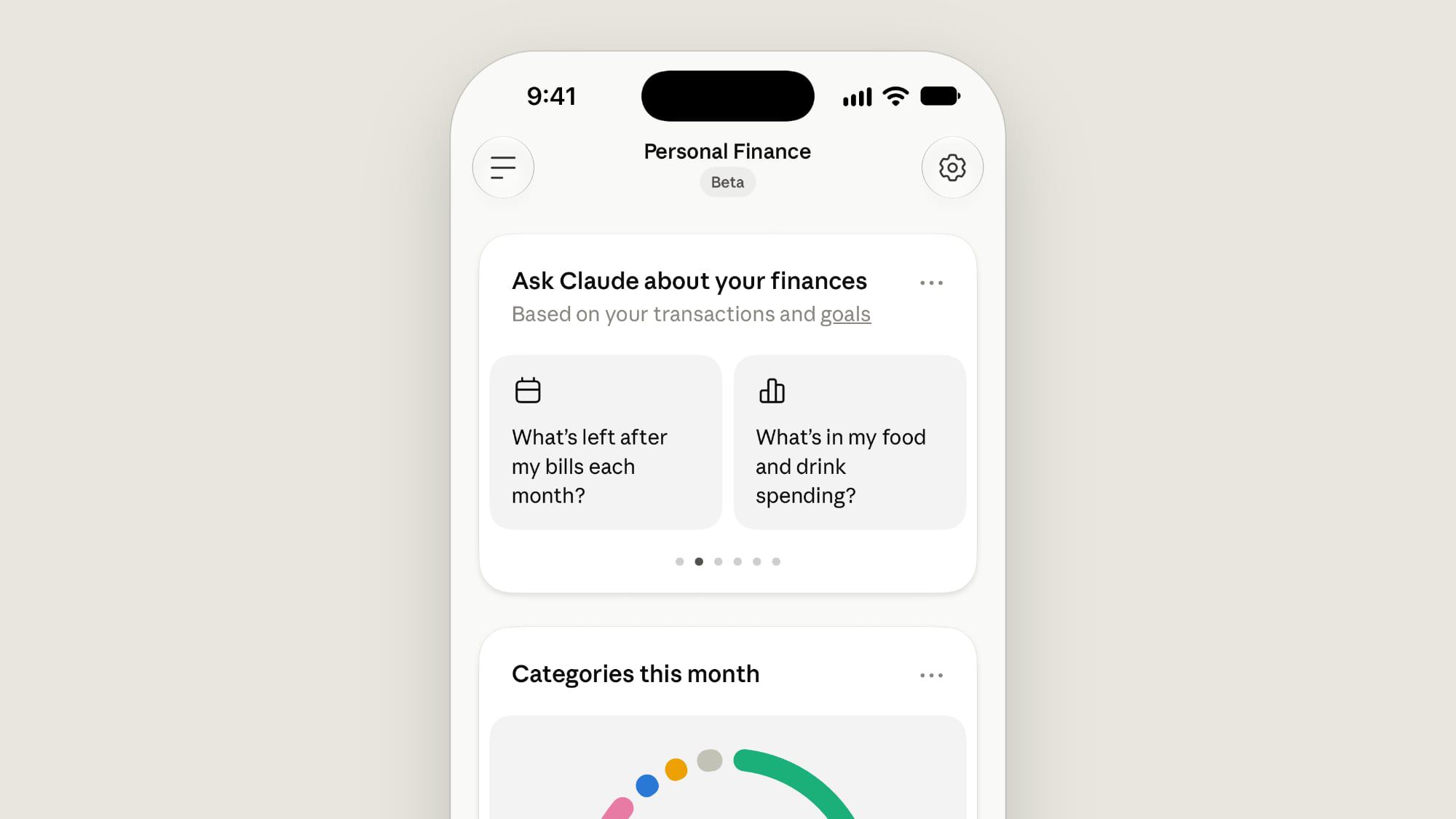
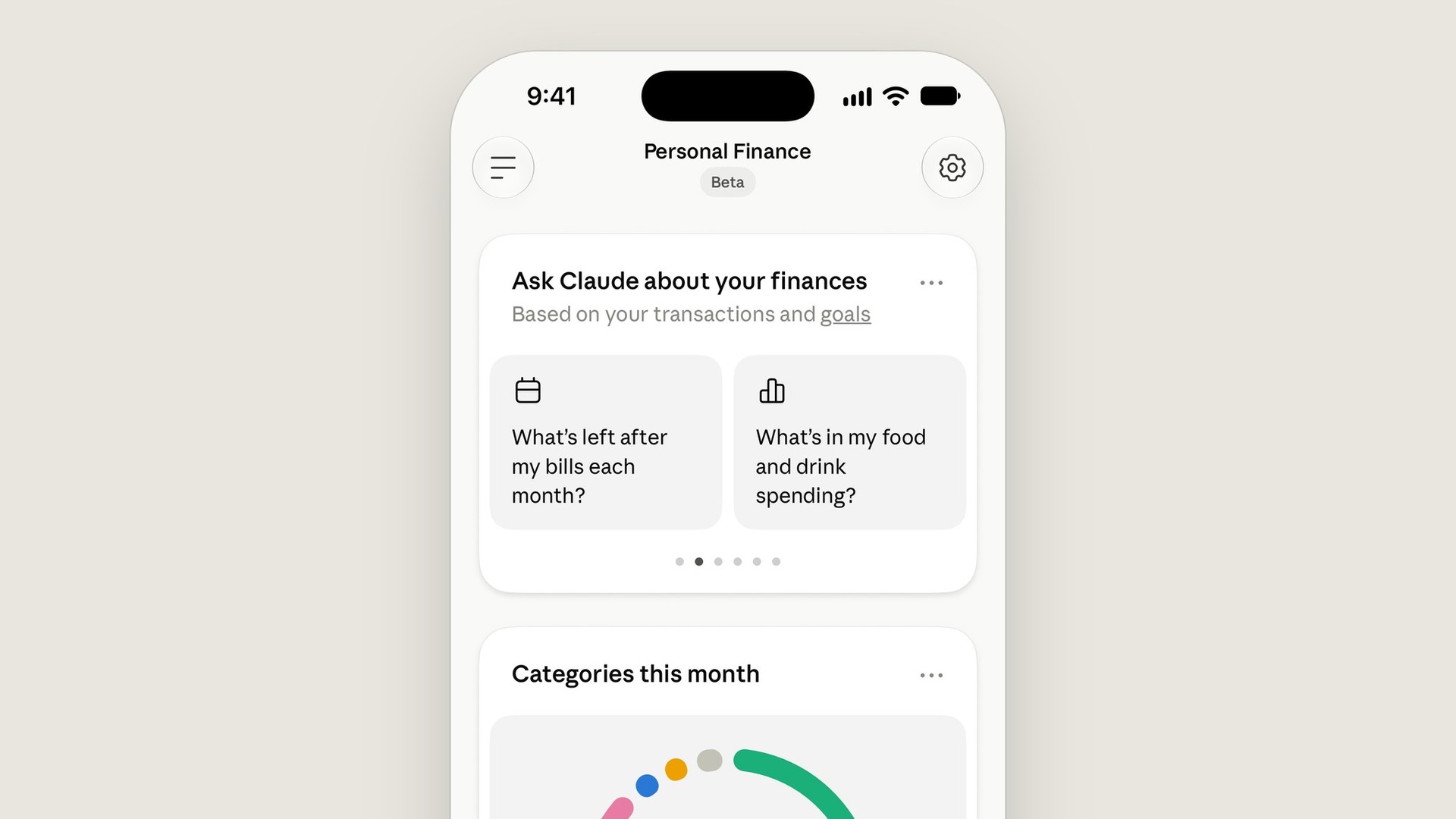
Anthropic launched Claude Personal Finance on November 5, bringing bank-account connections to its chatbot while explicitly withholding permission to move money. The feature uses Plaid, a service that connects financial institutions with apps, to bring selected account information into conversations. Its central tradeoff is straightforward: more useful answers require access to more sensitive context.
According to Anthropic’s Personal Finance announcement, the beta is rolling out to eligible paid subscribers in the United States. Users can ask about spending, bills, and balances using their connected accounts. That gives Claude something a generic money conversation lacks: records against which its explanations can be checked.
OpenAI introduced a similar account-connected experience in May, making this a competitive response as well as a product expansion. The central contest, however, is between personalized financial explanations and the confidence those explanations deserve. Account access supplies evidence. It does not automatically supply complete context, sound judgment, or protection against misleading conclusions.
The change is direct access to financial context, rather than a new ability to discuss money.
Claude could already respond to budgeting questions. Connecting accounts changes the information available when those questions arrive. Instead of describing a household’s finances manually, a user can ask the assistant to examine the records shared through the connection.
That distinction matters because a general answer and a personal answer make different promises. General guidance can explain how spending categories work. A personal explanation implicitly claims to describe what happened in someone’s actual accounts.
Juli Clover’s coverage of the bank account integration describes spending analysis, subscription checks, unusual purchases, and adjustable charts or dashboards. Claude receives account information and transaction history spanning up to two years. The rollout covers Pro, Max, and Ultra subscribers in the United States.
Those capabilities put an everyday question at the center of the product: why does the month’s spending look different? An assistant with transaction records can start investigating that question without requiring a fresh spreadsheet export for every conversation.
Consider a hypothetical household reviewing an unusually expensive month. A total alone describes the outcome. A useful explanation would distinguish recurring expenses from an exceptional purchase, then show which records support that distinction.
The assistant’s value would come from reducing the work between noticing a change and understanding it. That is a narrower, more credible proposition than asking software to take over someone’s financial life.
It also creates a higher standard for the answer. When an assistant uses actual records, readers reasonably expect greater precision. An explanation that sounds personalized can attract more trust than an equally uncertain answer based on general knowledge.
The distinction between analysis and action therefore belongs near the beginning of any description. This feature gives Claude information to interpret. Users still carry out financial decisions through the relevant institution or service.
That boundary leaves room for useful assistance. Understanding an unfamiliar charge, identifying a recurring expense, or organizing questions for a bank does not require transaction…
Originally published by Google News Personal Finance