E20 petrol: What vehicle owners should know about mileage and insurance cover
By Google News Personal Finance ·
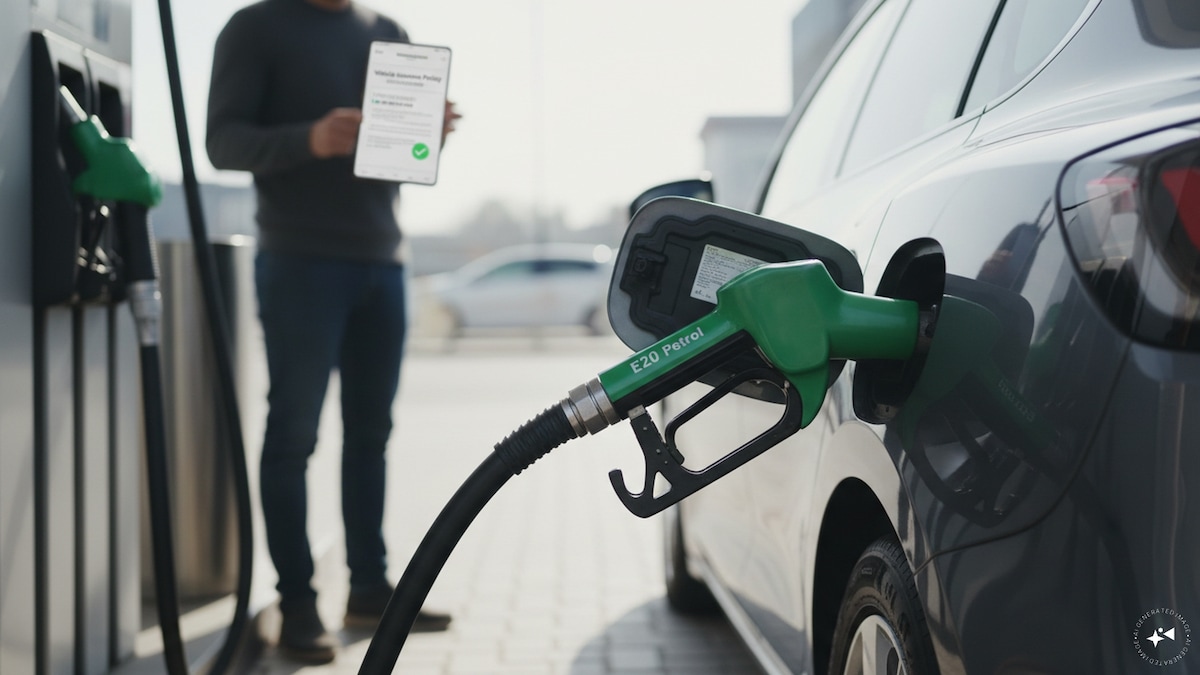
India's transition to petrol blended with 20% ethanol has brought fuel compatibility, vehicle maintenance and mileage into focus for car and two-wheeler owners.While newer vehicles are designed to meet E20 material compatibility requirements, owners of older vehicles may need to check their manufacturer's fuel recommendations before using higher ethanol blends.E20 petrol contains 20% ethanol and 80% petrol.The move
towards higher ethanol blending is part of the government's efforts to reduce dependence on imported crude oil, promote domestic ethanol production and lower emissions.India achieved its 20% ethanol blending target in December 2025, ahead of the original 2030 deadline.
With E20 now the standard petrol blend, understanding vehicle compatibility and maintenance requirements has become relevant for consumers.Here is what vehicle owners should know.Which vehicles are compatible with E20 petrol?Vehicle compatibility depends on the manufacturer's specifications, the model and the materials used in the vehicle's fuel system.In a written reply to the Lok Sabha in December 2025, the
government said vehicles sold before April 1, 2023, were compliant with E10 fuel standards, while vehicles sold after that date were E20 material-compliant.The government has also said that vehicle manufacturers define E20 compatibility, which should be indicated through a clearly visible sticker on the vehicle.Owners should check the vehicle manual, fuel compatibility sticker or contact an authorised service centre
to establish the recommended fuel specifications.
The manufacturing year alone may not be sufficient to determine compatibility.Can E20 petrol affect older vehicles?Ethanol has different chemical properties from conventional petrol, which makes the compatibility of certain fuel-system materials an important consideration.The government has cited studies by the Automotive Research Association of India , Indian Oil Corporation , the Society of Indian Automobile
Manufacturers and other institutions to state that E20 has not shown significant adverse effects on vehicle performance or abnormal wear and tear under prescribed operating conditions.However, certain older vehicles may require attention to specific components.In a parliamentary reply in July 2026, Road Transport and Highways Minister Nitin Gadkari said some BS-III vehicles manufactured before 2016 may require
replacement of certain rubber parts and gaskets when operated on E20.
Such replacements can be undertaken during routine servicing, he said.This does not mean every older vehicle will require component replacement or that E20 will necessarily damage vehicles designed for lower ethanol blends.
Owners should follow manufacturer-specific guidance.Does E20 petrol reduce mileage?Fuel efficiency is another consideration with higher ethanol blending.Ethanol has a lower energy content per litre than conventional petrol.
Consequently, vehicles may deliver lower mileage on E20 compared with petrol containing a lower proportion of ethanol.The government has cited studies indicating that certain E10-designed vehicles could experience a 3-5% reduction in fuel efficiency when using E20.The actual difference can vary depending on the vehicle's engine technology, driving conditions, maintenance and driving habits.
Therefore, the estimated reduction should not be treated as a uniform figure for all cars and two-wheelers.What should vehicle owners keep in mind?As E20 becomes more widely used, vehicle…
Originally published by Google News Personal Finance