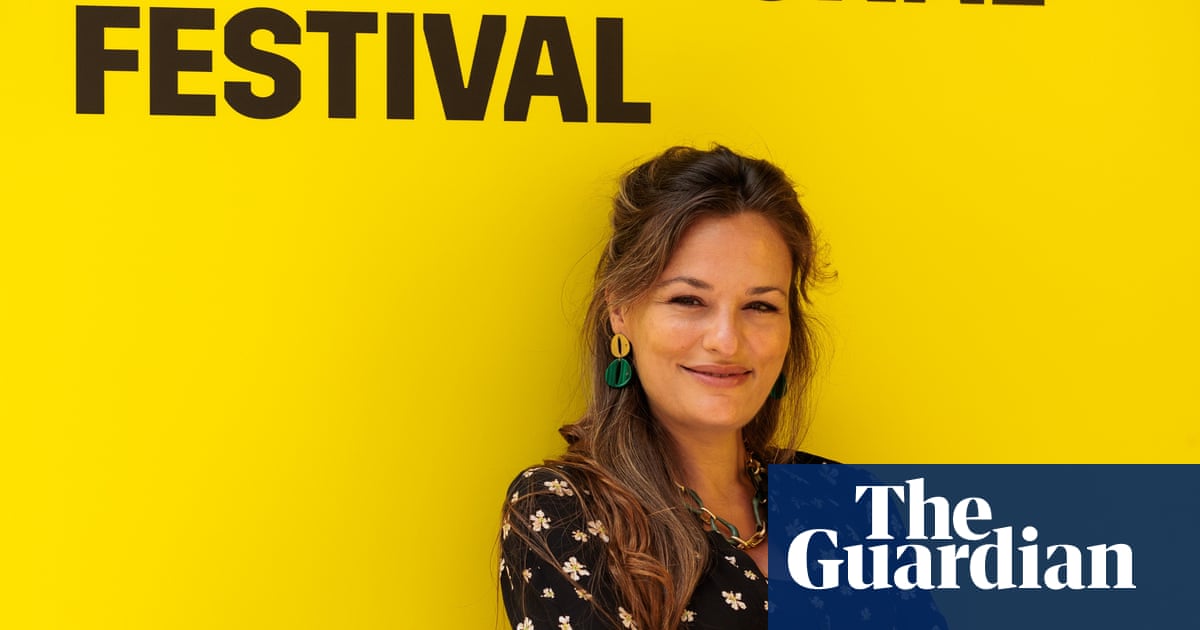
The Edinburgh international festival will run for just over four weeks in August 2027, its longest season, as it marks 80 years since its foundation. The festival runs from 6 August to 4 September, with the full programme to be announced in March.
The season will focus on how the arts can unite cultures and transcend conflict. Festival director Nicola Benedetti said echoes of the 1940s in current conflicts in Europe and elsewhere, alongside wider geopolitical instability, made the anniversary “relevant now more than ever”.
The festival was founded in 1947 by Rudolf Bing, an Anglo-Austrian Jewish émigré and opera impresario, to lift people amid the austerity and trauma of postwar Britain. Benedetti said many festivalgoers did not know its origins. “The vast majority of people do not know that story. Our focus is going to be how many more people can we enlighten with the incredible beauty of that tale.”
Glyndebourne Festival Opera, which provided the backbone of the first festival in 1947, will return with a new interpretation of Leoš Janáček’s 1904 opera Jenůfa. The work examines infanticide and redemption.
Other productions announced include a world premiere by Scottish Ballet: a multidisciplinary treatment of William Shakespeare’s A Midsummer Night’s Dream, performed by Jessica Wright and Morgann Runacre-Temple. Simon Rattle will conduct the Bavarian Radio Symphony Orchestra in works by Berlioz and Brahms, whose music also featured in 1947.
The festival will also present a theatrical adaptation of Harry Macqueen’s film Supernova, with Ewan McGregor and Alan Cumming performing together on stage for the first time. The festival said it “beautifully explores how a lifetime of love is changed irrevocably when memory starts to fray”.
The Edinburgh international festival has dropped its short-lived experiment of putting some headline-show tickets on sale earlier than usual. Last year, tickets for events including San Francisco Ballet and Wagner Moura’s recasting of Henrik Ibsen’s An Enemy of the People went on sale in November, five months before general sales began in March.
Festival patrons and members could buy tickets during that earlier period. Benedetti said this increased their booking rate for the two Berlin Philharmonic concerts, reducing access for non-members. “So obviously, if we’re bringing Berlin Phil into town, we want the largest number of individuals to experience them in some form,” she said.
The festival will continue subsidising events despite funding concerns, Benedetti said. Some tickets for Jenůfa will cost less than Glyndebourne’s entry-level prices at its festival in East Sussex.
During Benedetti’s five-year tenure, which is being extended by two years to 2029, the festival has expanded its lower-cost ticket offer. It guarantees £10 seats for every performance, prices half of all seats at £30 or less, and has increased free tickets for young people. “I would say our commitment to affordability, accessibility and that societal involvement that allows all of those barriers to be broken down, we’re doubling down on that,” she said.
Benedetti said it was too early to know whether the 2027 season would be the festival’s largest by number of performances or artists. It will last four weeks largely because the extra week was needed to meet Glyndebourne’s scheduling needs.
She also said she was concerned about funding from 2028. A three-year Scottish government deal announced in 2025 would end next year, while Edinburgh council funding is agreed year to year. The Scottish government is preparing cuts to non-essential services to help close a £5bn funding gap.
“I think those are the two main big questions, but they’re enormous questions and they’re really consequential for us. You know, there’s a lot of discussions to be had,” Benedetti said.
Previous real-terms cuts to core funding, lower support from donors and private foundations, and inflation meant the festival’s spending power fell by 26% in real terms between 2019 and 2024.