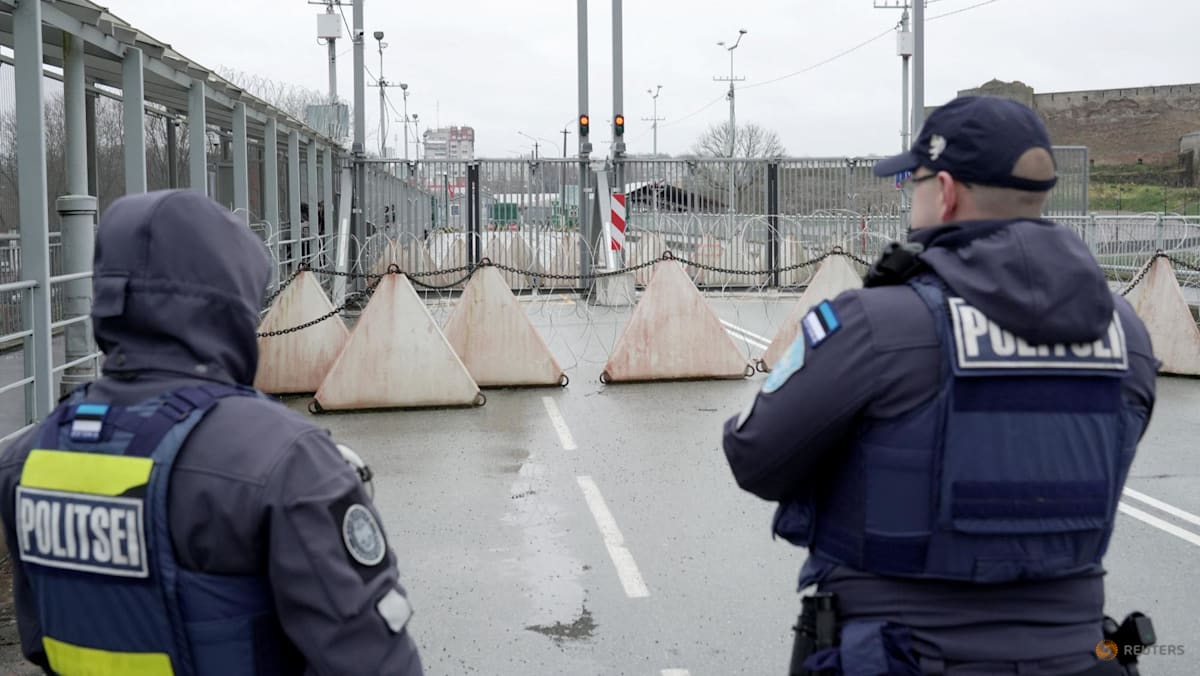
Estonia will close its three remaining road border crossings with Russia from Dec 1 for at least six months, citing security concerns and a series of alleged Russian-backed arson attempts targeting defence companies.
The decision follows two attempted arson attacks this year. Estonia blamed Moscow for an August fire at Tallinn-based Milrem Robotics, which manufactures unmanned vehicles, some deployed to Ukraine. Authorities said they thwarted an attempted arson attack on Threod Systems on Nov 14 and attributed it to Russia's GRU military intelligence agency. Moscow has denied involvement and accused Tallinn of trying to “erect a new Iron Curtain”, vowing to respond with political and diplomatic measures.
The border decision comes amid wider concerns about security along Estonia's roughly 340km frontier with Russia. In October 2025, Estonia shut the road through the Saatse Boot after armed Russian military personnel were spotted nearby. The roughly 115ha strip of Russian territory cuts across about 1km of the Varska-Ulitina road in southeastern Estonia. Bypass roads were built so motorists could avoid the area.
Before the route closed, drivers could cross the Saatse Boot without a visa or border checks, provided they did not stop. A breakdown meant remaining in the vehicle and contacting Estonian border guards; stepping onto Russian soil could constitute illegal entry.
Since Russia launched its full-scale invasion of Ukraine in February 2022, Estonia has increased efforts to secure its frontier. Renet Merdikes, head of the Saatse Border Guard Station, said: “We've made changes to our training systems just to be more ready if some sort of crisis happens here.” His team patrols nearly a third of the border.
Residents near Saatse, more than 280km from Tallinn, frequently hear Russian military exercises across the border. Estonian guards also monitor what officials describe as less visible threats, including surveillance drones being jammed almost daily. The article describes cyberattacks, disinformation, sabotage and electronic interference as forms of hybrid warfare.
Estonian Foreign Minister Margus Tsahkna warned that Russia could intensify provocations to test NATO. “We will probably see something more serious like terror attacks or sabotage, anything against NATO to test and push the lines,” he said. “Estonia is pretty resilient about that, but my question is whether the other capitals in Europe are.”
During a visit to Estonia last month, NATO Secretary General Mark Rutte said: “We will react when we need to react. The most important thing is to … stay calm, carry on, invest in defence,” and reiterated the need to ensure Ukraine receives the military assistance it requires.
Reports of suspicious drone activity near airports, military installations and other critical infrastructure have prompted governments across Europe to strengthen counter-drone capabilities. German authorities have linked Russia to suspected incidents at Leipzig/Halle Airport. In August, a drone carrying an explosive device was found near Ukrainian cargo planes; it reportedly did not explode because of a faulty detonator. Investigators also suspected a second drone collided with a nearby cargo aircraft, and a third was reportedly found near the airport about 10 days later. Russian President Vladimir Putin denied the allegations and accused Germany of planting evidence.
Netherlands-based Robin Radar Systems is working with Ukrainian forces and several NATO allies to counter drone threats. “We've seen a lot of unknown drone movements close to our coast, airports (and) some military air bases,” said chief commercial officer Marcel Verdonk. “That increased threat has (made) all of us realise that we need to invest in counter-drone equipment to detect what's happening and also figure out ways to deal with it.”
Estonia has called for a tougher, coordinated European response to Russian hybrid threats. Merdikes said Estonian border guards have been sent to help neighbouring Latvia respond to what authorities describe as hybrid attacks involving Russian ally Belarus.
Tallinn is also supporting an EU-wide ban on Russian tourist visas, arguing that travel poses security risks. France, Italy and Spain are among the countries that continue to issue visas to eligible Russian travellers. Under the Schengen system, a visa issued by one member state can generally allow travel in other participating countries, subject to applicable entry restrictions.
“It's not only a moral question on how you can let Russians go shopping in Paris when Ukrainians are dying every day,” Estonian Interior Minister Igor Taro told CNA. “It's also a question about security because (Russia is) using these tourists – their citizens – for hybrid attacks.”
Taro said Putin had misjudged Ukraine's capacity and determination to defend itself, as well as the international support it would receive, and warned that Moscow could make a similar mistake again. “He (Putin) miscalculated by a large scale. He thought Ukraine had nothing to fight with – no resources, no army. He thought the Ukrainians were not willing to fight. (Another) miscalculation was that he thought that no one would help,” Taro said.
“The biggest risk is that they (the Russians) can do it again. Obviously, Putin is not getting the real information from the frontline … or they would be out already. That's why they are still hoping to achieve something.”