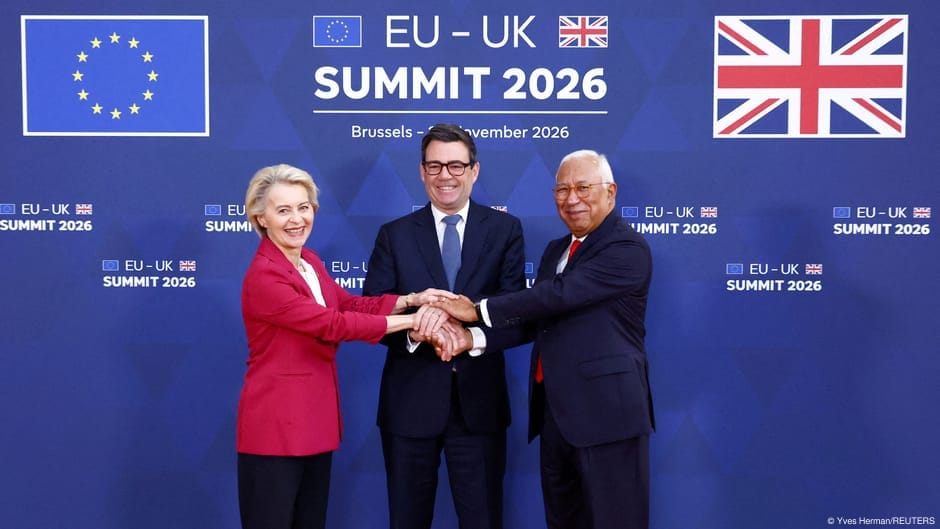
EU and UK officials were set to announce agreements on trade and youth mobility at a summit in Brussels on Friday, in what could be an initial step toward rebuilding ties a decade after Britain voted to leave the EU.
The proposed agreements cover simplifying food exports by reducing red tape, linking UK and EU emissions-trading systems, and creating a “youth experience scheme” to let young people travel between the UK and EU for work and study without existing visa requirements. They aim to facilitate British food exports to Europe and youth mobility.
The EU made the agreements’ implementation conditional on a deal to reduce tuition fees for EU students at British universities to the level paid by British students. The two sides aim to reach an agreement on fees within the next six months, according to DPA, which reported that the initiatives had been agreed shortly before the summit, citing EU diplomats and officials.
A British government spokesperson told AP news agency that “the deal is done,” adding that details would be published in a joint statement later.
UK Prime Minister Andy Burnham said as he arrived in Brussels: “Britain and Europe share values, interests and a global neighborhood. In a more dangerous world, we are stronger together. A closer partnership with Europe is good for working people, good for Britain and good for Europe.”
Burnham has said Britain should consider different options for its future relationship with the EU, including rejoining the bloc. In September, he said he would seek political consensus on the relationship and suggested he could campaign for Britain to return to the EU at the next election. On Monday, he called it the “obvious truth” that Britain had lost more than it had gained from Brexit.
YouGov regularly tracks whether people think the UK was right or wrong to vote to leave the EU. Since mid-2022, a majority of those surveyed have said Britain was wrong to leave. In September, the “Bregret” camp rose to 60%, its highest level ever.