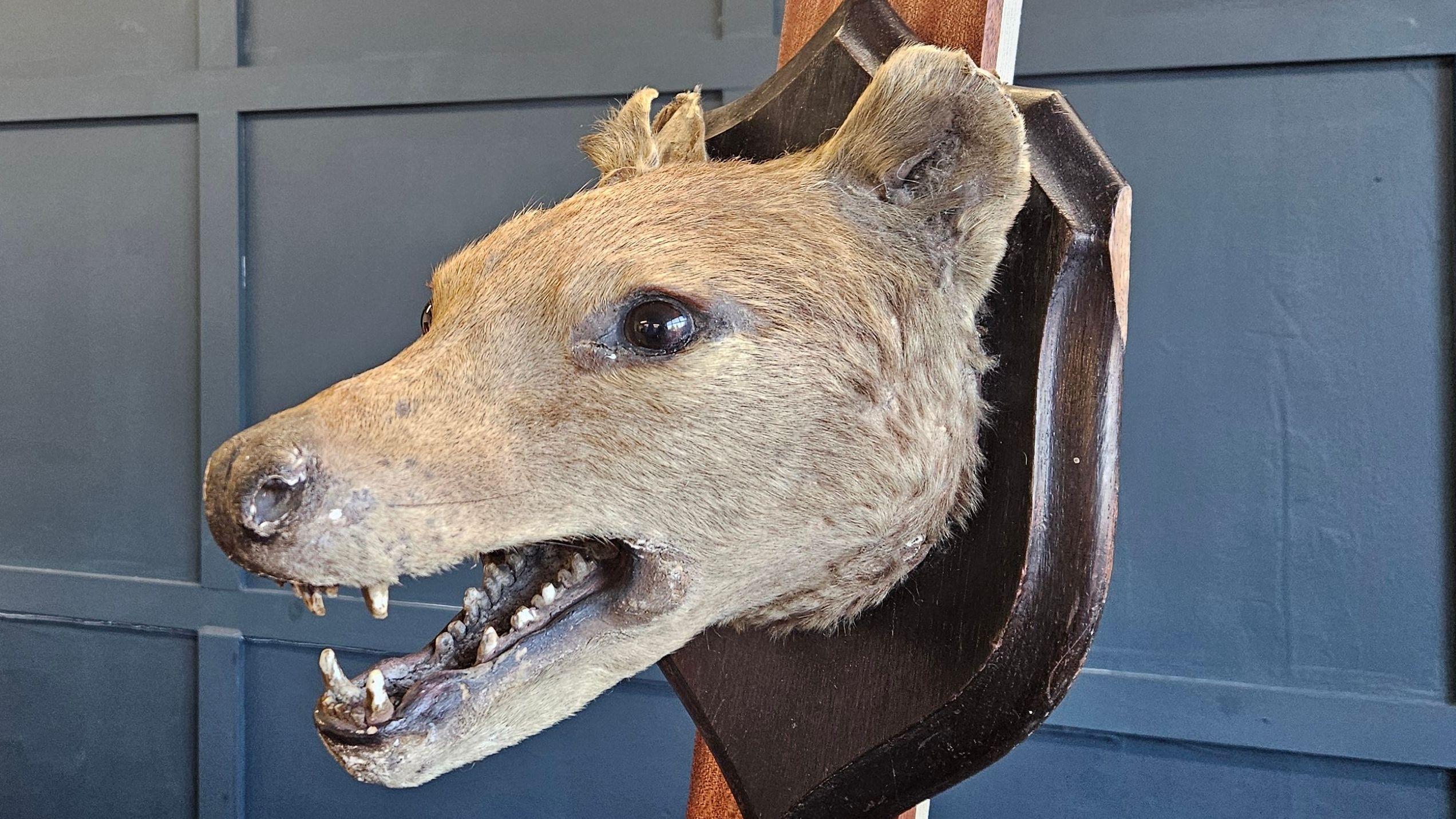
The mounted head of an extinct Tasmanian tiger, kept under a bed for years, sold for £170,000 at auction in Bath, far above its estimate of £30,000 to £50,000.
Nicknamed Trevor, the thylacine specimen was brought out of storage after its owner saw a similar example make the news in August and realised its rarity. It is described as one of only three known taxidermy heads in existence and has been added to the International Thylacine Specimen Database (ITSD).
Auctioneer Andrew Stowe of Auctioneum called the sale a “truly ground-breaking result” and said: “This isn't just about the auction result - we have made history.” He described the head as “probably the most important object” the auction house would ever sell.
The auction house said the lot drew bidders from “all over the world”. The winning bidder, who does not wish to be identified, beat prospective buyers from the UK, Australia, America and the Netherlands.
Stowe said: “This specimen is the only example to have ever been offered for sale correctly.” He added: “This incredible result sets the precedent for these specimens.”
The sale came weeks after a Victorian taxidermy head, mistakenly thought to be a fox, was recognised by bidders as a thylacine and sold for tens of thousands of pounds, making international news. Stowe said it was “extraordinary” and “phenomenal” for a second head to be “unearthed” and passed to the auction house so soon afterwards.
The specimen is thought to have been shot by a farmer in Sheffield, Tasmania, at the beginning of the 1900s, then brought to the UK in 1905.
The thylacine was a wolf-like carnivorous marsupial about the size of a large dog. It once roamed the forests of Australia, New Guinea and Tasmania. Hunted to extinction, the last known Tasmanian tiger died in Hobart Zoo in 1936.
Stowe said the “amazing journey from discovery to sale” involved “weeks of research, x-rays and collaboration with scientists as well as some good old-fashioned detective work”.
He said: “In 200 years' time, when scientists are still researching these amazing lost creatures, this specimen and its remarkable story will be there.
“That's special - that's bigger than anything.”
Stowe said it had been a “complete honour and a privilege to handle such a fascinating and rare” piece of natural history. “It has been the most thrilling rollercoaster journey of my career and one I shall never forget.”