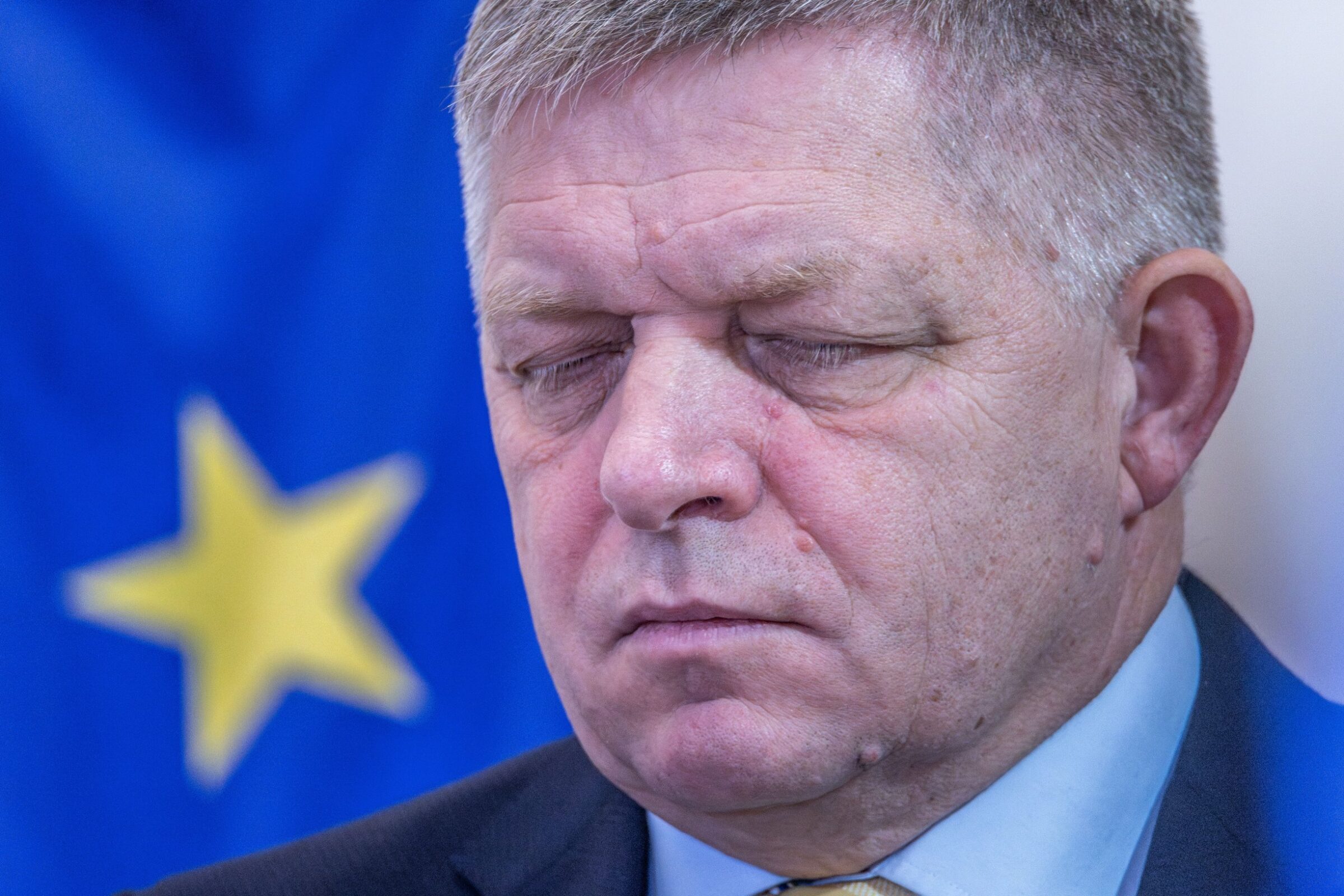
Slovak Prime Minister Robert Fico often arrives late at EU gatherings, leaves early and keeps apart from other leaders, according to Slovak and EU diplomats. At summits, he has retreated to a private “national room” while other leaders held informal talks, they said.
At the 12 November European Political Community summit in Dublin, leaders sought to agree who would represent them in talks on peace in Ukraine. Ukrainian President Volodymyr Zelensky and Canadian Prime Minister Mark Carney also attended.
Many of the more than 50 national leaders arrived well before the summit began. Moldovan President Maia Sandu was there more than an hour early, as were German Chancellor Friedrich Merz, Czech Prime Minister Andrej Babiš and European Commission President Ursula von der Leyen. Footage showed informal conversations starting well before the official talks.
Italian Prime Minister Giorgia Meloni was delayed in Rome by an emergency meeting prompted by threats sent to more than 6,000 Italian schools. Fico was also absent. The previous day, at a press conference, he had told Merz and Germany he would not “shit himself” over their “blackmail” about support for Ukraine.
The government aircraft carrying Fico left Bratislava hours later than scheduled. His office did not explain the delay. Speaking to reporters on board, Fico said: “I needed to sort out an issue with my eye, so we left a few hours later.”
The Dublin gathering was not the first international event Fico left early. In mid-October, he departed an EU summit in Brussels before it ended and flew to Serbia to give his personal support to then-president Aleksandar Vučić at an election rally in Novi Sad. Czech Prime Minister Babiš represented him during parts of the summit discussion.
“In the vast majority of cases, national leaders leave summits early only for exceptional reasons. You do not leave simply to attend a political rally,” a veteran Slovak diplomat said. Reports that Fico has little interest in European and foreign policy have circulated since his first four-year term began in 2006.
Fico was initially cautiously Eurosceptic but sought to remain aligned with the Party of European Socialists (PES). He later embraced anti-immigration politics, while in 2016 and 2017 also calling for Slovakia to join the EU’s core group of member states seeking faster and closer integration.
His foreign policy took a markedly pro-Russian turn in 2023, when he returned to government after three and a half years in opposition. His language towards foreign partners also became markedly more vulgar, including a reference to the current German army as the “Wehrmacht”.