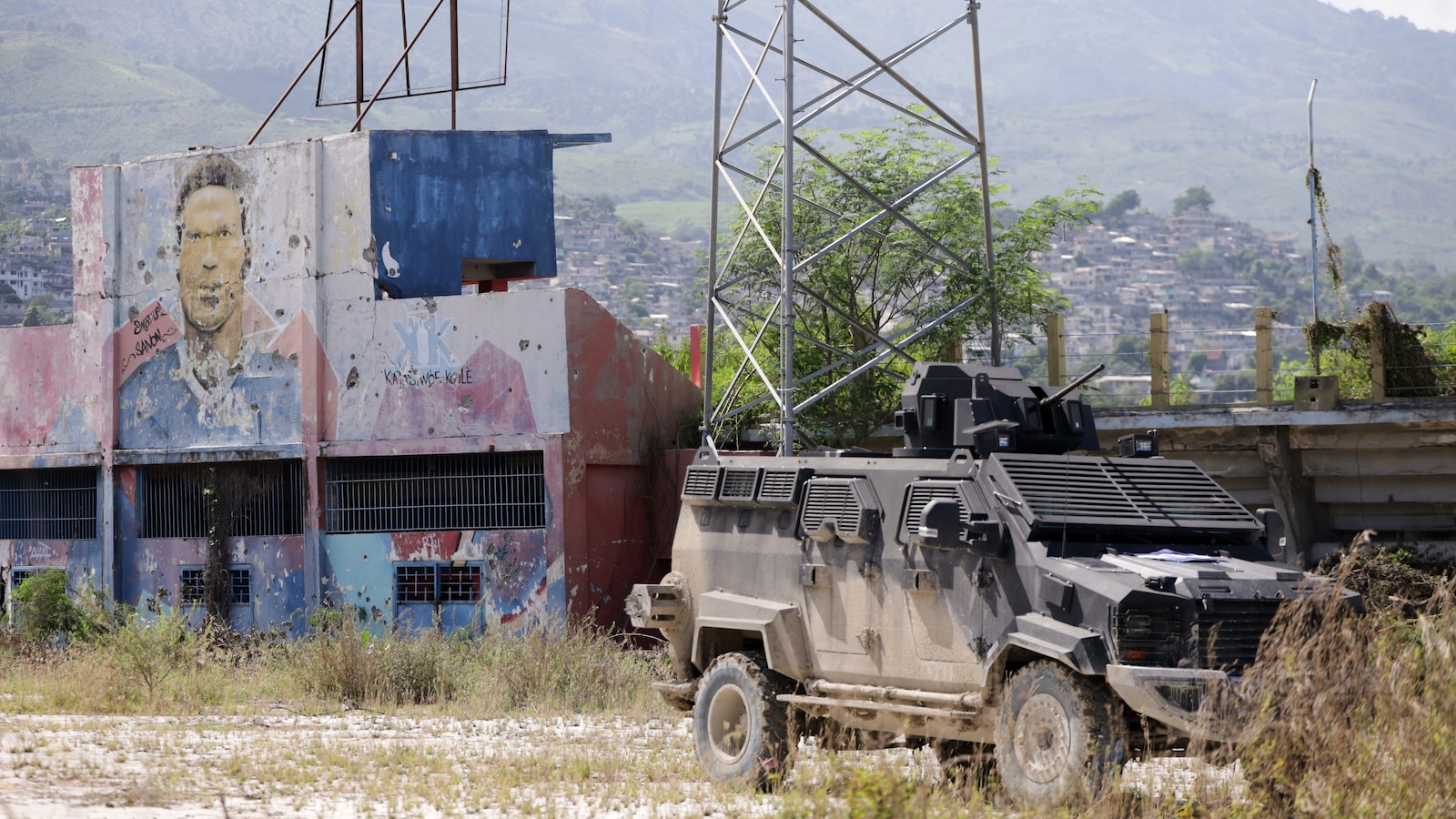
Haiti announced an agreement with El Salvador on Friday to build three prisons, as the countries deepen cooperation following El Salvador’s deployment of troops to fight gangs in Haiti.
Haitian Justice and Public Security Minister Patrick Pélissier announced the agreement after an official mission to El Salvador. He said the first prison would be launched soon and that the prime minister had ordered the project expedited. A Salvadoran company will build the three prisons in collaboration with a Haitian firm.
Pélissier did not say how much the projects would cost, whether El Salvador would help finance them or whether it would have a management role.
Gangs control an estimated 70% of Haiti’s capital and swaths of the country’s central region. Haiti has struggled to find suitable facilities for people arrested after powerful gangs raided its two largest prisons in 2024 and freed thousands of inmates. The country’s prisons have long been severely overcrowded; human rights experts have warned that prisoners sleep standing, and hundreds have died in recent years.
During his visit to El Salvador for an international conference, Pélissier praised the country’s CECOT maximum-security prison. El Salvador has been under a state of exception since 2022, during which more than 90,000 people have been imprisoned without access to family visits. The United States has also deported Venezuelans and Salvadorans to CECOT; after their release, they denounced torture there.
“Once you enter, there is no hope of ever seeing the outside world again,” Pélissier said.
The announcement came as El Salvador’s armed forces said two of its soldiers were killed and two others injured in a detonation while handling explosives at a camp in Haiti. Salvadoran President Nayib Bukele sent troops to Haiti, where many Haitians have welcomed the deployment.
The armed forces said on X: “We express our deepest condolences and solidarity with the families of those who died. We stand with their loved ones during this difficult time,” The military said the injured soldiers were receiving medical care but did not disclose their condition.
The soldiers killed were among 2,500 Salvadoran troops deployed to Haiti in an operation to rescue four technicians who disappeared on Oct. 18, 2026, after coming under fire from gangs in Croix-des-Bouquets, northeast of Port-au-Prince.
The missing technicians were part of the gang suppression force in Haiti, an international force authorized by the U.N. Security Council in October 2025. It is authorized to deploy 5,500 security personnel to dismantle and neutralize Haitian armed gangs, protect infrastructure and facilitate humanitarian access in collaboration with the Haitian National Police. It replaced the Kenya-led multinational security support mission and has not yet deployed all 5,500 personnel.
The gang suppression force is authorized to arrest suspected criminals, unlike members of the previous Kenya-led mission. The additional troops sent by Bukele are not part of the U.N.-backed force.
Some Haitians have celebrated Bukele’s decision to send troops to fight gangs, but experts have said the move is a political gamble for the leader running for his third term and poses risks to civilians.
Haiti has had no elected government since President Jovenel Moïse was assassinated in 2021. Elections are set to take place next year.