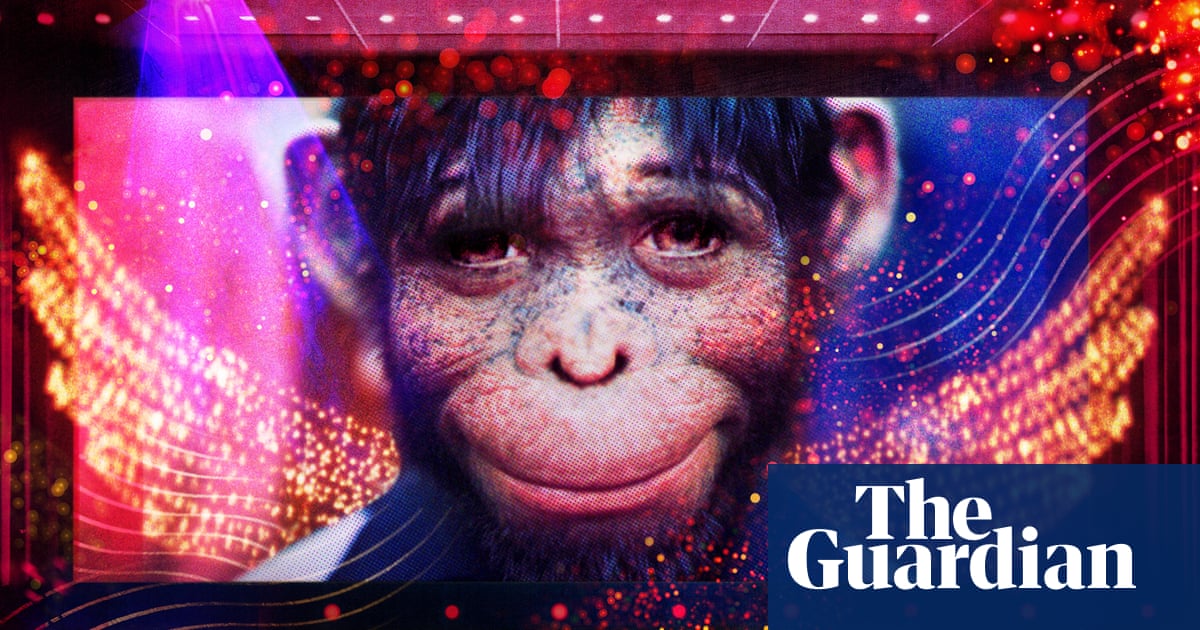
Dr Robert Mote says the 2024 film Better Man, in which Robbie Williams is portrayed by a CGI chimp, helped him understand his own experiences of deafness, trauma and recovery. He watched the film with his wife, initially sceptical about its unusual casting, and found parallels with his life.
Mote was born two months premature in Winnipeg, Canada, in 1961, with severe hearing loss in both ears. It was not diagnosed until he was seven. After his family moved to Woking, Surrey, in 1969, his father left and his mother developed alcoholism. Mote says he received little support for his deafness and was bullied at school by children and teachers. Reading, lip-reading and observing people helped him cope.
The film’s depiction of young Robbie Williams reminded Mote of his first friend, Nick, who encouraged him as he dreamed of becoming an engineer. Mote went on to achieve that ambition. Williams’s grandmother also brought back memories of Mote’s paternal grandmother, whom he visited every Sunday from the ages of 13 to 18. They played Scrabble and talked. “Aaah, Bobbie!” she would greet him, a memory that made him tearful in the cinema.
Mote’s mother had called him Bobbie until he was four, when she left him at the Montreal Neurological Institute for two weeks of investigations into his responses, large head and slow development. He remembers screaming as she left and feeling abandoned. Afterward, she said she had lost her Bobbie; he became Bobby. At 16, he left school and became Bob. He drove a forklift to pay for college, then studied engineering at university.
At 26, a week into a PhD that he later completed, Mote was a passenger in a Ford Granada that spun into a gate. The other people in the car were unhurt. He lost his memory, both hearing aids and the hearing in his left ear. Weeks later, a doctor told him the hearing loss was permanent.
On the drive home to Woking, Mote says he became so angry that he was tempted to veer his car sideways. He recalled his mother’s advice to wait 24 hours when he was inconsolable, slowed down and made it home. Years later, watching Williams’s anger after Take That sacked him, and his consideration of a similarly drastic decision, Mote says he wept.
Mote met his wife, Birgitte, in Denmark in 1992. They married and his work took them to the Netherlands and then Canada. He received his first cochlear implant in Ottawa in 2011 and says it was the first time he could hear emotion in voices. A year later, Birgitte was diagnosed with breast cancer. The family, including their three young children, moved to the UK in 2013 to be near relatives.
Mote says a four-hour daily commute made him feel increasingly distant from his wife and children. He began gambling on his iPhone and struggled to ask for help. After Birgitte discovered the gambling, he started counselling and never gambled again. Better Man, he says, helped him understand what he had described as an “addictive streak” as rooted in trauma. “Like Robbie, I had made my peace with my mother and my father, but not with myself.”
Mote and his family now live in Denmark. A second cochlear implant means he hears 95% in both ears, he says. The film’s closing scene, in which Williams sings to a crowd and sees his younger selves smiling back, inspired Mote to show compassion to his younger selves: “to tell Bobbie it’s OK, to hug Bobby and tell him he’s brave, to marvel at Bob’s confidence.” He says he is grateful to his wife, children and Williams.
In the UK, support for problem gambling is available through the NHS National Problem Gambling Clinic on 020 7381 7722 or GamCare on 0808 8020 133. In the US, call the National Council on Problem Gambling on 1-800-MY-RESET. In Australia, Gambling Help online is available on 1800 858 858 and the National Debt helpline is at 1800 007 007.