How Ghana’s new license to sell sustainable timber improves institutions & collaboration (analysis)
By Chris Beeko ·
By Chris Beeko. Originally published by Mongabay.
- Ghana is the first country in Africa to be awarded a Forest Law Enforcement, Governance and Trade license, which is seen as the “gold standard” in the sustainable timber trade and allows it to sell lumber to the EU.
- To achieve this milestone, representatives of Ghana’s government, industry and civil society needed to establish new ways of working together.
- “A stakeholder process that began with significant differences produced what became known informally as ‘Team Ghana’ at international forest meetings. For me, this remains one of the most important outcomes of the process,” a new analysis explains.
- This post is an analysis. The views expressed are those of the author, not necessarily of Mongabay.
When Ghana began its Voluntary Partnership Agreement (VPA) process with the European Union, the attraction was clear. Europe is an important market for Ghanaian timber, international expectations around its legality were changing, and the VPA offered both market access and support for strengthening national forest governance.
After a 16-year journey, last year Ghana became the first African country to earn a Forest Law Enforcement, Governance and Trade (FLEGT) license.
In a Mongabay commentary published last year, Fred Pearce welcomed that achievement while posing an uncomfortable question: Could Ghana also be the last? With the future direction of FLEGT and the VPA model uncertain, he asked whether the long and difficult process that produced significant change in Ghana might fail to provide a pathway for others.
Having been involved in this VPA process from negotiation through implementation, I believe Ghana’s experience suggests a broader way of considering that question.
Whether or not other nations follow Ghana’s lead to their own FLEGT licenses, the process changed the way the nation’s forest sector makes policy, regulates timber, verifies legality and brings government, industry and civil society into the same governance system. Those changes now exist within Ghana’s national institutions, and in my view, this represents the most important legacy of the process.
International framework becomes national process
One of the first lessons from Ghana is that externally designed frameworks cannot simply be transferred into national systems. When the VPA was signed, the original expectations around implementation proved optimistic. Building a Timber Legality Assurance System (TLAS) required interpreting the requirements through the nation’s laws, institutions, technical systems, forest sector and political economy. That is a necessary process, and one which takes time.
There is an understandable tendency in international programs to view long implementation periods as evidence that progress has stalled, but Ghana’s experience suggests greater caution is needed. National stakeholders need to understand a new concept, determine how it relates to existing systems, negotiate changes, build institutions, develop technical capacity and eventually take ownership of what began as an externally driven initiative. This is particularly important when the objective is transformation rather than delivery of a short-term project.
In Ghana, implementation required changes in regulatory practice, new institutional arrangements and the integration of systems that had previously operated separately: Forest-sector agencies had to work more closely together, and statutory legality requirements had to be translated into a common national standard and practical verification protocols. Timber tracking, legality verification, licensing and independent oversight all had to function as parts of one national system.
The resulting Ghana Legality Assurance System, or GhLAS, has value beyond the issuance of a FLEGT license, because it strengthens the way legality is applied and verified throughout the timber supply chain.
Process changing policymaking
A second lesson was less expected. Before the VPA, the nation’s government, industry and civil society did not always approach forest-policy debates from positions of trust, and some long-running issues had become entrenched. Civil society performed an important watchdog role as government defended its policy space, while the private sector had its own established channels for engaging government.
The VPA changed the conditions under which those groups interacted. Consensus was required and each stakeholder group also had clear incentives for the successful negotiation and implementation of the VPA. For government, there were governance and trade objectives. For industry, access to an important international market mattered, and civil society saw opportunities to strengthen accountability, participation and representation of forest communities.
While this did not remove disagreement, it did create a platform through which disagreements could be addressed and resolved.
For the first time, competing positions on issues that might previously have been debated through press statements or private meetings had to be brought to a common table. Government had to respond differently to civil-society concerns, industry had to present and defend its position in the presence of other stakeholders, and civil society had to engage directly in the process of finding workable policy solutions.
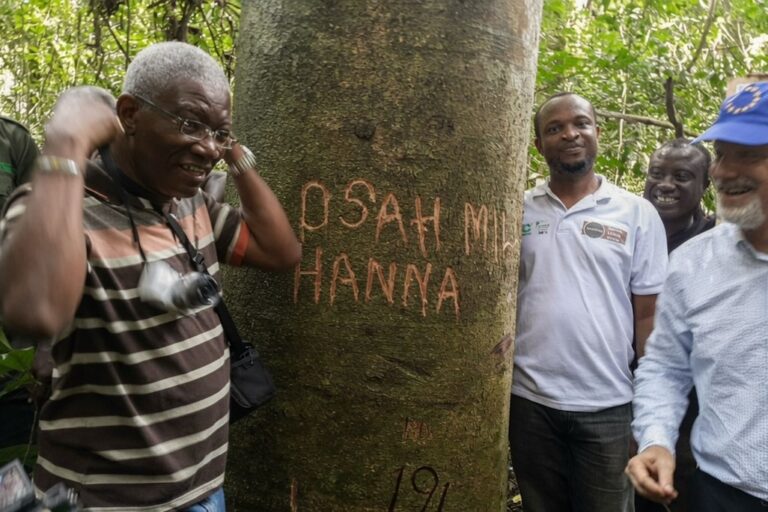
Over time, relationships changed. A stakeholder process that began with significant differences produced what became known informally as “Team Ghana” at international forest meetings. For me, this remains one of the most important outcomes of the process.
Ghana’s experience showed that stakeholders previously seen as holding irreconcilable positions can reach agreement when there is sufficient incentive to stay at the table to reach policy closure. This is a lesson not restricted to forestry.
National system, greater value
Fred Pearce also rightly drew attention to the wider environmental importance of Ghana’s achievement: Legality assurance alone cannot address every pressure on forests. Ghana’s forests face challenges extending well beyond the formal timber sector, including agricultural expansion and other drivers of forest loss.
But effective forest protection depends in part on a functioning system of governance. Laws must be comprehensible and enforceable, and be supported by reliable information.
Not only do forest products need to be traceable, but operators need to know what compliance is required, and why. Civil society needs space to scrutinize implementation just as regulators need systems capable of identifying whether rules are being followed.
The VPA process strengthened these foundations. It also helped smaller and less-resourced timber producers respond to changing market requirements. A nationally operated system can spread the cost and capacity of legality assurance much more widely than approaches that depend entirely on individual companies developing their own systems.
The national system also provides portals that meet the information and transaction needs of all stakeholders. The civil society plug-in portal gives the public access to forest management information. The industry portal enables users to view and submit transaction data for legal and regulatory purposes, while the EU market can access electronic licenses once they are issued in Ghana.
The process therefore has great value regardless of the purpose for which it was originally designed. Ghana’s timber tracking and legality verification systems were already providing evidence of legal compliance to buyers undertaking due diligence before licensing formally began.
This is why I would be cautious about judging the value of the VPA only by the number of licenses ultimately issued.
National systems need continuous improvement
There is a final lesson from Ghana that is particularly important now: National governance systems should not be understood as finished products. The legal definition developed through Ghana’s VPA process has itself been revisited as stakeholders considered deeper reforms. Institutions have evolved, technology has changed, and once systems begin operating, new weaknesses become visible. This is an inherent part of operating and improving a national system.
A national system provides a platform through which improvements can continue. Its credibility depends on the ability to identify weaknesses, respond to them, and maintain stakeholder confidence over time.
Seen in this way, the achievement of Ghana’s VPA journey is not the creation of a perfect forest governance system. It is the creation of national capacity and an institutional basis for continuous improvement.
This brings me back to Fred Pearce’s question. If the model for international cooperation on timber legality eventually looks different than the VPA process Ghana began 16 years ago, the experience should still be studied carefully. Countries will have different laws, institutions and political economies, and the Ghanaian experience will need to be adapted to those national realities.
The more transferable lesson lies in the underlying approach:
- Create the conditions for national stakeholders to reach agreement,
- build systems around national laws and institutions,
- connect market incentives to governance reform,
- invest enough time for national ownership to develop,
- and treat implementation as a process of continuous improvement.
Ghana’s license is an important milestone, but the deeper achievement is the governance journey that made it possible. In documenting that journey in a seven-part series, I’ve been examining why Ghana entered the VPA process, how it changed multi-stakeholder policymaking, how commitment was sustained over all those years, and how the national legality-assurance system was eventually built.
For countries, policymakers and practitioners considering what comes next in forest governance, these experiences may prove at least as important as the license itself.
As a former director at the Forestry Commission and as Ghana’s VPA focal point, Chris Beeko led the development of the nation’s timber legality assurance and traceability systems (GhLAS).
Banner image: Forestry officials and European trade representatives in Sefwi Wiawso, Ghana. Image courtesy of European Forest Institute via Flickr.
See related coverage:
Ghana repeals legislation that opened forest reserves to mining
Heavy rains during critical period of cacao cultivation hit Ghana’s yields
Republished from Mongabay under CC BY-ND 4.0. Text retained without substantive changes.
Originally published by Mongabay