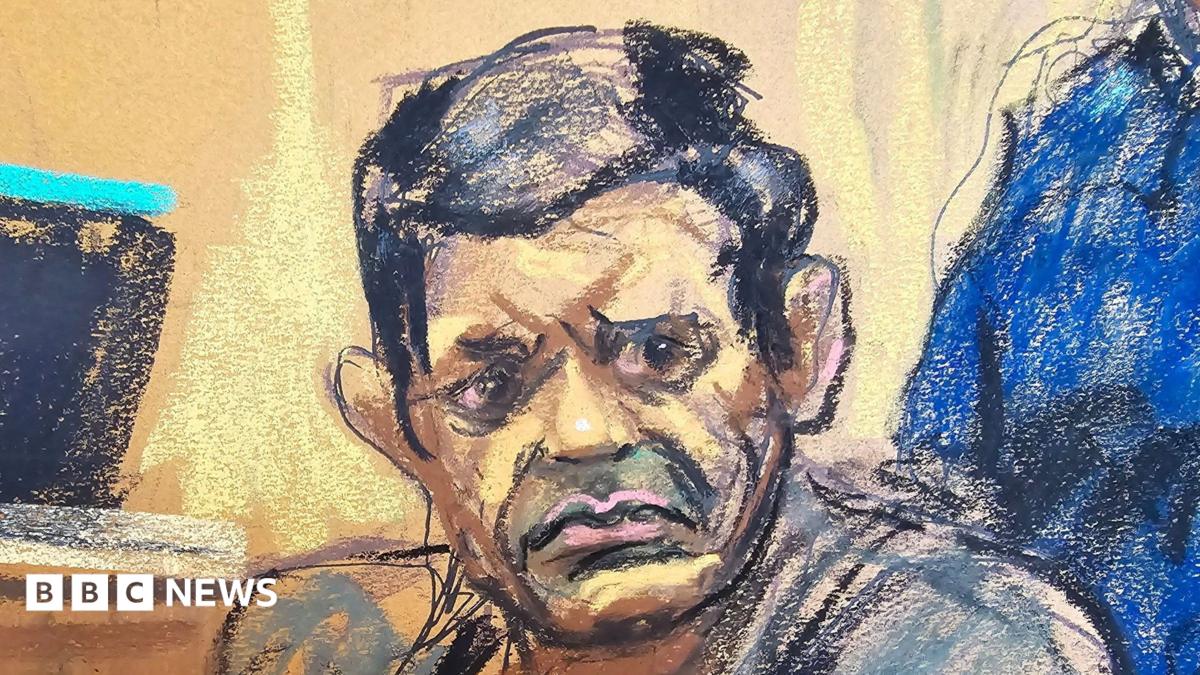
A federal judge sentenced Nikhil Gupta to 235 months in prison — more than 19 years — for his role in a plot to kill Gurpatwant Singh Pannun, a US-based Sikh separatist leader. The judge said Friday that Gupta likely would be deported or removed after completing his sentence.
Gupta, an Indian national, pleaded guilty in February to murder-for-hire, conspiracy to commit murder-for-hire and conspiracy to commit money laundering.
US prosecutors alleged that Gupta was recruited in May 2023 by Vikash Yadav, an Indian intelligence officer, to assassinate Pannun. Prosecutors said Yadav provided Gupta with Pannun’s New York address and information about his daily activities.
Prosecutors said Gupta contacted someone to arrange the killing at his handler’s direction, but that person was a US government informant. The informant introduced Gupta to a supposed “hitman” who was an undercover Drug Enforcement Agency officer.
Gupta was arrested at an airport in Prague, Czech Republic, in June 2023 and extradited to the US. He had been held at a New York jail while awaiting sentencing at a Manhattan court.
India has denied involvement. Its government has accused Pannun of being a terrorist; Pannun denies the accusation. He is an American citizen and spokesman for Sikhs for Justice (SFJ), a US-based Sikh separatist group that has been banned in India since 2019.
Pannun previously told the BBC: “Nikhil Gupta's guilty plea was judicial confirmation that India's Modi government orchestrated a structured murder-for-hire assassination plot on American soil”.
Then-US attorney Jay Clayton said in a statement after Gupta’s guilty plea was announced: “He thought that from outside this country he could kill someone in it without consequence, simply for exercising their American right to free speech”.
Narinder Singh Randhawa, a Sikh separatist and successor of Hardeep Singh Nijjar as temple leader in Surrey, British Columbia, told the BBC the sentence marked the “first time we see justice” against what he described as historic and systemic persecution of Sikhs by the Indian government in India and abroad.
Inderjeet Gosal, a Sikh separatist advocate based in Ontario, called the sentencing “a big community event”. “It's for all the community to finally witness someone getting caught red-handed.”
The case brought renewed scrutiny to the 2023 killing of Sikh separatist leader Hardeep Singh Nijjar in British Columbia, which heightened tensions between India and Canada. In September 2023, then-Canadian Prime Minister Justin Trudeau said there were “credible allegations potentially linking” India to Nijjar’s murder. India has denied involvement in his death.
Nijjar, an advocate for Khalistan and an associate of Pannun’s, was shot and killed by two assailants outside a Sikh temple in British Columbia. US prosecutors allege Gupta told the undercover officer the day after Nijjar’s murder that Nijjar “was also the target” and “we have so many targets.”
India opposed the Khalistan movement, which advocates an independent homeland for Sikhs. Sikhs make up about 2% of India’s population, and some groups have long called for a separate homeland. India crushed a violent armed Sikh insurgency seeking Khalistan in the 1980s and 1990s. The movement has little support in India now, although some members of the Sikh diaspora continue to advocate for it.
Pannun faces serious charges in India, including charges connected to terrorism, which he denies. He has said he is an activist who believes in Khalistan.