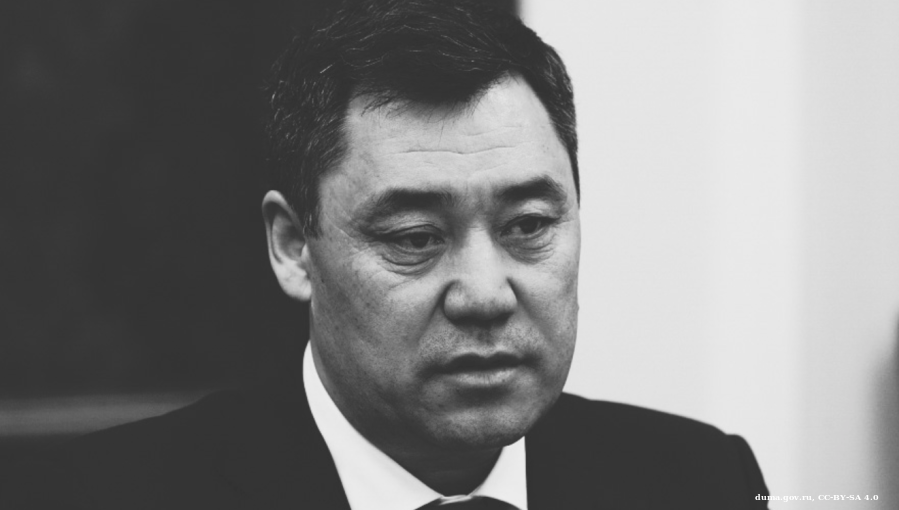
Kyrgyzstan’s presidential election is scheduled for January 27, 2027, and 11 people have filed documents with the Central Election Commission (CEC) declaring their intention to run. President Sadyr Japarov is widely expected to win re-election, but political upheaval this year and his warning of possible unrest have raised questions about stability ahead of the vote.
By December 8, each prospective candidate must collect signatures from at least 30,000 eligible voters. For the first time, signatures can be submitted online through a government website; paper signatures are also allowed. The CEC will verify the signatures and documents, and campaigning is due to begin on December 23 for candidates who meet the requirements.
As of November 19, Japarov, Syymyk Zhapykeyev, Iskhak Masaliyev and Ayman Kasenov had each collected the required 30,000 signatures. Japarov reportedly gathered 40,000 in less than 24 hours and soon reached the maximum of 60,000. Candidates must also pay a non-refundable deposit of one million som ($11,435).
The 11 hopefuls first had to pass a Kyrgyz-language test. Self-nomination is among the new features of the election, and all but one candidate, Mambetzhunus Abylov, are officially running as independents. The United Democratic Movement selected Abylov as its candidate. The CEC’s checks could still disqualify some of the hopefuls, as signature verification has done in previous elections.
Among the candidates are three figures who were members of the Committee to Save Kempir-Abad: Masaliyev, Klara Sooronkulova and Abylov. The committee was formed in October 2022 in response to government plans to cede the Kempir-Abad reservoir to Uzbekistan as part of a final border agreement. Authorities detained more than two dozen committee members, including Sooronkulova and Abylov, on charges of planning mass unrest. Masaliyev was not detained because of his immunity as an MP. In June 2024, the 22 people still facing charges were acquitted.
Masaliyev, 66, has served as a parliament deputy for most of this century and led Kyrgyzstan’s Communist Party from 2005 to 2010. Sooronkulova, 57, served on the CEC and as a judge of the Constitutional Chamber of the Supreme Court, and helped found the Reforma party in 2020. She is the only female nominee. Abylov, 72, was CEC chairman and Minister for Emergency Situations, and later served as Bishkek’s ambassador to Malaysia and Turkey. Sooronkulova and Kasenov also ran against Japarov in 2021.
The other nominees are Kasenov, a member of the Russian-Kyrgyz Development Fund’s management board; Azamat Esenbekov, a former Social Fund and Finance Ministry official; Zhapykeyev, a prosecutor’s office employee and former Financial Police chief; Baktybek Kalmatov, an MP from Ata-Meken in 2010-2015; and Bakytbek Adylov, mayor of Jalal-Abad, now called Manas, in 2011-2012. The remaining candidates are businessmen Akai Kadyrov and Amur Ayba Meder.
A major political shock came in February, when Japarov dismissed Kamchybek Tashiyev as head of the State Committee for National Security. Japarov said the decision was made “to prevent a split in society, including between government structures.” The two had been long-time friends and came to power together after protests following the October 4, 2020 parliamentary elections brought down President Sooronbai Jeenbekov’s government.
Tashiyev was later suspected of plotting to overthrow Japarov. He and seven others were convicted in July. In September, an appeal court reduced the offence to interfering with electoral rights, and their four-year prison sentences were replaced with three years of probation. All those convicted remain in the country.
On November 12, Japarov warned of information about plans to foment inter-ethnic unrest between Kyrgyz and Uzbeks before the election. “For now, they are only talking about it,” he said. “However, there is a possibility that these provocative plans could be put into action.” The article says the alleged threat could provide a reason to tighten security, potentially making it harder to protest against Japarov or his policies during the campaign period.
Japarov won nearly 80% of the vote in 2021, when fewer than 40% of eligible voters cast ballots. Of 3.56mn eligible voters, 1.105mn voted for him. The article identifies turnout as a possible indicator of his support, with voter apathy potentially posing a challenge despite his expected victory.