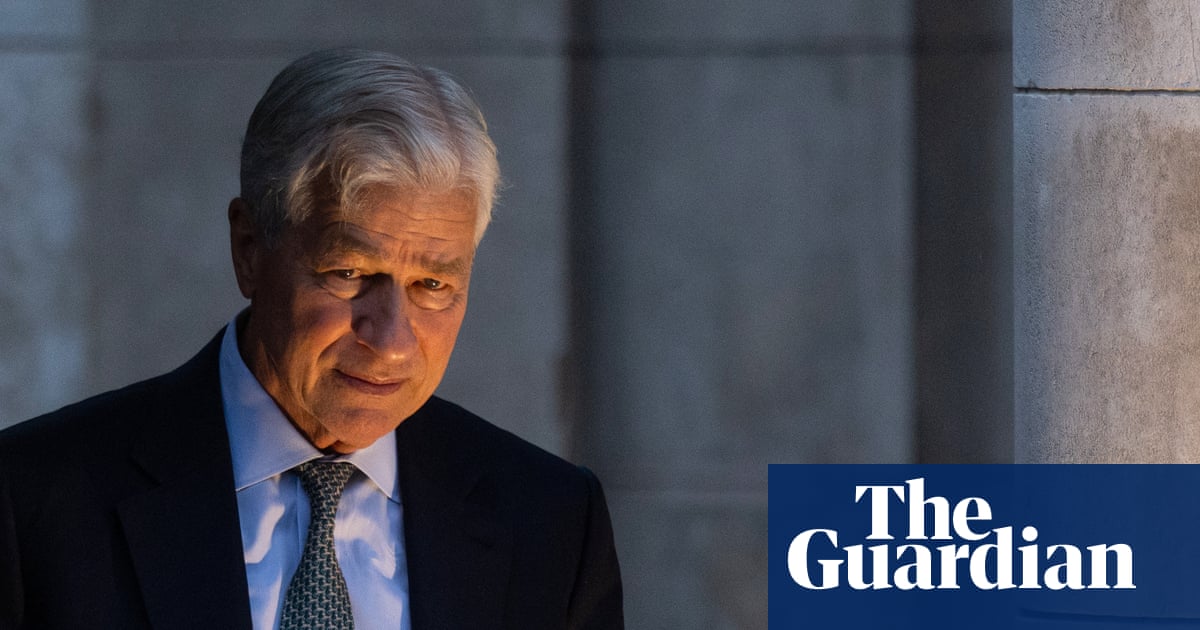
JP Morgan chief executive Jamie Dimon said he would seek ways to offset the UK tax increase on banks, describing it as unfair.
Speaking at an event in London on Thursday, Dimon said he would try to claw back the increase and was “setting an example so that [governments] understand the trade-offs of these unfair penalties”.
The bank surcharge is due to rise from 3% to 6% in January as a temporary 15-month measure. It was unclear how JP Morgan, which employs 23,000 people in the UK, would make up for the additional cost.
In comments first reported by the Financial Times, citing people who attended the event, Dimon said he would set an example in making up for the added costs. He said the decision was “more in sorrow” than in anger.
Dimon has repeatedly lobbied Labour against raising taxes on banks. In May, he suggested he could scrap plans for a new £3bn tower in London’s Canary Wharf district, expected to serve as JP Morgan’s UK headquarters.
Shortly after the chancellor, John Healey, announced the policy during his inaugural budget in October, a source familiar with the matter told the Guardian that plans for the 279,000 sq metre (3m sq ft) building were still going ahead. The bank also said then that the policy “lacks principle” for singling the sector out, adding that it operated in a “highly competitive global marketplace”.
JP Morgan also has a large campus in Bournemouth, where it employs more than 5,300 staff who process more than $1tn (£750bn) worth of global transactions each day. Earlier this month, the Guardian reported fears that advances in artificial intelligence could put their jobs at risk.
UK lenders pay corporation tax at a rate of 28%, above the standard 25%, as well as a separate surcharge on their UK balance sheets. The surcharge is set for the temporary increase. JP Morgan was expected to pay £120m more in taxes because of the rise, the Financial Times reported.
Bank share prices rallied after Healey’s October announcement, as the increase was lower than many people in the industry had expected. The chancellor said at the time that he was “looking to our banks to help fund breathing space for British families”.
JP Morgan declined to comment.