Kansas’ rate of children without health insurance tops national average for second year
By Tim Carpenter ·
TOPEKA — More government red tape, the demise of COVID-19 benefits and anxiety about immigration crackdowns factor into a surge to 8.5% in the portion of Kansas children without health insurance in 2025.
It was the second consecutive year the American Community Survey published by the U.S. Census Bureau reported children younger than 19 who reside in Kansas were more likely to go without health insurance than children nationwide. The rate of uninsured children in Kansas climbed from 5.2% in 2022 to 7% in 2024, when the U.S. rate of children without health insurance stood at 6%. Nationally, the uninsured rate for kids bumped up to 6.2% in 2025.
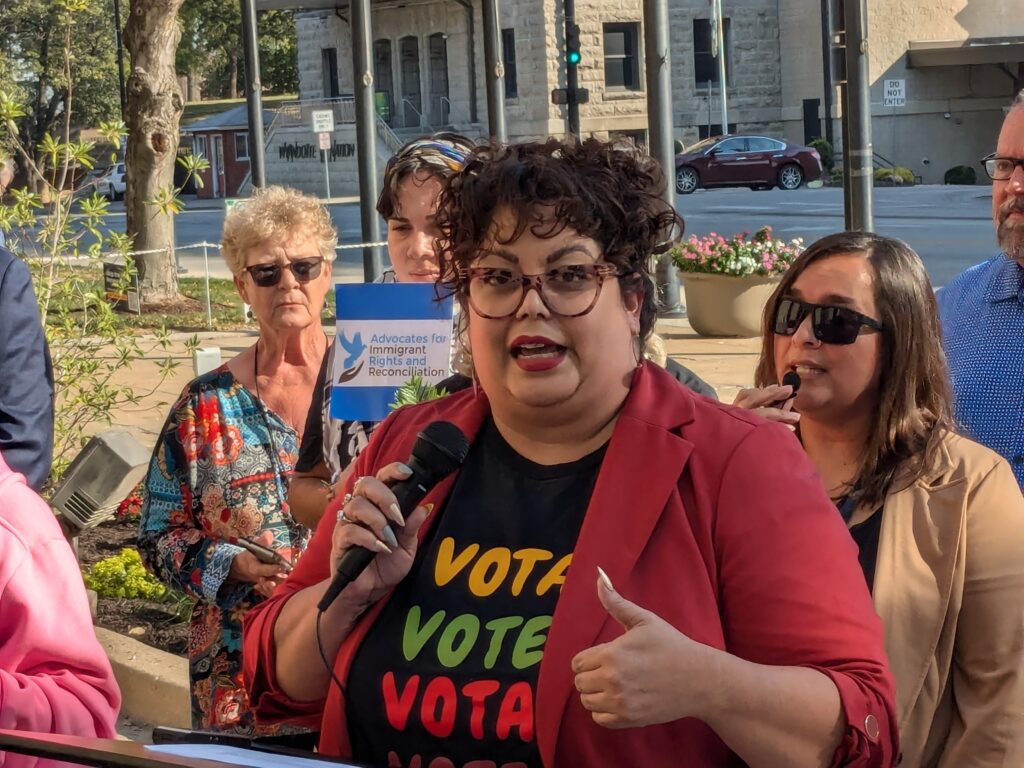
Erica Andrade, president and CEO of the nonprofit El Centro, which focuses on improving lives of Latino residents in the Kansas City area, said some people assumed the rising percentage of children without health coverage in Kansas was because of the failure of Medicaid and the Children’s Health Insurance Program. CHIP is the joint state and federal initiative offering coverage to children in families earning too much to qualify for Medicaid but not enough to afford private insurance.
“They say, ‘Well, the system is broken,’ ” Andrade said during a forum Thursday hosted by the nonpartisan Kansas Health Foundation. “No, the system’s working perfectly fine. The system was designed to keep people from using public benefits.”
Andrade said aggressive immigration enforcement operations ordered by President Donald Trump prompted some parents in Kansas who knew their children qualified for Medicaid or CHIP to voluntarily disenroll or not apply for preventative health care services serving young people. One in four children living in the United States have at least one foreign-born or immigrant parent.
“We also serve a lot of mixed-status householders,” Andrade said. “Because of fear … people actually come in to decline, to withdraw, knowing their kids were eligible. We’ve had a few families that have asked to do that proactively just because of the fear and knowing what this possibly could mean for their families.”
Anne Dwyer, a research professor at Georgetown University’s Center for Children and Families, said Medicaid and CHIP enrollment fell nationally in 2025 and that preliminary data suggests the same transpired during the first half of 2026. The latest report says nine states, including Kansas shifting from 7% in 2024 to 8.5% in 2025, experienced meaningful escalation in the percentage of children without insurance, she said.
“Kansas did experience a statistically significant increase in the rate of uninsured children along with other states. Kansas is definitely notable, but it’s not alone,” Dwyer said. “Some children might be finding coverage elsewhere.”
Dwyer said shrinking enrollment in Kansas and other states was tied to escalating amounts of government red tape, the Trump administration’s decision not to embrace federal protections on coverage for children, parental confusion about work reporting requirements and the pending program cuts imposed by Congress and Trump.
Complicating the task of securing health insurance for children has been unwinding of COVID-19 policies that automatically sustained health coverage for U.S. children during the pandemic. In addition, there have been increases in health insurance premium rates for employer-sponsored policies and options in the Affordable Care Act Marketplace.
Sonder Crane, a pediatric physician in Manhattan and president of the Kansas chapter of the American Academy of Pediatrics, said uninsured children were more likely to miss out on preventative health care checkups that could catch illnesses early when maladies could be treated more effectively and less expensively. The lack of regular access to medical care among children promoted inconsistent vaccinations, he said.
“That is basic care that everybody should have accessible to them,” Crane said.
Crane said the growing health insurance problem in Kansas was also associated with parents who didn’t speak English as their first language, a wave of retirements among family physicians and the lack of easy geographic access to doctors for families residing in rural areas. Some patients in her Manhattan clinic drive an hour each way for routine appointments, she said.
In Kansas, the portion of uninsured children younger than 6 advanced from 3.7% in 2022 to 7.2% in 2024, federal reports said. The change in Kansas’ 6-18 age group was less severe, moving from 5.8% in 2022 to 7% in 2024.
The government reporting shows ethnic distinctions in terms of access to health insurance in Kansas. The rate of Hispanic children without coverage went from 8.6% in 2022 to 16.2% in 2024, while rates for Black children ticked up from 5.7% to 9.8% in that period. The percentage of white children in Kansas without health insurance increased from 6.8% in 2022 to 7.9% in 2024.
Kaci Cink, a senior analyst at the Kansas Health Institute in Topeka, said behind each insurance statistic were families grappling with medical challenges.
“These disparities raise important questions about why some populations are more likely to be uninsured than others,” she said.
Original reporting: Read the original publisher’s story. Distributed by News From The States, part of States Newsroom.
Originally published by News From The States — Immigration