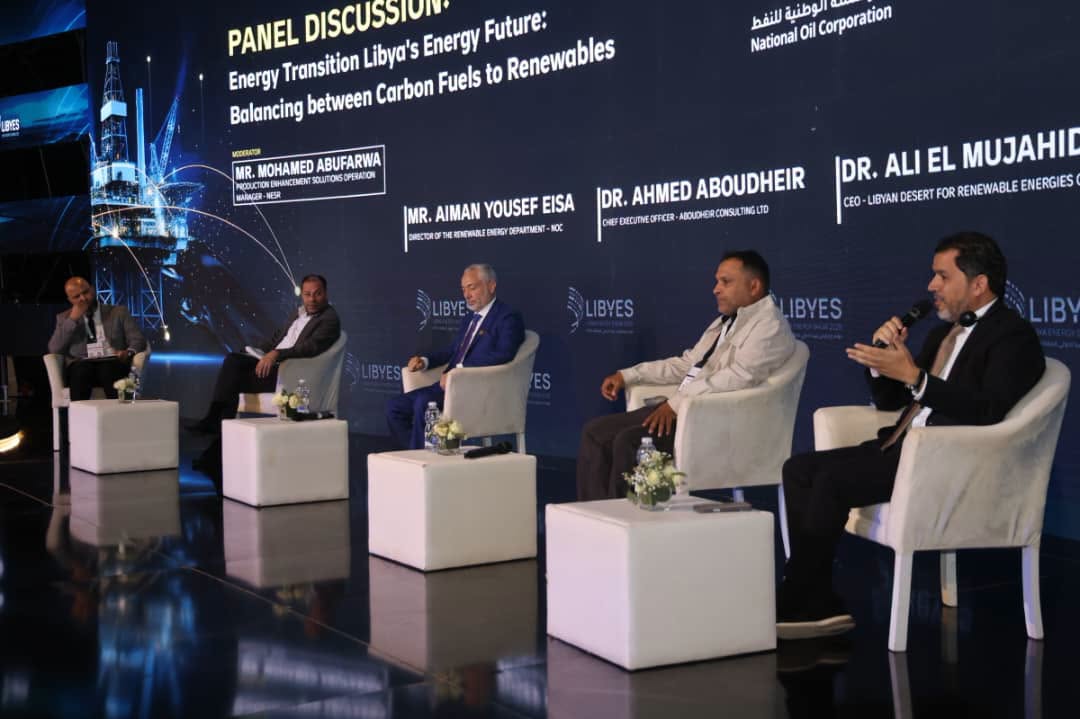
A panel at the Libya Energy Show (LIBYES) 2026 in Tripoli discussed how Libya can balance continued use of carbon-based fuels with expanding renewable energy. The event ran from 24 to 26 November, and the session was held on its final day, yesterday.
Participants considered ways to develop both traditional and alternative energy resources, with the aim of supporting sector sustainability and Libya’s development plans. They noted that renewable energy can provide immediate power to remote, off-grid locations, public service facilities and oil installations through hybrid systems that reduce fuel consumption and emissions.
Libya’s renewable energy plan aims for approximately 4,000 megawatts of capacity by 2035. This includes a 500-megawatt project in Al-Saddada, developed in collaboration with TotalEnergies.
The panel also discussed the “Go Green” initiative to electrify administrative buildings, healthcare centers and schools, as well as efforts to complete the legislative and legal framework needed to attract investment.
Participants stressed the importance of involving the local private sector and transferring modern technologies. They said oil and gas would remain important in the coming years and called for technologies to reduce emissions, including carbon capture, utilization and storage (CCUS), and blue hydrogen, to make conventional energy cleaner and more sustainable.