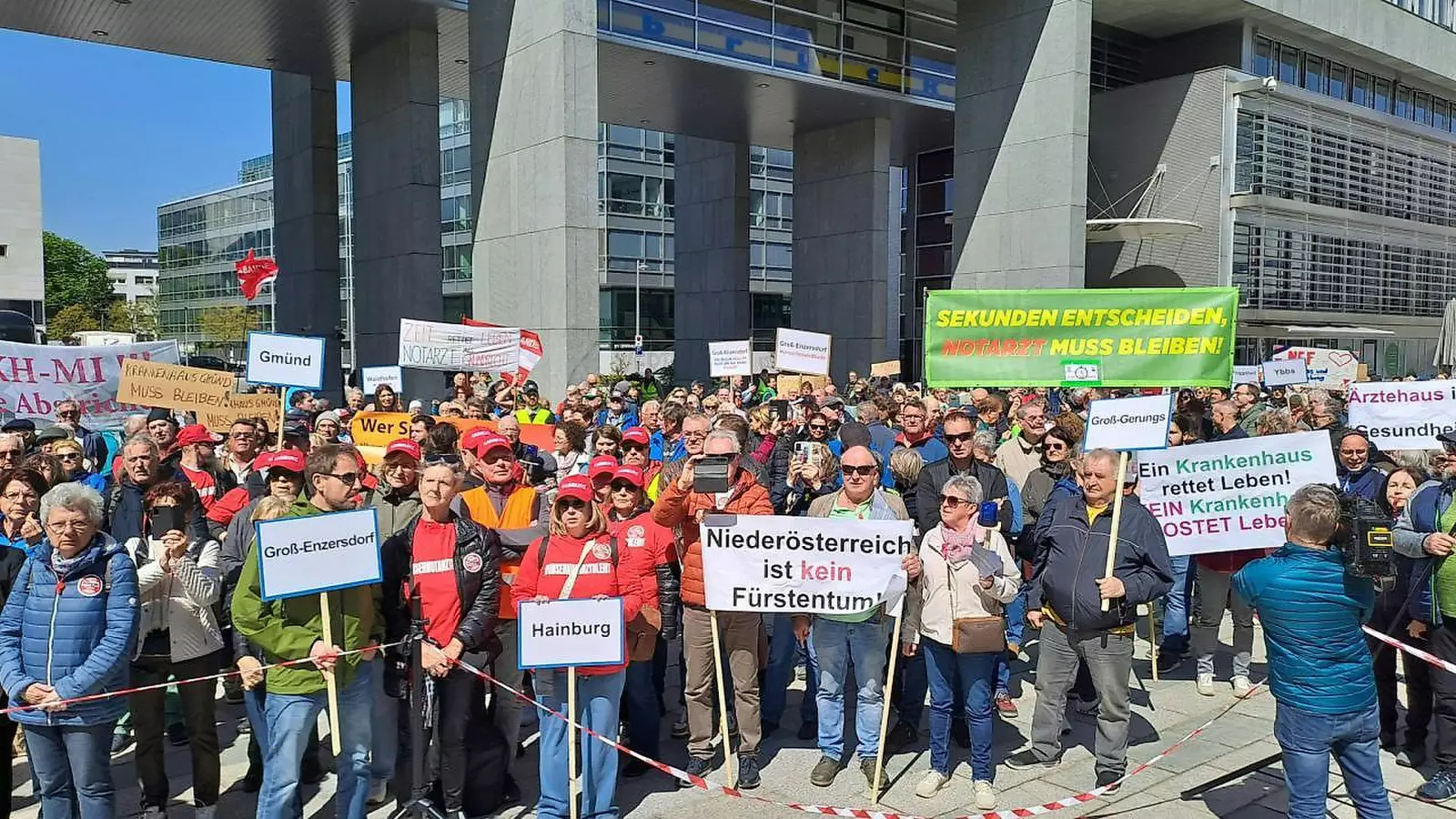
Lower Austria’s provincial government has approved the contracts needed to reduce the number of emergency doctor bases from 32 to 21. The decision was made on Tuesday, after months of political dispute over the reform of the province’s emergency medical and ambulance services.
The new structure is due to take effect on 1 April 2027. In parallel, the number of ambulance locations staffed by specially trained emergency medical technicians is to increase. The Austrian Society for Emergency and Disaster Medicine (ÖNK) said the reform is not intended to worsen care and that the number of RTW-C locations is to rise to around 87 in the long term.
Before Tuesday’s meeting, Governor Johanna Mikl-Leitner (ÖVP) had tasked provincial councillors Anton Kasser (ÖVP) and Martin Antauer (FPÖ) with submitting two outstanding contracts: one on funding the ambulance service and one on emergency medical care. Both were approved.
Mikl-Leitner said the province had to keep its word to emergency services organisations. The Red Cross and the Arbeiter-Samariter-Bund had recently called for a swift decision and, in a petition to the state parliament, urged approval of the agreements. Preparations for the new structure, including training emergency paramedics, were already underway.
The responsible SPÖ provincial councillor, Eva Prischl, missed the meeting because of illness. Her office said she had been ill since the previous week. Mikl-Leitner invoked Section 16 of the provincial government’s rules of procedure to delegate the submission of the contracts.
The provision allows the governor to assign another government member to perform duties or report on a matter if a member does not fulfil their obligations.
Prischl is still expected to oversee the reform’s continued implementation; no permanent removal of her powers was decided.
The ÖNK argues that the expanded RTW-C network will allow teams to handle calls that do not necessarily require an emergency physician, while maintaining emergency physician coverage across the entire region.
The SPÖ in Lower Austria had opposed closing the eleven bases. Party leader Sven Hergovich cited an expert report commissioned by the party from emergency medicine specialist Matthias Fischer. It concluded that longer journeys for the remaining emergency physician teams could lead to poorer patient care. The ÖNK, by contrast, expects no deterioration in emergency care under the planned framework conditions.
The provincial government’s approval ends the months-long political deadlock over the agreements. Preparations for the new structure are to be completed before it takes effect on 1 April 2027.