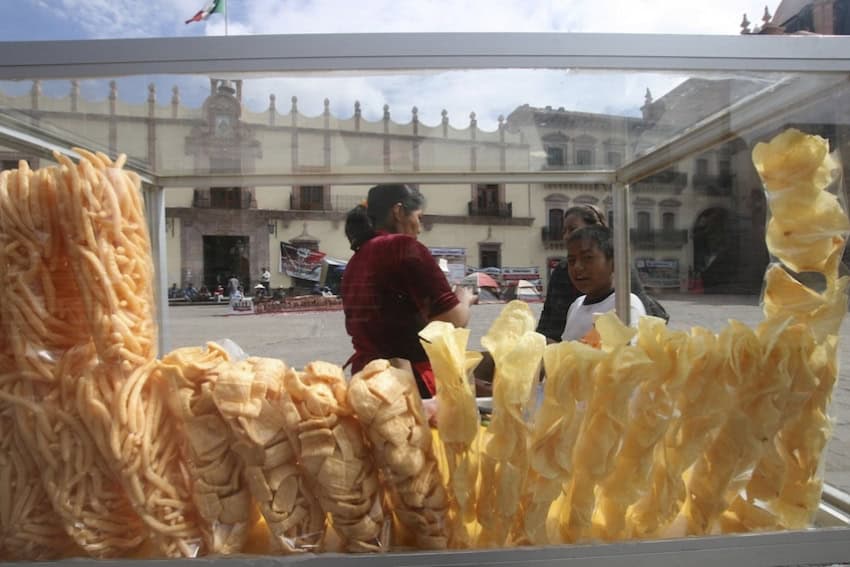
On a slow, cloudy day in Mexico City’s Condesa neighborhood, Elvia sells potato chips from a pushcart along Parque México. The 32-year-old has worked in the trade for three years, following a family tradition that became popular in the capital in the 1940s and ’50s before spreading across the country.
“It’s not like this in the summer,” Elvia says. “When it’s hot, people seem more inclined to buy potato chips.” The sidewalk is busy, but competition among vendors is fierce, particularly in tourist areas, where artisans, ice cream sellers, musicians and others compete for limited earnings.
Mexico City street-cart chips are made from julienned potatoes fried twice, leaving them crisp outside and soft inside. Vendors commonly use Alpha, Atlantic and Fianna potatoes; Atlantic and Fianna have more starch and less water, which helps them brown and crisp. The chips may be salted, marinated, jalapeño-flavored or served as a mix, often with hot sauce, lime and salt. Toppings can include chamoy, cueritos — a kind of pickled pork skin — and bone marrow.
The snack is widely sold near subway stations, hospitals, parks, schools and government offices. At the Central de Abasto, potatoes start at 12 pesos per kilogram, according to its daily price monitor. A kilogram yields about 12 medium-sized bags; small bags generally sell for 10 to 20 pesos in Mexico City, while large ones can cost up to 50 pesos.
But Elvia does not own her cart or keep most of the proceeds. “The cart isn’t mine,” she says. “It belongs to the man I work for.” The cart and supplies are provided by her employer, and she pays a share of sales. Elvia keeps 25% of what she earns during an eight-hour shift. She must return the cart when her shift ends and collect it again the next day, along with a new assigned location.
Many street vendors also face demands for “piso,” or “protection money,” from police officers and others in exchange for permission to work. Elvia says she has not had to pay it. Other potato vendors declined to be interviewed; one woman said, “I’d rather not — customers keep coming, and we have to attend to them.”
Street vendors in Mexico City are required to obtain a “Permit to Engage in Commerce on Public Thoroughfares” from the relevant borough authority. The city government promoted permits to regulate the trade and protect workers, who are rarely covered by law or supported by their employers. Elvia says her boss handles her permit, as paperwork is left to the person who assigns vendors their daily locations.
Vendors selling fruit, aguas frescas, tamales and bread from baskets also work with few safeguards. Some of the capital’s other traditional trades have organized to seek greater state protection, but Elvia says there is no union for street vendors. “I can only rely on my family,” she says. “My nieces and cousins also do this kind of work.”
For now, Elvia continues renting the cart and giving up most of her earnings. “It’s the only thing we have left,” she says. “This is the only way we earn a living.”