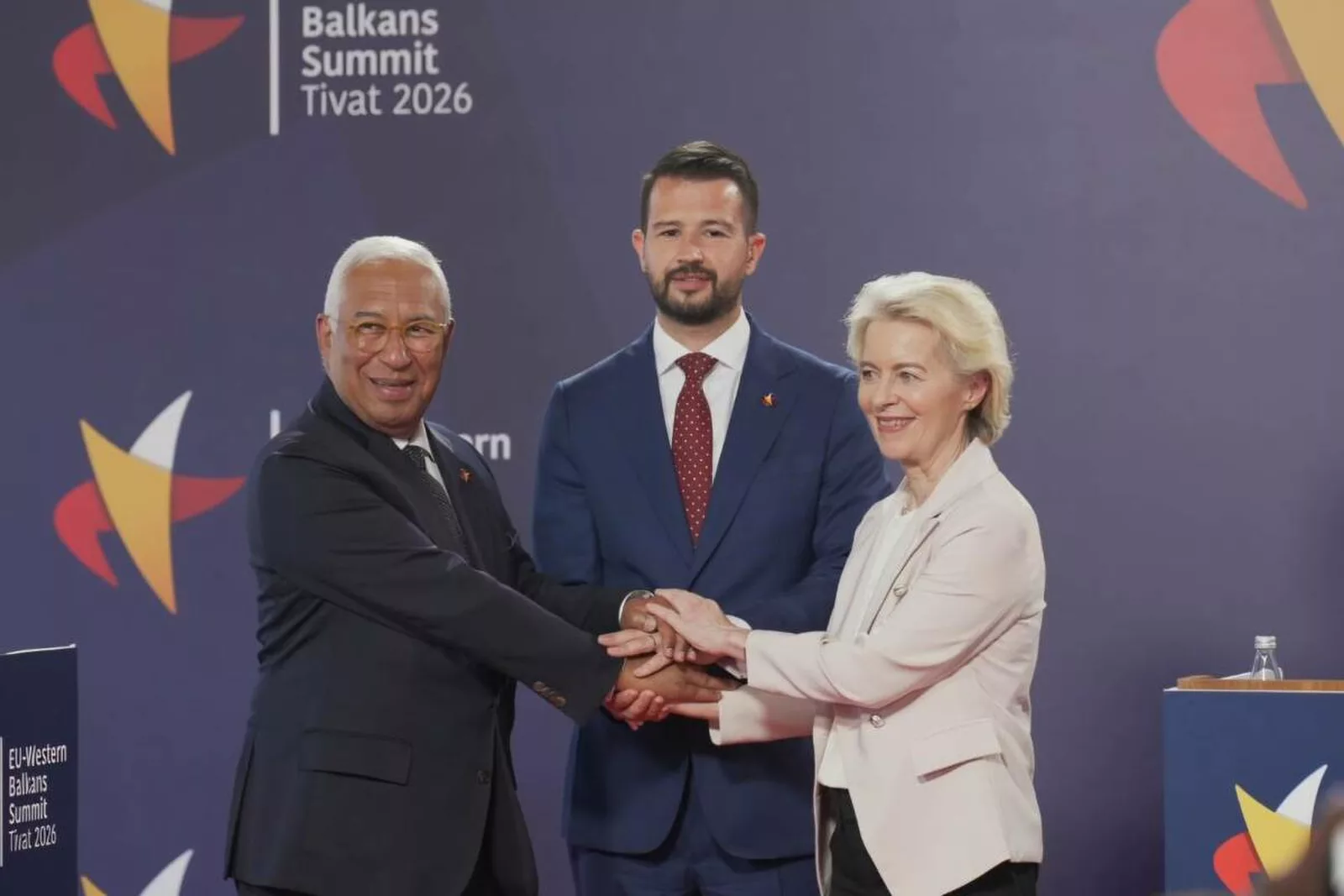
Montenegrin President Jakov Milatović urged European leaders to approach the final phase of Montenegro’s EU accession negotiations with determination and strategic vision, warning that making accession conditional on bilateral issues would be a strategic loss for Europe.
In a letter to European Council President Antonio Costa and European Commission President Ursula von der Leyen, Milatović said Montenegro is on track to complete negotiations by the end of this year and become the EU’s 28th member in 2028. His office announced the letter ahead of the EU-Western Balkans Summit in Brussels.
Milatović pointed to what he described as Montenegro’s remarkable progress since the Summit in Tivat this summer, saying the country is leading the enlargement process. “We are approaching the end of the negotiations with the best annual result so far, with 13 chapters closed this year, a pace that has not been achieved in the last 25 years, ever since Lithuania and Latvia achieved such a result,” he said.
He attributed the progress to two factors: the profound transformation of Montenegrin society during 14 years of negotiations and the achievement of high European standards, as well as the EU’s renewed priority for enlargement policy.
Milatović said Montenegro’s EU membership in 2028 would be an achievement of generational significance for the country and send a strong message from Europe to the world.
In contemporary geopolitical circumstances, marked by the re-deepening of divisions and the development of Europe’s strategic autonomy, he said, the next enlargement would have a global impact and reaffirm the strength of the European project, which he called the greatest peace project in modern history.
He argued that bilateralization of accession would run counter to the EU’s fundamental values and interests. Recalling Jean Monnet’s description of Europe as “a sum of solutions”, Milatović said overcoming differences was central to the European path and had driven previous rounds of enlargement, extending democracy and freedom further east and south than ever before.
“Ensuring that these principles guide the upcoming enlargement process means remaining true to the very idea of the EU. Making accession conditional on bilateral issues would be contrary to this fundamental logic: instead of Europe being a solution for overcoming differences, they would become an obstacle to its further unification,” Milatović said.
His office said Milatović also pointed to enlargement’s security dimension, which gained importance after the Russian aggression against Ukraine in 2022. He said enlargement policy is now one of the most important instruments for strengthening Europe’s security and long-term stability, maintaining a strong presence in its immediate neighborhood and leaving no room for Russian influence.
“The final phase of Montenegro’s accession should be approached with determination and strategic vision. Any different approach would be to the detriment of Montenegro, other candidate countries and the EU itself,” Milatović stressed.
He confirmed Montenegro’s full readiness and commitment to resolving all open issues with its neighbors and partners through dialogue and in good faith, but outside the accession process. He said this did not mean neglecting those issues, but recognizing the historic moment promised at the Thessaloniki Summit more than two decades ago and awaited for a full 13 years since the last enlargement.
Milatović said he strongly believed the EU and its member states would make the right strategic decision amid global challenges, in line with the message from European leaders at this year’s Tivat Summit: the EU will not be complete without the Western Balkans.