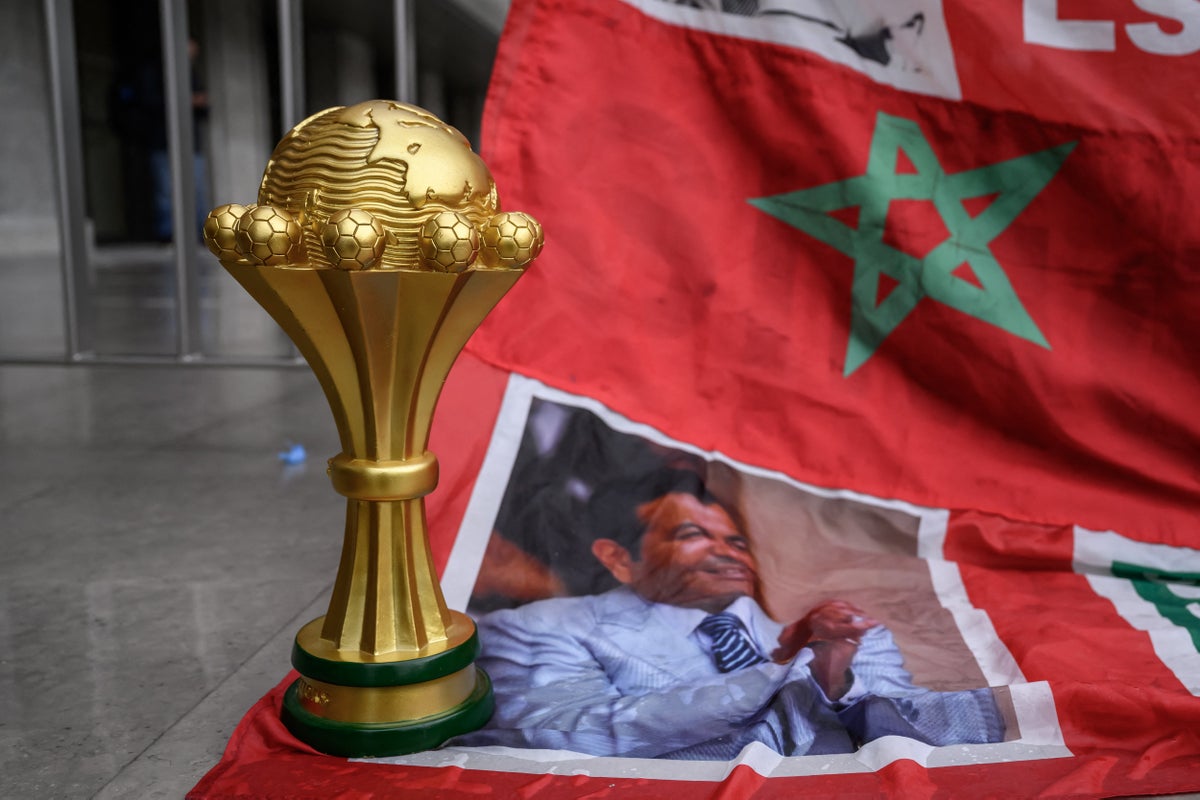
Morocco’s football federation says it will pursue further legal action after the Court of Arbitration for Sport (Cas) restored Senegal as Africa Cup of Nations champions.
Senegal won January’s final 1-0 after extra time in Rabat. But after Senegal’s players walked off in injury time to protest a penalty awarded against them, the Confederation of African Football (Caf) declared Morocco champions, removing Senegal’s title from the records.
Cas confirmed on Tuesday that Senegal’s appeal had been upheld. It found referee Jean-Jacques Ndala “did not commit any error of law” when he resumed the match after Senegal’s players returned to the pitch, a decision within his sole authority.
The Royal Moroccan Football Federation (FRMF) says Cas “did not take into account” a tougher approach recently adopted by global refereeing body Ifab and Fifa toward team walk-offs. It says it will “pursue all available legal avenues” to appeal the ruling, which deprives Morocco of its first Afcon title since 1976.
The FRMF also questioned “the integrity and credibility of the arbitration process” over an alleged phone call between Senegalese Football Federation (FSF) president Abdoulaye Fall and a member of the judicial panel. The FSF vehemently denied the allegation. Cas has been contacted for comment.
In a statement, the FRMF said it was “surprise[d]” and protested that its request for legal consequences over practices that could compromise the arbitration process had not been considered. It referred to reported communication between German referee Ulrich Haas and Fall 48 hours before the ruling.
The statement added that Cas had not considered the approach recently adopted by Ifab and Fifa toward players leaving the field without the referee’s permission, or the related disciplinary responsibilities and penalties. It concluded: “Accordingly, the Royal Moroccan Football Federation confirms its intention to pursue all available legal avenues to appeal the decision of the Court of Arbitration for Sport.”
Amendments to Law 12 of Ifab’s regulations earlier this year say players or coaches who leave the field to protest a referee’s decision, or instruct others to leave, are to be sent off. Had that approach been applied during the final, several Senegal players would have been dismissed. That could have reduced the number of active players on the pitch below the minimum of seven, resulting in the match being forfeited.
Senegal’s federation welcomed Cas’ decision to restore its title. “The Senegalese Football Federation welcomes this sentence with deep satisfaction,” it said, adding that the ruling affirmed “the triumph of sporting fairness” and the principle that “the truth of a match is established exclusively on the field, under the protection of sports law.”
The FSF also thanked the Lions of Teranga and their management, its lawyers and advisors, the President of the Republic and the Senegalese Government, as well as supporters in Senegal and the diaspora.
Fall said: “The Court of Arbitration for Sport has delivered justice to sport.” He added: “I wish to strongly reaffirm the bonds of fraternity that unite us with the Royal Moroccan Football Federation and the Moroccan people. Senegalese football now resolutely looks to the future, with confidence and enthusiasm, in an Africa united around the values of sport.”