Nature demands rights for just energy transition..
By Ria Ernunsari ·
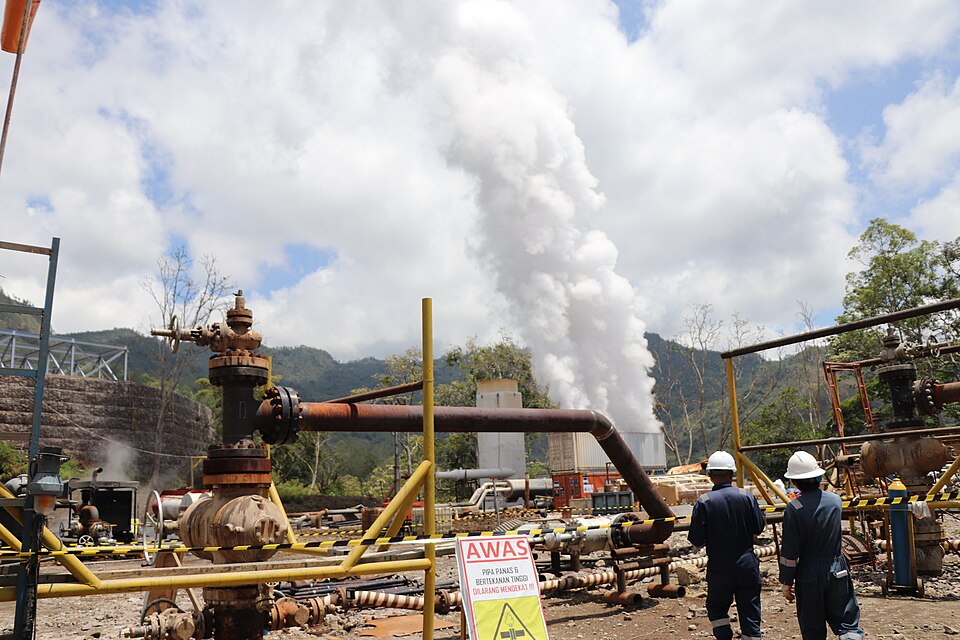
Geothermal energy and nickel-supported electric vehicles are often cited as energy transition efforts in Indonesia. Ironically, these practices have caused environmental and socio-economic crises.
On September 4, 2026, the Archdiocese of Ende, East Nusa Tenggara, Indonesia, filed a constitutional challenge to the Supreme Court regarding the designation of Flores as a “geothermal island”.
“This is about ecological justice and the protection of our home,” said the Chairman of the Commission for Justice, Peace, and Pastoral Migrants of the Archdiocese of Ende, RD Reginaldus Piperno.
The “geothermal island” designation was made under the Decree of the Minister of Energy and Mineral Resources in 2017 to reduce dependence on fossil fuels and conventional energy sources.
Besides geothermal projects, the nickel industry, often cited as part of energy transition efforts, has also drawn criticism.
Nickel is recognised as an essential raw material used in electric vehicle batteries. By producing nickel, the Indonesian government intends to achieve net-zero emissions, specifically by replacing fossil-fuel-powered vehicles with battery-electric vehicles.
Paradoxically, geothermal mining, nickel mining, and downstream processing have caused new crises, damaging natural ecosystems and harming communities and living creatures.
The practices’ failures underscore the importance of nature’s rights, which cannot be overlooked.
Energy transition ambitions lead to ecosystem disturbanceFor many Indigenous communities, such as Manggarai communities on Flores, nature is considered a “living space”, an inseparable unity of homes, fields, water sources and ritual sites – comprising land, community and ancestors. When parts of this space are disturbed, the whole ecosystem is affected.
Archbishop of Ende, Paulus Budi Kleden, expressed concern that geothermal development might affect Flores’ landscape, including mountains, forests, groundwater recharge areas, and water resources.
Geothermal power plants depend heavily on clean water, approximately requiring 6,500 to 15,000 litres of water to generate one Megawatt of electricity.
The practices of geothermal mining not only disrupt soil stability but also increase the potential for groundwater contamination.
Beyond Flores, the Ministry of Energy and Mineral Resources continues to expand geothermal working areas throughout Indonesia, including in Java, Sumatra, Sulawesi and Maluku Islands.
Furthermore, through the Presidential Regulation in 2019, the Indonesian government set a production target of two million electric cars and 13 million electric motorcycles by 2030, driving the growth in the nickel mining industry.
Ironically, this ambition to produce electric vehicles has fuelled the nickel exploitation and downstream processing, particularly in Eastern Indonesia, which have driven deforestation and aquatic ecosystem damage.
The industry mainly contributed to deforestation of 4,262 hectares across 210 concessions in Central Sulawesi, Southeast Sulawesi, and South Sulawesi. By 2024, it also caused the loss of more than five thousand hectares of forest in Halmahera, North Maluku.
In Raja Ampat, West Papua, nickel mining has caused 174 hectares of deforestation and threatens more than six thousand hectares of coral reefs. In Weda Bay, North Maluku, fishermen’s catch was found to contain heavy metals—arsenic and mercury—in varying concentrations, exceeding safe contamination limits.
The destruction of nature caused by nickel and geothermal mining will further worsen the people’s lives, especially those living in rural areas, who have already been impacted by the climate crisis.
In the long term, they will lose their ability to adapt to the climate crisis as the natural environment’s carrying capacity is destroyed.
Towards the legal rights of natureOn an international level, the Paris Agreement emphasises that a just transition must consider several factors, not only human rights, but also the rights of nature.
One of several aspects that the Parties bound themselves to is to recognise “the importance of ensuring the integrity of all ecosystems, including oceans, and the protection of biodiversity—recognised by some cultures as Mother Earth”.
Nature’s rights—to exist, to survive, and to realise its own potential—is of utmost importance. Nature possesses intrinsic value in and of itself, not merely instrumental value. It is regarded not merely as an object but as a legal subject with very strong legal standing.
This perspective also emphasises that a just energy transition must not merely be a shift from fossil fuels to renewable energy sources. The transition must not trigger new ecological crises—such as deforestation, marine pollution, the extinction of biodiversity, the loss of food and water sources, and air pollution.
Unfortunately, the Indonesian government does not view the rights of nature as a vital component of its energy transition efforts. The country’s energy transition ambitions remain limited to a mere shift in energy commodities, inevitably creating a “new” ecological and socio-economic crisis.
At this juncture, prioritising the rights of nature in the energy transition becomes crucial to mitigating the various crises that will arise.
Ensuring nature’s rights represents a significant leap forward in environmental thinking, placing ecological integrity as the paramount principle above economic growth that sacrifices nature and people’s livelihoods.
This perspective also highlights the principle of justice, which is imperative for the energy transition and essential to consider in any relevant policies.
There are three recommendations:
First, the government needs to re-examine and reinterpret the critical mandate for a just energy transition under the Paris Agreement. Indonesian Law 2016 on the Ratification of the Paris Agreement to the United Nations Framework Convention on Climate Change should be translated into more concrete policies.
Second, free, prior and informed consent (FPIC) principles are essential to ensure the involvement of communities that have long been on the front lines of protecting nature from the threat of destruction.
A just energy transition requires the involvement of communities whose livelihoods depend heavily on nature—such as forests, mountains, rivers and the ocean.
Third, main streaming the concept of the rights of nature as a key perspective in national education as part of efforts to promote a just energy transition while fostering a forward-looking worldview integrated with global climate justice.
Parid Ridwanuddin is a lecturer in the Department of Philosophy and Religion at Universitas Paramadina, and National Coordinator of GreenFaith Indonesia.
Originally published under Creative Commons by 360info™.
Originally published by 360info — selected topics