A recent Disney deal with Netflix illustrates the shift. It includes multi-year agreements for ABC’s Will Trent and Shifting Gears, with existing seasons arriving on Netflix weeks before the shows’ upcoming season premieres on ABC. Shifting Gears debuted on Netflix earlier this month and is projected to crack the Nielsen Top 10 in the next ranking.
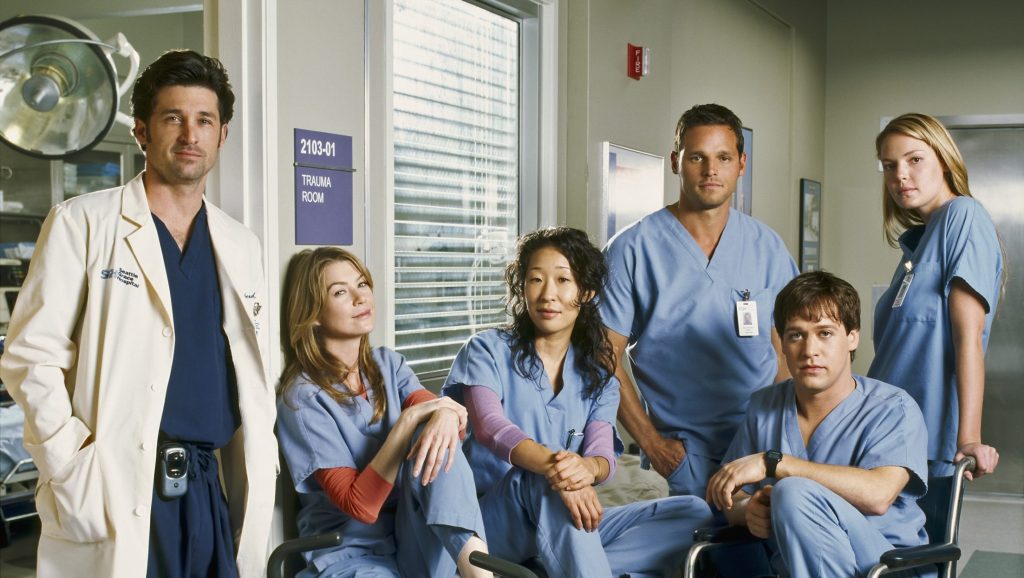
Disney has seen the promotional value of Netflix before. ABC drama Grey’s Anatomy began streaming there in 2015 under a pioneering agreement. Making earlier seasons available helped bring a new generation of fans to the series, which is now airing its 23rd season on ABC.
The pattern has roots in the success of AMC’s Breaking Bad on Netflix. Four years before the 2013 Emmy recognition cited in the article, the show’s streaming performance helped it avoid cancellation and become an award-winning hit for AMC. Creator Vince Gilligan credited Netflix with keeping the series on the air after it won its first of two Outstanding Drama Series Emmys in 2013.
The term “the Riverdale phenomenon” emerged after the CW series posted modest ratings in its first season in 2017, then surged on Netflix over the summer. Its audience growth helped lift ratings for the show’s second season on the CW that fall. “After that, everyone was like, ‘Oh, I want my show on Netflix because then everyone will watch it,'” one industry veteran recalled.
Despite the CW’s output deal with Netflix, large streaming agreements for current broadcast and basic-cable series were uncommon. Notable examples included NBC’s The Blacklist and Blindspot, Fox’s New Girl, Gotham and Lucifer, and TNT’s Animal Kingdom, all sold in competitive situations. The Blacklist, New Girl and Gotham went to Netflix; Hulu acquired Blindspot and Lucifer before Lucifer became a Netflix original; and Prime Video acquired Animal Kingdom.
NBC’s Good Girls was another Netflix success. Under a co-production model Netflix used in the late 2010s, its first season debuted in the U.S. on Jan. 1, 2019, two months before Season 2 began on NBC. The show’s Netflix performance and the fees it generated helped keep it on air for four seasons despite falling linear ratings.
Licensing deals of this kind largely dried up when major media companies began launching their own streaming services in 2019-20 and kept nearly all their series on their own platforms. That approach has gradually shifted: Netflix now carries more current series from ABC, NBC, CBS and Fox than ever. Other third-party deals remain less common; CBS’ Ghosts, for example, is available on Prime Video.
Today, third-party deals are largely non-exclusive. Series remain available on their corporate sibling’s platform, which may hold next-day and previous-season rights, while Netflix and other outside services typically get seasons after their broadcast runs have ended.
That resembles syndication, but the streaming window arrives sooner. Traditionally, shows needed four seasons and 100 episodes before entering syndication, first on local broadcast stations and then on cable. “Then cable and local markets collapsed on top of each other, and eventually streaming essentially took the place of this syndication window. But not after four years, after one year,” one industry veteran said.
Network series are now commonly licensed to third-party services after their first season. A season may arrive 30 days after its finale, as Grey’s Anatomy and the CW’s Sullivan’s Crossing do on Netflix, or at the start of the next broadcast season.
The second model was used for New Girl and The Blacklist and is now in play for NBC comedies Happy’s Place and St. Denis Medical, as well as Fox drama Doc, all on Netflix. In many cases, the fall release has shifted to about 30 days before a new broadcast season, giving viewers time to catch up.
Netflix’s releases of ABC’s Will Trent and Shifting Gears this fall were timed to their next seasons on broadcast. Will Trent arrived on Netflix two months before its return to ABC; Shifting Gears arrived about 30 days ahead. Fox-owned Best Medicine and Animal Control are also putting previous seasons on Netflix a month before new seasons begin on Fox.
CBS’ Fire Country has taken a different approach, returning to Netflix with an earlier season. Season 1 arrived about two months before the show’s Season 3 premiere on CBS in 2024, and Season 2 arrived about two months before Season 4 began on CBS in 2025. Netflix has carried only those two seasons; newer seasons are available only on CBS sibling Paramount+.
An early example of Netflix being used this way after a network had its own streaming service came in September 2020. CBS Studios struck a one-year, non-exclusive deal to put the first seasons of Evil and The Unicorn on Netflix ahead of their second-season premieres on CBS.
The deal did not help Walton Goggins’ comedy, which was canceled after two seasons. NBC’s The Hunting Party met the same fate despite a strong first-season launch on Netflix, a little over a month into its second season on NBC.
Evil’s strong sampling on Netflix helped inform the decision to move the supernatural drama from CBS to Paramount+. Its performance also likely contributed to the initial one-year, non-exclusive Netflix deal being extended to five years and expanded to include the first three seasons.
The timing echoes the role basic cable once played for shows in off-network syndication: a series’ latest season would become available on cable in September, shortly before the next season began on broadcast. Cable marathons promoted a show’s return; in the streaming era, the equivalent is often a full previous season released for binge-watching ahead of a new network premiere.
The deals also bring in revenue as networks and studios contend with declining linear ratings and related advertising income. “There is enhanced promotion, but also economics are driving these things,” one industry insider said. “Studios are carrying deficits on these shows, they need to find revenue, so because because the four-year syndication window really is not there anymore, they have to find revenue.”
For some studios, revenue takes priority over marketing. “From our standpoint, we’re going to look at the money first, and then the marketing aspect second,” one studio executive said. Decisions also take into account profit participants, who receive a share of off-network revenue.
Agents representing creative talent have lamented the decline of the syndication model. They say streaming deals do not match syndication’s payouts for covering deficits and compensating profit participants, and that proceeds are lower than in streaming’s early years, when Netflix paid premium prices for predominantly exclusive SVOD rights.
Studio executives say revenue remains available, but is now spread across multiple streaming outlets rather than a single syndication window. Audiences are more fragmented, and so are non-exclusive deals across platforms. “Our business is not just streaming to the big ones, Netflix and Amazon; it’s also AVOD, it’s Roku and Tubi. There’s multiple ways you can now make money, which is great,” one TV executive said. “In the aggregate for individual shows probably will rarely get close to what a show could have made in its peak syndication days, so agents probably see that more than we do because they’re focusing on the individual performance of one show in its U.S. life cycle.”
Six years after the Riverdale phenomenon, USA Network series Suits became a major streaming hit in summer 2023. It broke streaming ratings records and amassed 57.7 billion minutes watched that year, despite arriving on Netflix U.S. only in June. Its success showed that cable series once considered to have little off-network syndication value could find a large audience on streaming.
Other pay-cable series have also moved to Netflix, including Starz’s Outlander and Power, and Showtime’s Dexter, Homeland, Shameless and Yellowjackets. Many of those deals were driven by the shows’ producing studios. For basic-cable networks seeking to continue making scripted programming, and some pay-cable networks too, a syndication-style deal with a major streamer has become a crucial source of revenue.
That helps explain AMC’s recently announced $500 million licensing deal with Netflix for the entire The Walking Dead universe. AMC has licensed major originals to Netflix since Breaking Bad’s breakthrough, including The Walking Dead mothership for almost 15 years and Anne Rice’s Immortal Universe; the newer titles are also available on AMC+.
Disney’s FX, meanwhile, operates as a streaming brand on Hulu, with series including American Horror Story, Love Story: John F. Kennedy Jr. & Carolyn Bessette, Shōgun and The Bear among the platform’s biggest hits.
In January, Netflix announced a deal with Paramount covering 20 series, including, unexpectedly, Mayor of Kingstown, a Taylor Sheridan original for Paramount+. HBO had previously licensed some completed series to Netflix, including Sex and the City, Band of Brothers and Six Feet Under, while keeping marquee titles such as The Sopranos and Game of Thrones off the service. The Paramount package is largely made up of former CBS series, along with Matlock, which was licensed to Netflix only internationally.
Mayor of Kingstown was a late addition, according to the article, with Netflix unwilling to take the other titles without it. The show’s producers used its inclusion to secure an extra season, the article reports, after Paramount+ had planned to end the series after Season 4. A renewal for an abbreviated fifth and final season was announced days before the Netflix deal, which covers the first four seasons, was unveiled.
In May, David Ellison, then-CEO of Paramount and now co-CEO of Skydance, told Wall Street analysts that the company would continue licensing select programming to third parties “for the foreseeable future.”
Amazon also struck a Netflix deal for the first three seasons of MGM+’s sci-fi horror drama From, which has released four seasons and been renewed for a fifth and final season. The series, acclaimed but not widely known, has become a Suits- or Riverdale-style phenomenon, accumulating more than 5 billion minutes viewed in the U.S. in its first three weeks.
Disney went further in its Netflix deal by licensing a current Disney+ original, Percy Jackson and the Olympians, for a short, three-month window, along with the Ice Age movie franchise. The arrangement is timed to the new season of Percy Jackson on Disney+ on Nov. 20 and the new Ice Age movie, Boiling Point, on Feb. 5, 2027.
On Netflix’s earnings call last month, co-CEO Ted Sarandos joked about promoting Disney’s Ice Age: Boiling Point on the service, addressing Disney counterpart Josh D’Amaro with the line, “You’re welcome, Josh.”
“We expect to have opportunities throughout for the best series and the best films with all the suppliers,” Sarandos said about Netflix’s licensing strategy. “It’s a little complicated because all of our suppliers are also our competitors. Our deals bring in much needed revenue. They certainly build awareness, and the benefit of that awareness transfers back to them because it helps grow the value of their IP. So these deals really are win-win.”