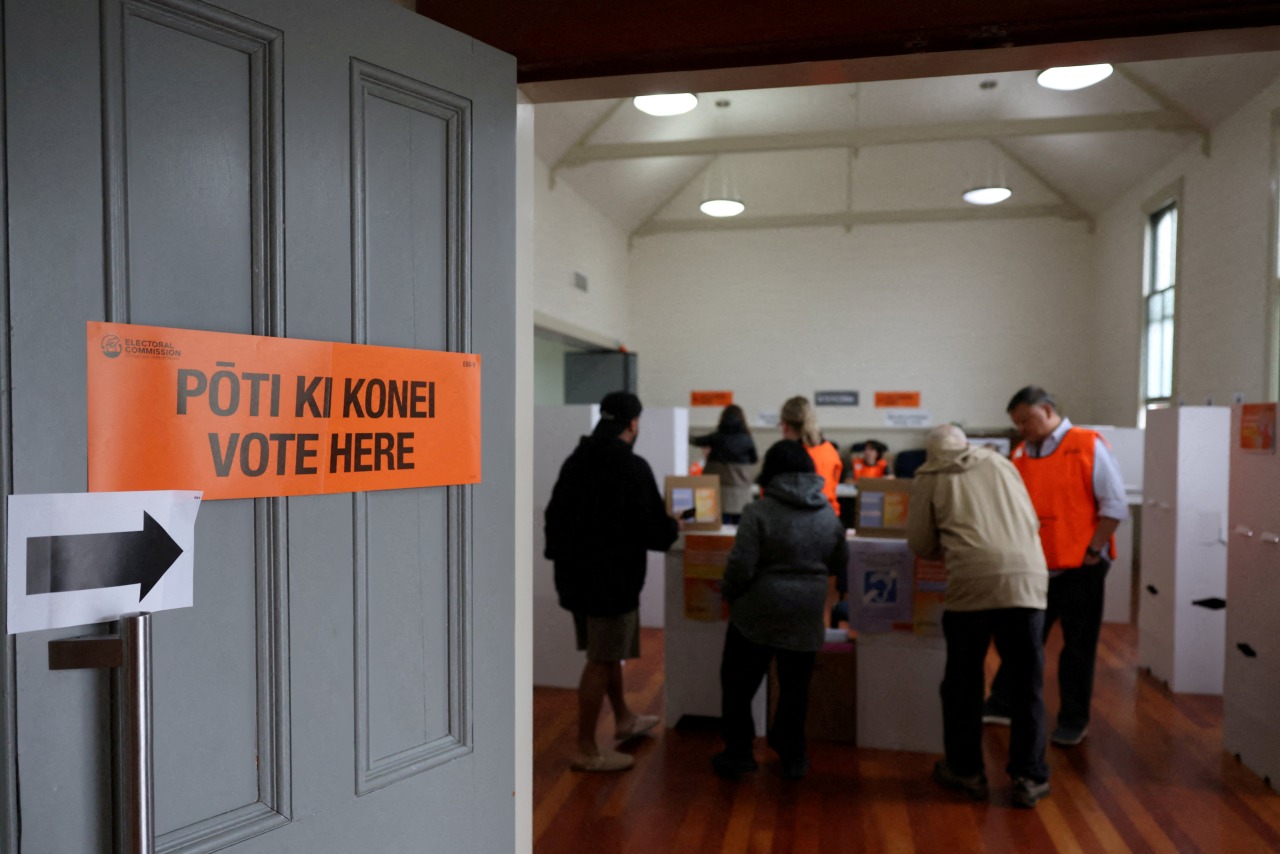
New Zealand’s election has ended in a deadlock after late ballots were counted, leaving the future of Prime Minister Christopher Luxon’s government dependent on Qiulae Wong, a 38-year-old political newcomer who became leader of her party after answering a job ad.
The center-right National Party and its right-wing allies, New Zealand First and ACT, won 65 seats in the expanded 130-seat parliament. The result followed the tally of nearly 400,000 special votes, alongside a recount of ordinary votes cast before and on election day, Nov. 7. Special votes include ballots cast overseas or outside a voter’s electorate.
The center-left Labour Party, led by former Prime Minister Chris Hipkins, took 36 seats. Its Green Party allies won 17, while Te Pāti Māori, a left-wing Indigenous rights party, secured five.
The incumbent coalition needs support from Wong, whose Opportunity Party won seven seats. The party will be the first founded outside New Zealand’s modern political establishment to enter parliament.
Formed in 2016, the centrist Opportunity Party’s success reflected voters’ movement toward parties outside the political mainstream, a trend also seen in other democracies. The election recorded the second-lowest turnout on record and the lowest combined vote share ever for the two largest parties, National and Labour.
Wong is a former KPMG consultant. Earlier in her career, she worked with major brands including Vivienne Westwood and Stella McCartney at a sustainable fashion startup in London.
“Noone had heard anything about her until probably a couple of months out from the campaign,” said Andrew Geddis, a law professor at the University of Otago.
Before the election, Wong said the party had five nonnegotiable policies, including lowering consumer prices, increasing healthcare funding and political reform. Opportunity is also calling for measures to improve ocean health and for the government to “recommit” to its climate obligations under the Paris agreement.
“There are echoes of Jacinda Ardern and her appeal,” said Mark Boyd, an honorary academic in social sciences at the University of Auckland. Ardern became prime minister in 2017 at age 37 and held the role as Labour leader until 2023, shortly before Luxon took power.
“You guys have voted for unity over division,” Wong, who goes by the nickname Q, said on election night. “You have voted to change New Zealand politics for good.”
It is unclear how long talks between the parties could take. On the campaign trail, Luxon said he would not negotiate with Opportunity. Wong has previously said she would not join a coalition if New Zealand First leader Winston Peters continued as foreign minister after comments toward another lawmaker that she called unacceptable and damaging to the country’s international reputation.
The close contest in a country of about 5.3 million people centered on voter concerns about the cost of living and a strained healthcare system, including out-of-pocket expenses, wait times and a shortage of physicians.
New Zealand’s economy emerged from a double-dip recession months after the 2023 election, but inflation has remained above the central bank’s midpoint target since 2021. The Reserve Bank of New Zealand has raised interest rates twice since mid-2026 in response to resurgent inflation.
Foreign policy played little role in the campaign, though there was some debate about balancing New Zealand’s security ties with the U.S. against its trade relationship with China. New Zealand is a key regional partner of the U.S. and a member of the so-called Five Eyes intelligence alliance. Opportunity campaigned almost exclusively on domestic reform and did not release a foreign policy of its own.