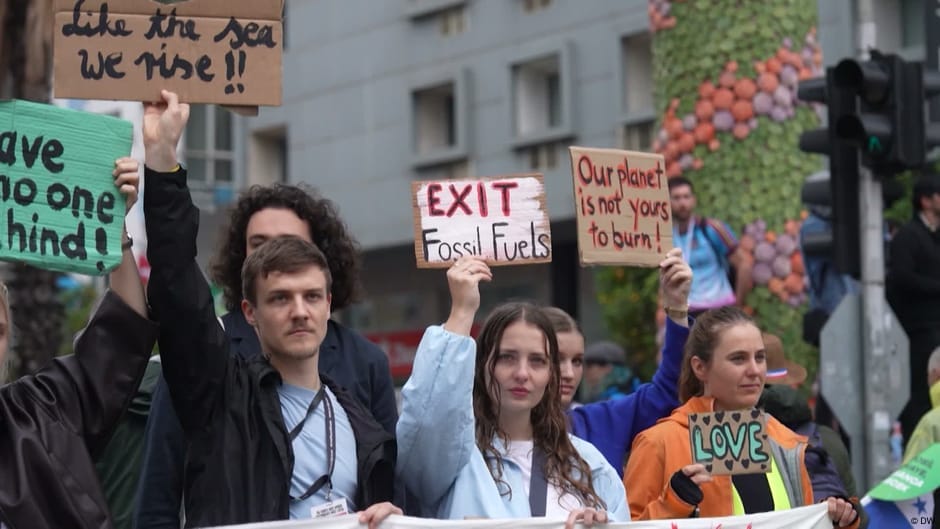
A new draft deal at the COP31 climate conference in Turkey contains no mention of fossil fuels, after removing language on transitioning away from coal, oil and gas and calls for an accelerated phaseout that appeared in an earlier version.
The latest text, released Thursday by summit co-host Australia, follows days of negotiations involving representatives from nearly 200 countries over issues including fossil fuels and climate funding for developing countries. The conference is officially due to end Friday, though annual talks sometimes run overtime. The draft is expected to be revised further before adoption, which requires approval from all countries.
The draft calls for electricity to supply 35% of global final energy demand by 2035, up from around 20% today. Turkey had pushed for the proposal. The text does not say whether the additional electricity must come from clean sources, drawing criticism from some countries, but links the target to efforts to triple global renewable energy capacity and other energy-efficiency measures.
The text expresses "deep concern" that global warming is projected to exceed 1.5 degrees Celsius (2.7 degrees Fahrenheit) above pre-industrial levels, the threshold outlined in the 2015 Paris Agreement to avoid runaway climate change. It says each increment of warming above current levels would "result in increasingly adverse, and in some cases irreversible, impacts and risks to human and natural systems."
The draft recognizes the need for "deep, rapid and sustained" cuts to greenhouse gas emissions and calls for more action on methane. It also calls for faster deployment of technologies to remove carbon from the atmosphere, which are as yet largely unproven at scale.
Harjeet Singh of the Fill the Fund campaign to boost climate finance for developing countries criticized the second draft, saying it "trims away inconvenient mandates and accountability while leaving behind lofty rhetoric that won't protect a single vulnerable community." In a statement, Singh said: "It is actively more regressive, stripping out hard-won accountability, timelines, and legal anchors just as frontline communities in the Global South are paying the steepest price for climate breakdown,"
Panama said Thursday it would block any agreement that does not meet its demand for a cap on oil production and steps to eliminate methane. Environment Minister Juan Carlos Navarro said Panama "not lend its name" to "complacent or ineffective language" in the final pact.
The conference takes place in a year marked by major climate-related disasters, including wildfires and deadly heat waves in Europe and a glacier collapse in Nepal that killed more than 1,400 people. It is also taking place amid an intensifying "super" El Nino weather pattern and geopolitical shocks that have sent energy prices rising globally.
The article says this is the first conference taking place with the UN’s acknowledgement that keeping average global temperatures under 1.5C is no longer realistic. Scientists are instead discussing limiting the time spent above that threshold and bringing temperatures back down rapidly by the end of the century.