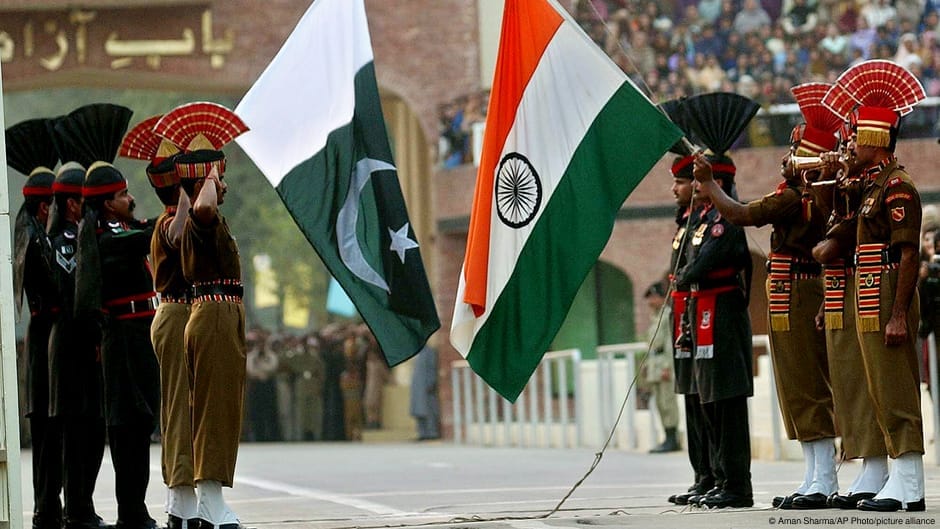
Pakistan’s Climate Change Minister Musadik Masood Malik will visit India from November 20 to 22 to attend the Shanghai Cooperation Organization (SCO) Civilizational Dialogue in New Delhi. It will be the first visit to India by a Pakistani federal minister since the two countries fought a four-day war last year.
The fighting began after armed gunmen killed over two dozen tourists, mostly Hindus, in India-administered Kashmir in April 2025. New Delhi accused Islamabad of backing the attack, which Pakistan denied. Diplomatic tensions have remained high since the confrontation, limiting official engagement.
India invited all SCO member states to the dialogue, which was proposed by Prime Minister Narendra Modi at the organization’s summit in Tianjin in September 2025. The SCO, established in 2001, is a political, economic and security alliance. Its members are Belarus, China, India, Iran, Kazakhstan, Kyrgyzstan, Pakistan, Russia, Tajikistan and Uzbekistan.
Ajay Bisaria, a former Indian ambassador to Pakistan, said it was significant that neither side avoided the event. “The real takeaway is that the relationship isn't so broken that India won't invite Pakistan, or that Pakistan won't come. That alone is a good sign,” he told DW.
Bisaria cautioned against interpreting the invitation as evidence of a diplomatic breakthrough. “The trigger was procedural. This forum grew out of Modi's proposal at the 2025 SCO summit in Tianjin, and as host, New Delhi invited every SCO member. I see no evidence of a back channel or outside mediation, and I wouldn't read much into that either way,” he said.
Pakistan is seeking to maintain its influence in the organization. It holds the chairmanship of the SCO Council of Heads of State for 2026–27 and is due to host the next leaders’ summit in Islamabad in August 2027.
Ayesha Siddiqa, a Pakistani expert on military and security affairs at King's College London, said Islamabad’s decision to send a senior minister was primarily about its role in the grouping. “Pakistan is keen to maintain its position and influence within the SCO and does not want to relinquish its role in the organization. The minister's visit should therefore be seen primarily in the context of Pakistan fulfilling its commitments under the SCO Charter, rather than as a gesture towards India,” she told DW.
T C A Raghavan, another former Indian ambassador to Pakistan, also framed the visit in terms of the SCO. “Both India and Pakistan attach importance to the SCO, and Pakistan currently holds its chairmanship. This visit should be seen primarily in the context of the SCO, rather than as a development in India-Pakistan bilateral relations,” he told DW.
Raghavan added: “Islamabad is also being pragmatic in keeping channels open during its SCO chairmanship by participating in an initiative championed by Prime Minister Narendra Modi. There will be no real impact on the India-Pakistan bilateral.”
Since the April 2025 attack, India has maintained that terrorism and talks cannot go hand in hand. “Post the Pahalgam attack, we have a Pakistan policy. That Pakistan policy remains in place. There has been no change,” Indian Foreign Ministry spokesperson Randhir Jaiswal said at the end of October.
Pakistan continues to raise Kashmir and the Indus Waters Treaty, which New Delhi placed “in abeyance” following the attack. Malik has been a prominent voice in Pakistan’s campaign over water rights. In June, he warned: “We will protect ourselves... if anyone lays a hand over our share of water, we'll cut off that hand.”
Sanjay Kumar Bhardwaj, a professor at the Center for South Asian Studies at Jawaharlal Nehru University, described the SCO as part of India’s “multi-aligned foreign policy.” He said the forum “doesn't provide any space to normalize relations with Pakistan.”
Although there are no official talks, bilateral communication has not entirely stopped. Since the May 2025 confrontation, Indian and Pakistani former diplomats, strategic experts, parliamentarians and retired military officers have reportedly attended informal or semi-official back-channel meetings. The exchanges allow participants to gauge the other side’s thinking, maintain informal communication and reduce the risk of miscalculation, but do not constitute formal negotiations. New Delhi has said retired officials attend such meetings in their personal capacities.
An assessment by the International Institute for Strategic Studies in November said both governments appeared reluctant to resume secret talks, despite the role earlier back-channel contacts had played in stabilizing relations.
Bisaria called the Pakistani minister’s visit “a modest step forward, not a breakthrough.” What happens next, he said, “depends on Pakistan.”
“If it avoids grandstanding in Delhi and offers credible assurances on terrorism, publicly or quietly, it becomes more likely that Indian leaders will attend next year's SCO summit in Islamabad. That will be the real test.”