
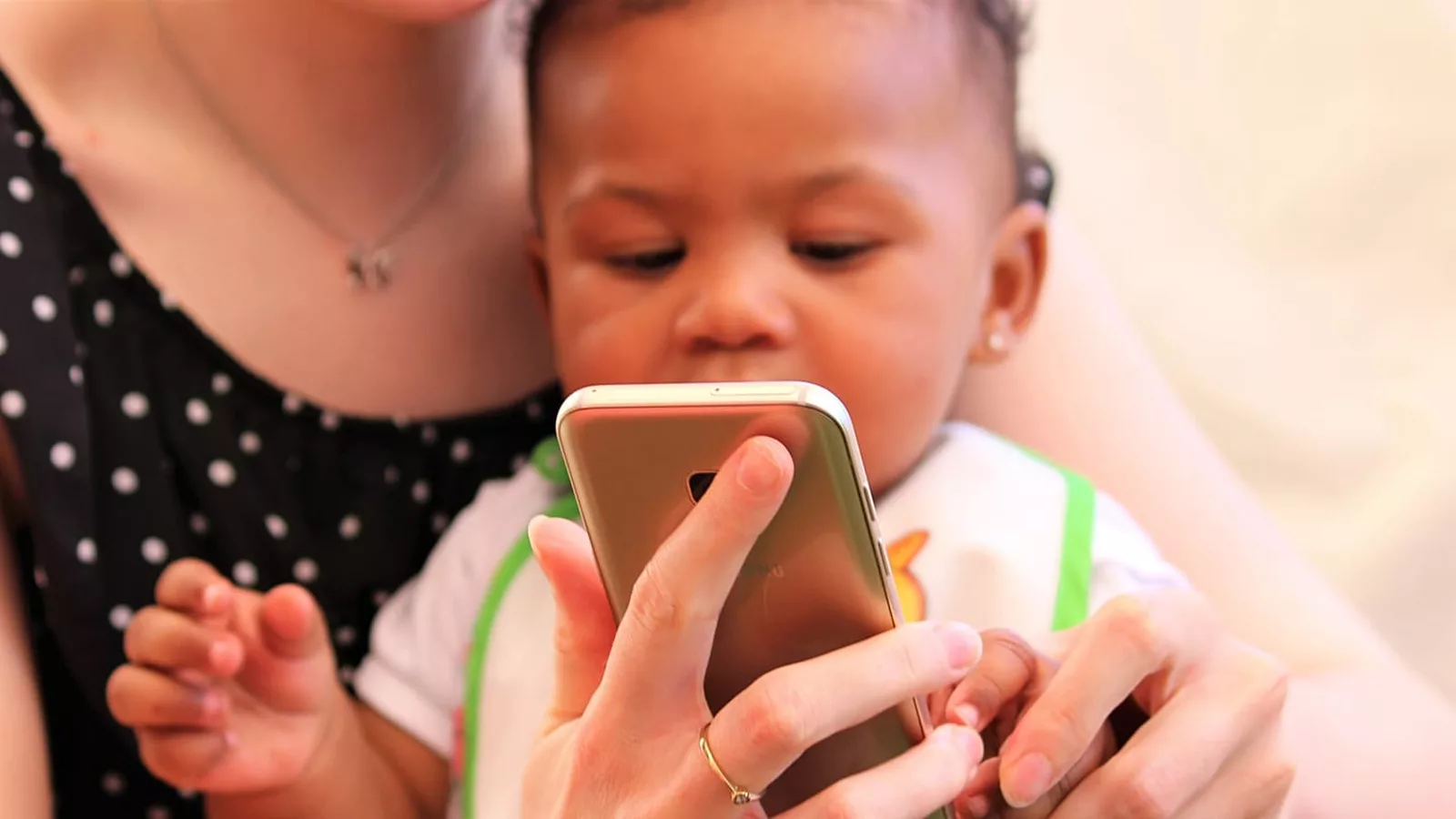
A new study links parents’ phone use outside work hours to slower speech development in their children.
Researchers analysed how family functioning and the use of digital devices affect the development of their preschool-age children. They warned that parents' use of mobile phones, children's nighttime tablet use and "excessively close and interdependent relationships" are linked to delayed speech in children.
The study was conducted by RISE-Health and the University of Aveiro in Portugal.
"Parents play a very important role in the communication opportunities they provide every day," said Maria Inês Gomes, a researcher at RISE-Health.
"Talking, playing, singing and telling stories allow the child to hear and try out speech sounds in situations that have meaning. It is equally important to give the child time to respond and take the initiative," she added.
The study included 93 Portuguese-speaking families with children aged 3 to 5. It found that the type of content and the context of digital device use also mattered. If parents are distracted by their phones, it can curb the number of face-to-face interactions they have with their young children, which is important for language development, the study said.
Excessively closed off and dependent relationships between parents and children could also affect development, the study suggests. It can limit children's autonomy and the "diversity of linguistic contexts in which they take part, which are essential for practising and learning speech sounds," the RISE-Health specialists said.
"When adults often answer for the child or anticipate what the child intends to say, there may be less room for the child to take part, communicate and have the chance to develop autonomy, particularly in terms of phonological development," Gomes said.
The researchers encouraged parents to consider their own digital habits. They also said municipalities and schools can help parents organise routines, choose appropriate digital content, supervise the use of devices and create moments for real-world conversation and play.