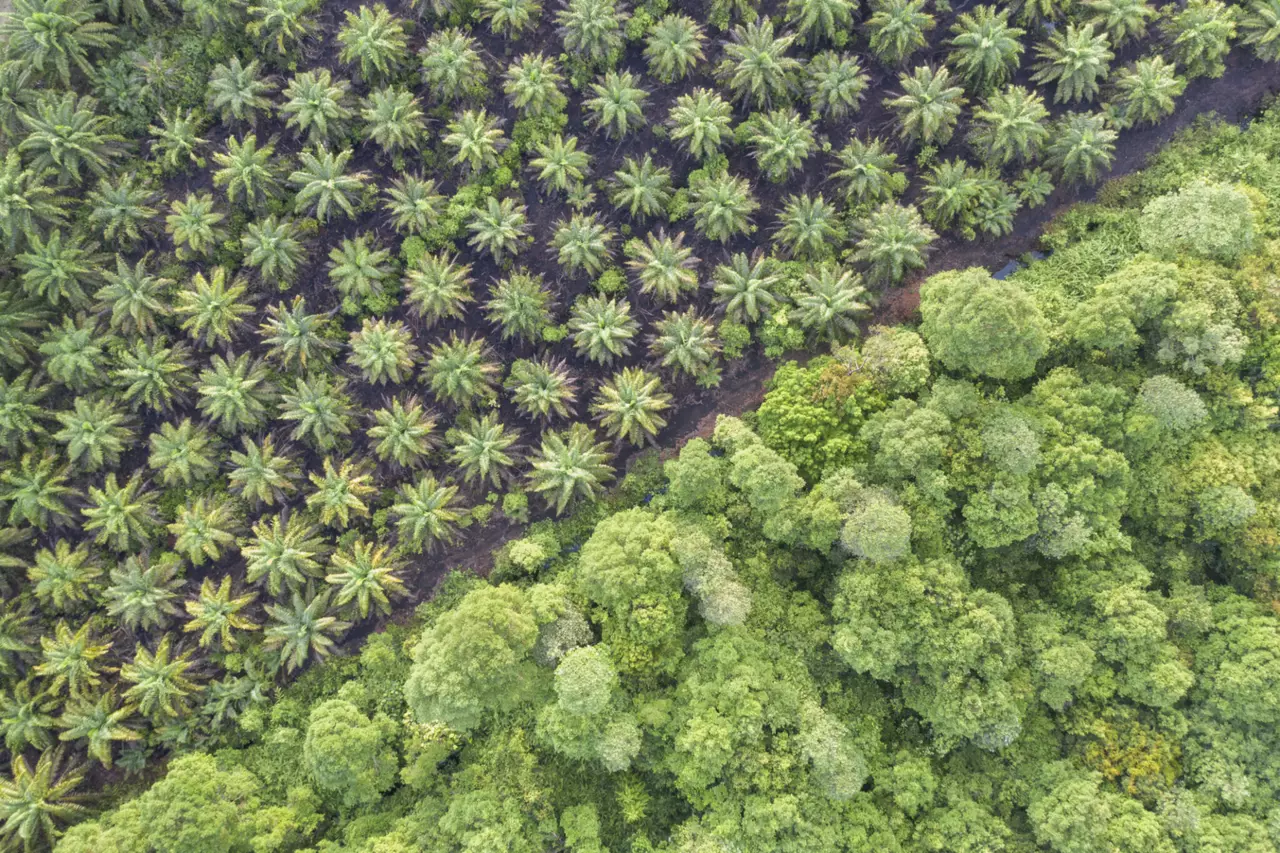
Fossil fuels account for most human-caused climate change, but land-use change has also played a major role, contributing about one-third of historical CO2 emissions. Deforestation is a major factor; draining wetlands is another. A new study estimates how peatland drainage has added to warming, drawing on measurements of emissions from wetlands that remain today.
Led by Jevan Yu at MIT, the study examines peatlands such as bogs and fens, where organic matter builds up in thick layers. Researchers estimate these stores contain about 600 billion tons of carbon—more than all the world’s living vegetation.
In permanently waterlogged peatlands, oxygen is quickly depleted. Anaerobic bacteria break down organic matter slowly and incompletely. Some carbon gradually becomes methane, a more potent greenhouse gas than CO2 that ultimately oxidizes into CO2. Peatlands therefore keep most of their carbon out of the atmosphere, while some escapes as methane.
Many peatlands have been drained through ditches to make land available for agriculture or other uses. As water levels fall, oxygen reaches the exposed peat, boosting aerobic bacteria. Methane emissions decrease, while CO2 emissions rise sharply.
The researchers used recent studies measuring peatland gas emissions to build a global model of CO2 and methane release as water levels drop. The gases respond differently to falling water levels, and CO2 responses also vary by region. Using reconstructions of historical water-level changes caused by peatland drainage, they ran the model from 1800.
To assess the combined climate impact of changes in both gases, the researchers calculated their effect on Earth’s energy budget, or the strength of the greenhouse effect. In 2020, they estimated that CO2 emissions added about 83 milliwatts per square meter of Earth’s surface, while reduced methane emissions subtracted about 9 milliwatts per square meter. The net effect was +73 mW, or 2.7 percent of the total human-caused change in Earth’s energy budget. The estimated range, accounting for error bars, was 1.8–3.6 percent.
Put another way, around 4 percent of the carbon buried in peatlands is now in the atmosphere. Europe accounted for over half of the total CO2 emissions, Southeast Asia for almost a quarter and North America for 14 percent. The timing differed by region: Southeast Asia’s contribution rose only in the last few decades.
Drainage sets off a carbon-release process that continues over time, so past land-use changes will keep producing emissions in the future. The researchers also modeled outcomes through 2100. If peatland water levels remain at their 2020 levels, the total change in Earth’s energy budget would nearly double, from 73 to 138 milliwatts per square meter by 2100.
In the researchers’ analysis, moderate restoration of peatland water levels could slow that increase, while ambitious restoration could reduce the effect to slightly below its 2020 level. The study says the process can be halted, but a full return to the landscape of 1800 is unlikely, meaning elevated emissions will continue for a long time.
Nature, 2026. DOI: 10.1038/s41586-026-11339-0 (About DOIs).