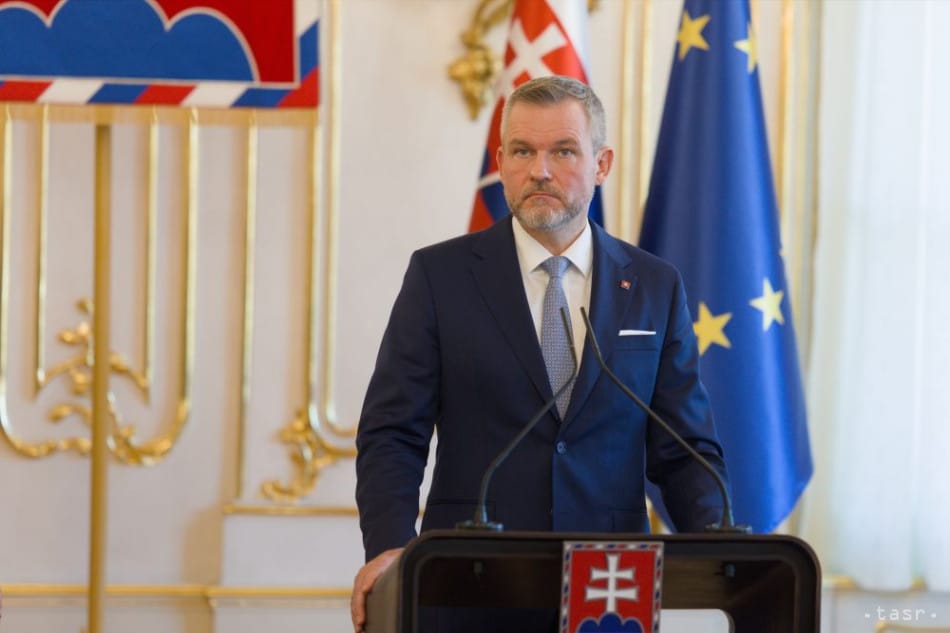
Slovakia should proceed with drafting rules to regulate children’s access to social media rather than wait for European Union-wide measures, President Peter Pellegrini said at a press conference on Tuesday.
He said legislation presented by Education Minister Tomas Drucker (Voice-SD) is consistent with current European regulations and that Slovakia has the right to adopt a domestic solution before the European Commission prepares one.
Drucker said Slovakia had to seek the Commission’s opinion because the proposal is based entirely on current European legislation. The three-month deadline for the process ends in December, he said. Both Pellegrini and Drucker said the Commission had not yet begun its legislative process, and expected final EU measures only in 2028 or later.
Pellegrini urged Drucker to resubmit to Parliament, as soon as the Commission notification process ends, the section on social media regulation that was removed from the de-radicalisation bill. He said Slovakia should be among the countries restricting children’s access to social media from a specific age, citing what he described as scientific proof of negative effects on children.
Drucker said the provision was removed from the de-radicalisation bill to meet the deadline, but that the government plans to pursue regulation after receiving the Commission’s opinion. The ministry is ready to assess substantive discussions with experts and consider, for example, a ban for those under 15, he said.
Drucker rejected the idea that Slovakia was devising a local solution, saying the proposal complies with current European legislation. He said Slovakia had rejected the Commission’s position, already communicated to colleagues in Austria, that countries should wait 12 months.
Eleven countries support Slovakia’s stance, he said, including all four Visegrad countries—the Czech Republic, Hungary, Poland and Slovakia—as well as Austria, Germany and France.
The countries support joint efforts to improve regulation but reject what Drucker called the Commission’s attempts to prevent them from using available legal tools to protect children online.