Hungarian Prime Minister Péter Magyar has rejected the EU’s proposed 2028–2034 budget as a basis for negotiations, saying Hungary will not accept making financial support for Ukraine compulsory in the bloc’s next seven-year spending plan.
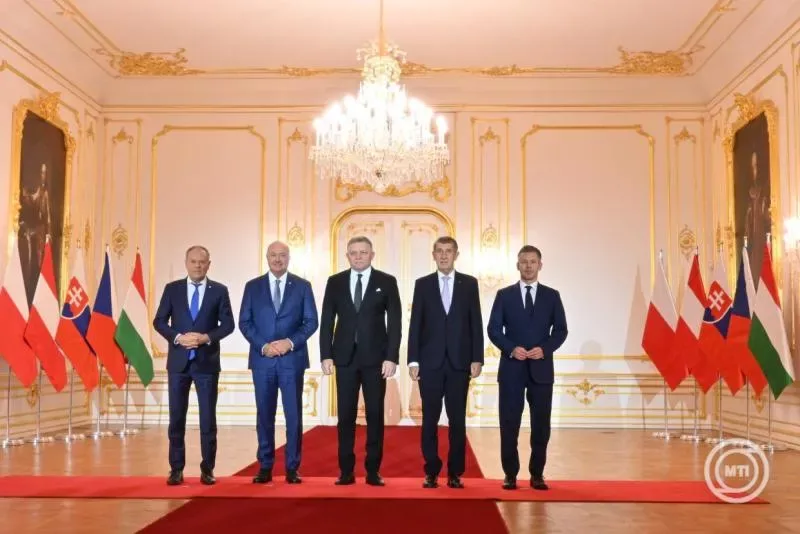
Magyar spoke after a meeting of Visegrád Group (V4) leaders in Bratislava on Monday. The summit was attended by the prime ministers of Hungary, Slovakia, Poland and the Czech Republic, as well as Austrian Chancellor Christian Stocker. Competitiveness, migration and the EU’s next long-term budget were among the main topics.
According to Telex, Slovak Prime Minister Robert Fico initially avoided dramatic language about the proposal, which V4 countries consider unacceptable. Magyar took a more forceful tone at the joint press conference.
“I am, of course, ready for the negotiations on Thursday and Friday, but I think it would have been more useful to put forward a reasonably good proposal instead of playing a bazaar in Cairo, Tunis or Marrakesh,” he said.
Magyar said Hungary, like Slovakia, Poland, the Czech Republic and Austria, stands in solidarity with Ukraine and is willing to provide assistance. “We have done so before and will continue to do so in the future,” he said, according to the Hungarian News Agency (MTI).
But he argued that the EU should not require member states to make contributions through an already stretched budget, threaten them over the issue or make such funding a condition in negotiations.
The dispute is expected to feature prominently in the next round of EU-level talks on Thursday and Friday, 26–27 November.
Despite differences on individual issues, all four V4 prime ministers said the meeting showed that regional cooperation remains viable. Polish Prime Minister Donald Tusk credited Hungary’s change of government with helping the countries find common ground.
“There are things on which we agree, and the fact that we have managed to agree now is also thanks to the change of government in Hungary,” Tusk said, as quoted by Telex. He also highlighted Magyar’s anti-corruption efforts.