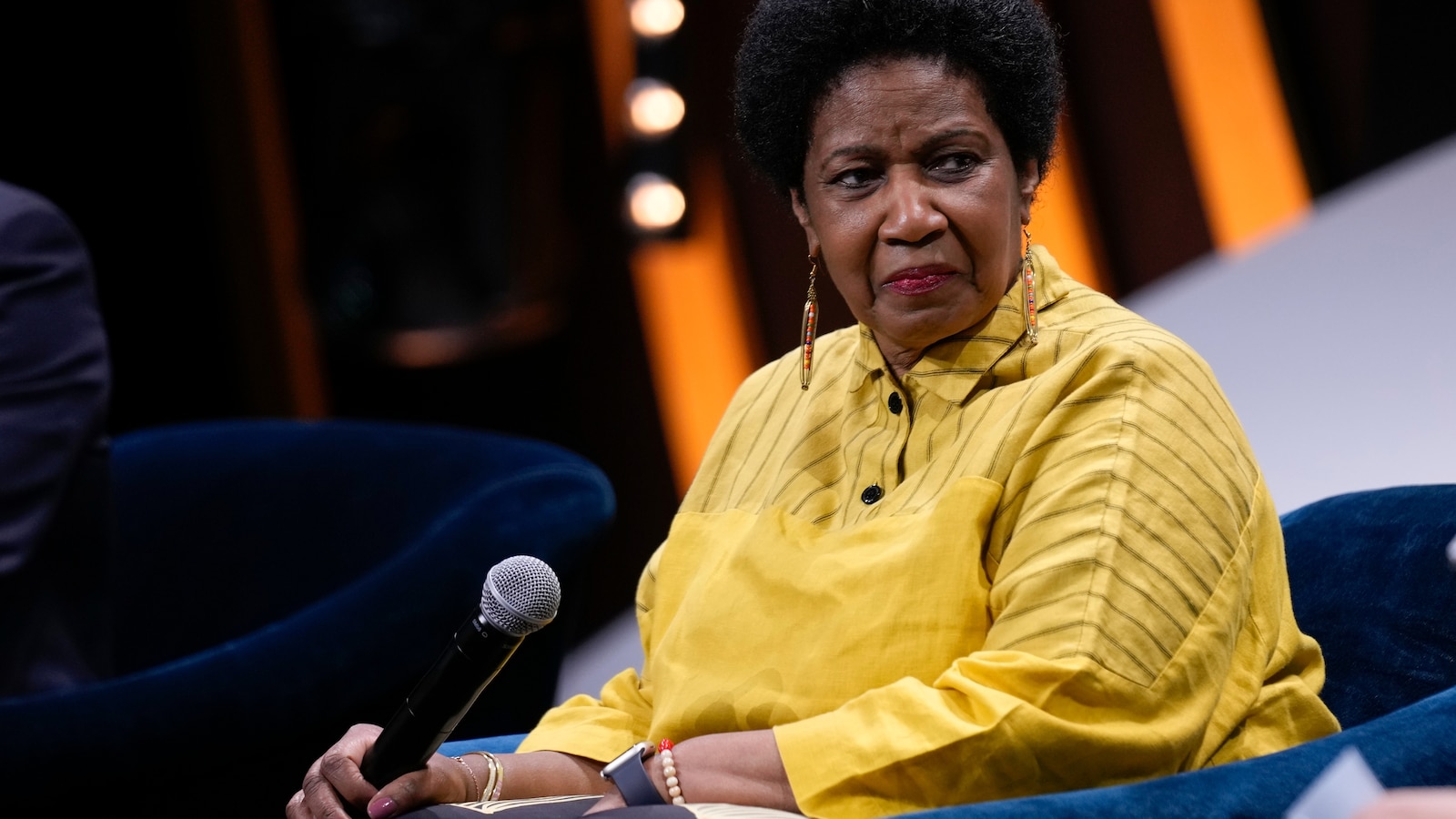
Phumzile Mlambo-Ngcuka, South Africa’s first female deputy president and a former head of U.N. Women, has died at 71, the South African government announced Friday.
A former anti-apartheid activist and lawmaker, Mlambo-Ngcuka served as deputy president from 2005 until 2008. She was also minister of minerals and energy and deputy minister of trade and industry. From 2013 to 2021, she served as U.N. under-secretary-general and executive director of U.N. Women.
The government and her political party, the African National Congress, did not immediately share the date or location of her death.
Mlambo-Ngcuka was part of the ANC’s first democratic Parliament after apartheid and white minority rule ended in 1994, when Nelson Mandela was elected the country’s first democratically elected leader.
Tributes praised her contribution to South Africa’s liberation struggle and democracy, as well as her work at the U.N. championing women’s rights and gender equality.
“Mama Phumzile was a distinguished leader of our movement and a dedicated servant of the people. She made history as the first woman to serve as Deputy President of South Africa,” the ANC said in a statement Friday.
U.N. Secretary-General António Guterres expressed condolences and called her “a lifelong champion of the rights and empowerment of women and girls.”
“Phumzile Mlambo-Ngcuka’s fight began long before she entered the world stage. As a young teacher in KwaZulu-Natal and an activist against apartheid, she learned that freedom is never complete until it reaches every woman and every girl,” he said in a statement Friday.
U.N. Women said her courage inspired people around the world and that her leadership helped shape a global movement. “From her early days as an anti-apartheid activist to becoming South Africa’s first woman Deputy President, and later leading U.N. Women from 2013 to 2021, she devoted her life to justice and equality,” the agency said in a statement.
Mlambo-Ngcuka was appointed deputy president amid a volatile period in South African politics and infighting and a succession battle in the ruling ANC. She replaced Jacob Zuma after he was fired following his implication in a corruption scandal involving an arms deal.
Her appointment drew criticism over her marriage to Bulelani Ngcuka, the country’s lead prosecutor, who was pursuing corruption charges against Zuma. Mlambo-Ngcuka is survived by her husband and their five children.