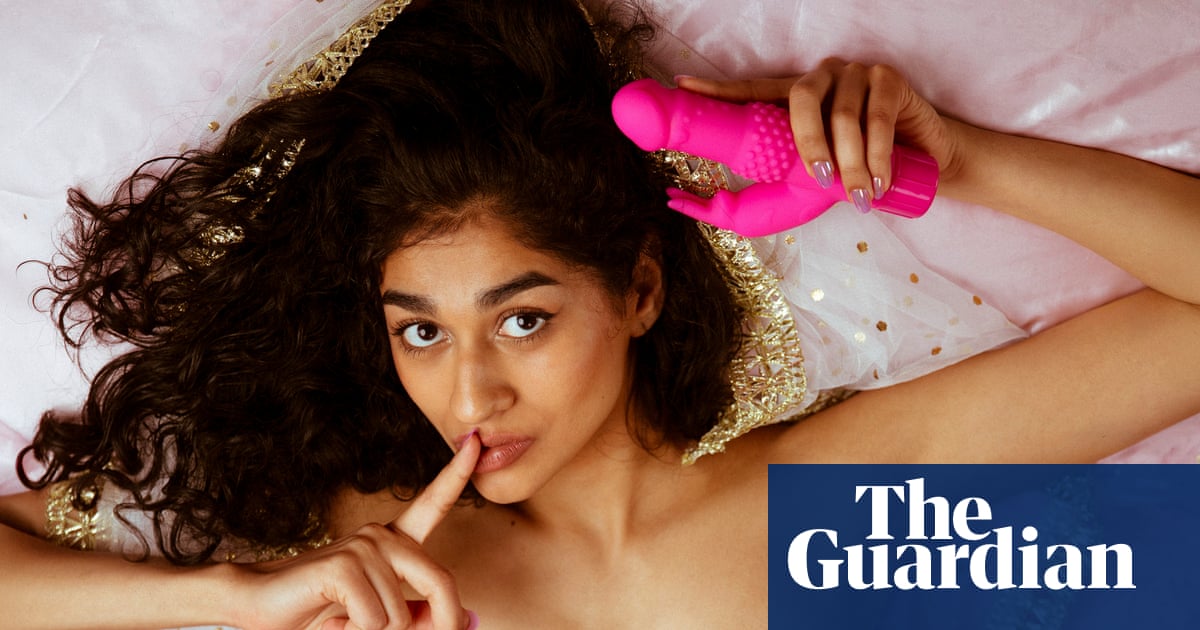
In Farah Ashraf’s solo play Pink Rabbit, Amna is a dutiful Muslim daughter at home and an online sex worker known as PersianBaby. The darkly funny drama follows the collision of those two worlds when her mother arrives unexpectedly during an online encounter.
Ashraf, who wrote and performs the play, says she began developing it in her final year at the Oxford School of Drama. Before that, she trained with the National Youth Theatre. The idea grew from her frustration about how she might be perceived in the acting industry and the roles she might be limited to playing.
Ashraf first imagined a young woman who seemed comfortable with herself but was missing something. The character came into focus in a bedroom scene, as her mother unexpectedly appeared during a scandalous online encounter. Ashraf portrays both Amna and her ammi, the Urdu word for mother.
Although Pink Rabbit is not autobiographical, Ashraf says: “A lot of Amna’s soul is very much a mirror of me and my life.” She says the production has developed as she has grown as an artist.
The play challenges limited representations of south Asian and Muslim women, presenting Amna as contradictory, vulnerable and unpredictable. Ashraf performed it at the Edinburgh fringe this summer for a predominantly white audience. “There’s some people sitting in there, and this might be their first experience of hearing this kind of perspective from a brown woman,” she says.
Ashraf says she was nervous about how older south Asian audience members might respond to Amna’s online alter ego, explicit interactions with customers and a bright pink sex toy. “But overall, they were so open to the experience and the story,” she says. By playing both Amna and her mother, Ashraf brings generational tensions into focus without presenting either character as entirely right or wrong.
Directed by Alessandro Babalola, Pink Rabbit draws on Ashraf’s relationship with poetry and her experience growing up between London and Pakistan. It features Urdu and Punjabi alongside English. Ashraf says she introduced prose gradually, keeping poetry’s rhythm and lyricism while allowing some moments to breathe. “There’s something beautiful about theatre and how it allows for that.”
During its Edinburgh run, the play was staged in a small, tightly packed space. Ashraf shifted between Amna, Ammi and PersianBaby’s subscribers, using physical performance to tell the story without props, complex lighting or rigorous sound design.
As Pink Rabbit prepares for its forthcoming Soho theatre run, Ashraf and her team plan to experiment with lighting and silence. They want to explore “how to take everything up a notch, and be even braver with our choices,” she says. “The story is not changing, but we wanted to know where in that story we could add layers, or even take away layers.”
Ashraf hopes audiences will laugh, cry, question and recognise parts of themselves in the characters. “Brown women are not monoliths,” she says. She hopes people with complicated relationships with family or their wider communities will feel seen and heard, while others may gain a new understanding of experiences beyond their own. “More than anything, I’d really love people to feel inspired to tell their own stories.”