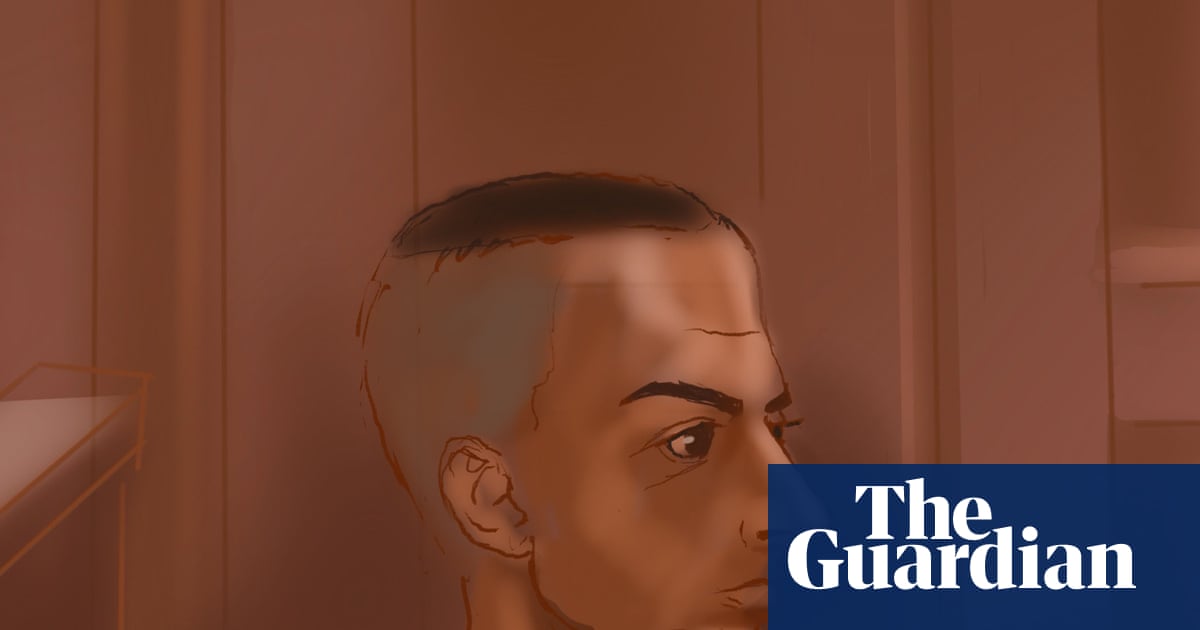
Prosecutors told the New South Wales supreme court that former police officer Beau Lamarre-Condon’s explanations for disposing of the bodies of Jesse Baird and Luke Davies “ring completely hollow”. Lamarre-Condon has pleaded not guilty to two counts of murder and one charge of aggravated break and enter.
Lamarre-Condon is accused of fatally shooting Baird and his new partner, Davies, with his police service weapon at Baird’s home in Paddington, Sydney, on 19 February 2024.
Crown prosecutor Brett Hatfield SC addressed Lamarre-Condon’s efforts to clean up the alleged crime scene and dispose of the bodies on Friday, as the trial concluded its ninth week. The defence does not dispute his actions after the deaths, but argues he acted because he “panicked considerably”.
Hatfield told the court Lamarre-Condon’s conduct was not that of someone who panicked after an unintended event, describing it as “deliberate, sustained and very purposeful”. He said Lamarre-Condon took extensive steps to distance himself from the deaths, including texting people from Baird’s phone to make it appear Baird was alive, and “disposed of the bodies in an utterly callous manner”.
“The lies, concealment and disposal of the bodies are not equally explained by manslaughter or accident,” Hatfield said. “His conduct is immediate and the steps are so extreme you might think it’s only consistent with having intentionally killed both men and a planned murder. His explanations in his evidence … ring completely hollow.”
Lamarre-Condon said his initial actions were motivated by concern for the housemates. Hatfield argued that leaving the bodies in the courtyard risked them making a “completely terrifying discovery”. He said Lamarre-Condon understood that “exactly what he’d done was murder” and described his conduct as “an exercise in avoiding accountability in what he knew he had done”.
Earlier on Friday, Hatfield restated the prosecution’s account of the day of the alleged murders and played audio of the two gunshots that killed Baird. He asked the jury to consider what could be done in the four seconds between the shots, arguing there was time to walk a few steps and fire, but “not opportunity for much more than that”.
The prosecution alleged Lamarre-Condon later raised a “pathetic moral dilemma” and claimed he feared being killed in jail, despite knowing he would be in protective custody. The defence says Baird and Davies died in two separate struggles when Lamarre-Condon was acting in “self-defence”.
Hatfield said Davies’ DNA being found on the gun was “entirely unremarkable evidence”, alleging Lamarre-Condon had handled Davies’ body and then touched the weapon. “It’s just something he’s grabbed on to in order to weave this invented narrative about Mr Davies shooting himself,” Hatfield said.
Earlier evidence from a weapons expert indicated that almost 3kg of force would be needed to pull the trigger, which the prosecution said would require a conscious movement by the person holding the gun. The trial before Justice Natalie Adams continues.