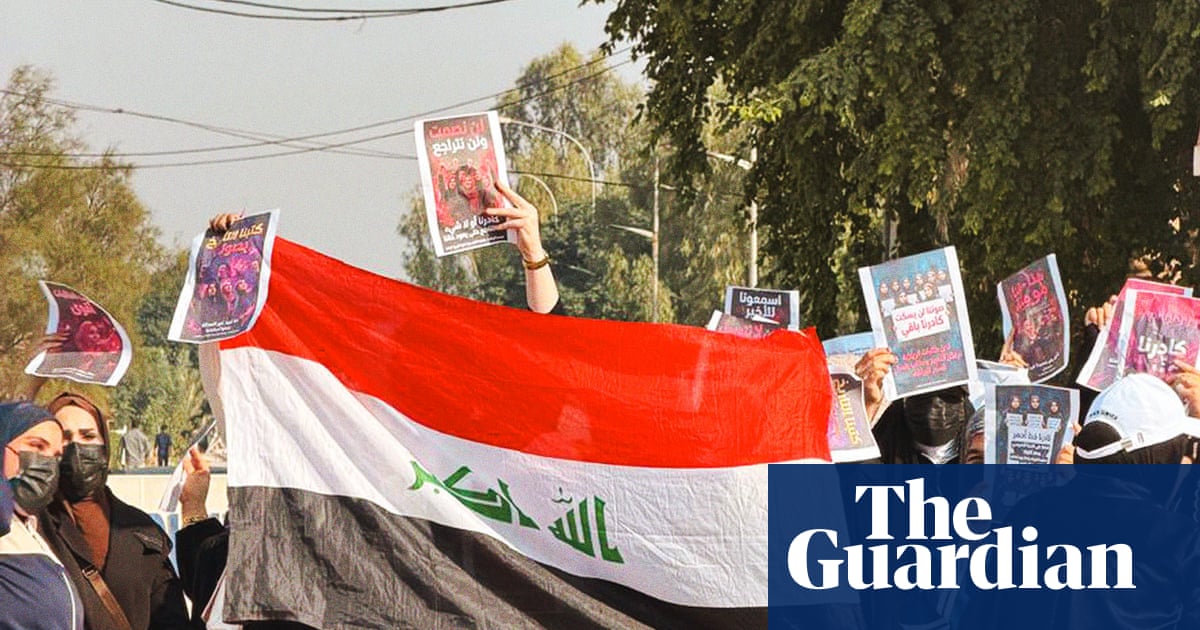
The removal of male professors teaching female students at Al-Qadisiyah University in southern Iraq has prompted protests over the past two weeks. Activists have criticised the move as a policy of gender segregation resembling that under Taliban rule.
As many as 400 women are estimated to have joined protests calling for their professors to be reinstated. The demonstrations appear to have surprised university administrators.
The university said the change was necessary to “prevent the mixing” of men and women and had been requested by female students’ families. Students said their families knew male professors were on the teaching staff before they enrolled and supported the protests.
Students said university leaders had mocked their demonstrations and refused to discuss their concerns about losing their academic supervisors. Social media commentators also accused the women of wanting to keep male professors to “establish immoral relationships with them”.
Huda, 22, said she and her classmates went to demonstrate, but university president Rahi al-Yasiri blocked their way with bodyguards. “He ordered them to take photographs of our faces, in an attempt to intimidate us and punish us later,” she said, adding that the bodyguards had made fun of the students.
Huda said the students tried to explain that men and women continued to work together in Iraqi society. “Aren’t there doctors who treat both men and women? Why then do you prevent male professors from teaching us, too?” She said al-Yasiri replied: “Even if you hit your heads against the wall, I will not bring back the professors.”
Many students said their graduation projects and research were supervised by the professors. They said they were used to their teaching methods and that the professors knew their strengths and weaknesses, making replacements more complicated at this stage. Female students said the university told them to drop out if they were unhappy with the change.
Balsam Mustafa, an Iraqi-British feminist researcher at the University of Cardiff, said the students were “treated as if they are minors without the right to object to decisions affecting their academic lives”. She described the professors’ removal as part of a worrying trend in women’s rights, pointing to “growing discussion about women’s clothing and chastity reflected in the celebration of female students who wear the abaya”.
Israa Salman, an Iraqi lawyer and human rights activist, called the restrictions on women a “societal catastrophe”. She said efforts were being made to suppress women’s talents and turn Iraqi society into “something resembling Kabul under Taliban rule”. Salman said this contradicted Iraq’s constitution and the international treaties and conventions the country had signed and ratified.