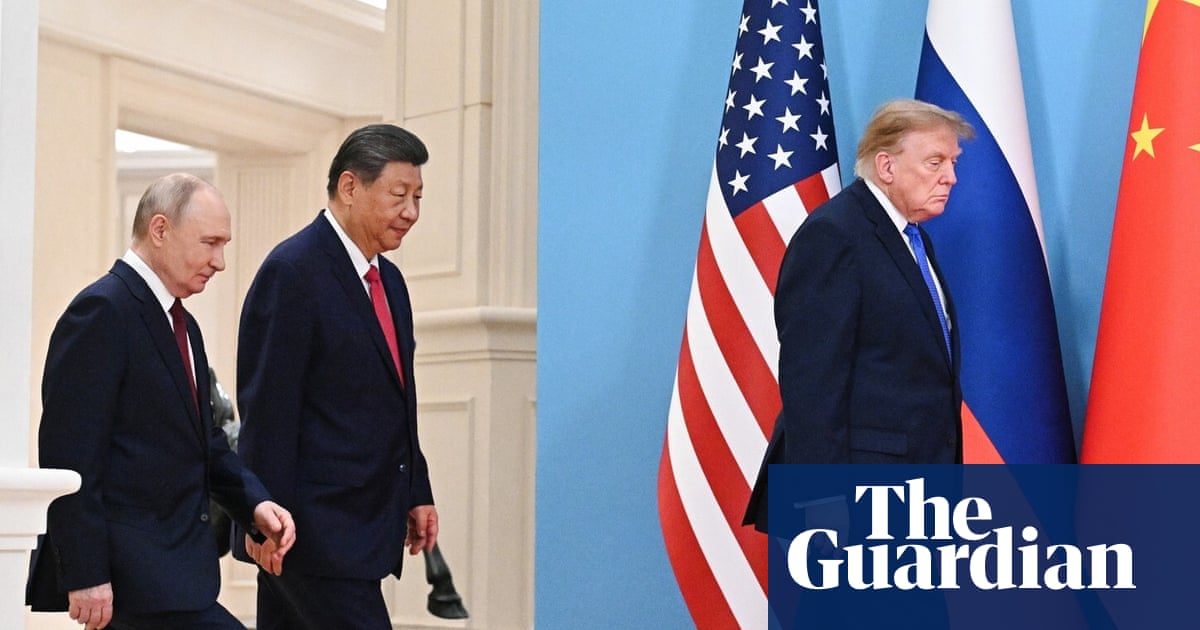
The presidents of the US, China and Russia met on Thursday for an unprecedented trilateral gathering on the sidelines of the Apec summit in Shenzhen. Donald Trump, Xi Jinping and Vladimir Putin spoke for more than an hour about nuclear weapons, the war in Ukraine and international security, but announced no breakthrough or concrete agreement on the main issues.
The three leaders head the world’s major nuclear powers. Their decisions have far-reaching consequences for global security. Here are five takeaways from the meeting.
Trump called the meeting ‘historic’
Trump opened the talks by telling Xi and Putin that “we are really making history”. He said the US, China and Russia were “uniquely positioned” to discuss reducing their nuclear stockpiles and lowering the risk of nuclear weapons being used.
The gathering was an unusually high-profile display of cooperation between countries whose relations have been marked by tensions, particularly over Ukraine, trade disputes and the Nvidia scandal. Trump said peace could not be achieved by turning down opportunities for dialogue. It was the first trilateral summit of this kind between the three countries’ leaders.
Nuclear arms control was a central issue
The meeting took place as the New Start nuclear agreement is due to expire in February. The treaty limits the US and Russian arsenals, capping each side at 1,550 deployed strategic nuclear warheads.
In September last year, Putin proposed voluntarily maintaining the limits for another year. Trump rejected that approach, calling instead for a new agreement that would include China.
Xi called for every effort to be made to prevent nuclear war and for nuclear weapons to “be completely prohibited and thoroughly destroyed”. No new arms control agreement was announced.
Ukraine was discussed, but there was no breakthrough
Putin told Trump and Xi that their countries had “many converging interests” in resolving conflicts, explicitly mentioning the war in Ukraine. He also referred to their shared responsibility for international peace and security.
The meeting gave little indication of progress toward ending the war in Ukraine. Kyiv was not mentioned in the subsequent joint peace declaration.
Trump criticised the International Criminal Court
Trump described the International Criminal Court as “out of control”, criticising what he regards as the court’s excessive overreach.
Putin is wanted by the ICC on war-crimes charges. The court issued an arrest warrant for the Russian president in March 2023, accusing him of unlawfully deporting and transferring Ukrainian children from occupied territories to Russia.
The US and China are not signatories to the Rome statute, the treaty that established the court, and are not bound by the requirement for member states to carry out its arrest warrants.
A joint ‘peace declaration’ was issued
A joint “peace declaration” published after the meeting by Chinese and Russian state media called for UN reform “so that it may respond more effectively to global challenges”. It said changes should range from boosting fuel supplies to engaging in “dialogue to reduce nuclear risks”.
The US and China are permanent members of the UN security council, each with veto powers. They, along with Russia, have argued for a greater role for nations from Asia, Africa and South America.
Russia has opposed permanent security council bids from Germany and Japan, arguing that western and Nato countries are already overrepresented and vote as a single bloc against Russian interests.
The declaration also criticised the ICC, saying the court and similar bodies “must not abuse their jurisdiction”. It emphasised state consent and respect for the immunity of officials, which could be interpreted as a challenge to the legal basis for the ICC’s arrest warrant for Putin.