Originally published by joecirincione.substack.com. By Joe Cirincione.
Reducing the Cost of Living and Creating a Fair Global Economy for AllA progressive foreign policy agenda for the 120th Congress, Part Three.
Joe CirincioneNov 19, 2026This is the final part of my three-part series on the new agenda for the Democratic majority released by the Center for International Policy. I serve as vice-chair of its board of directors. Although I had little to do with the drafting of this agenda; I wholeheartedly endorse its recommendations.
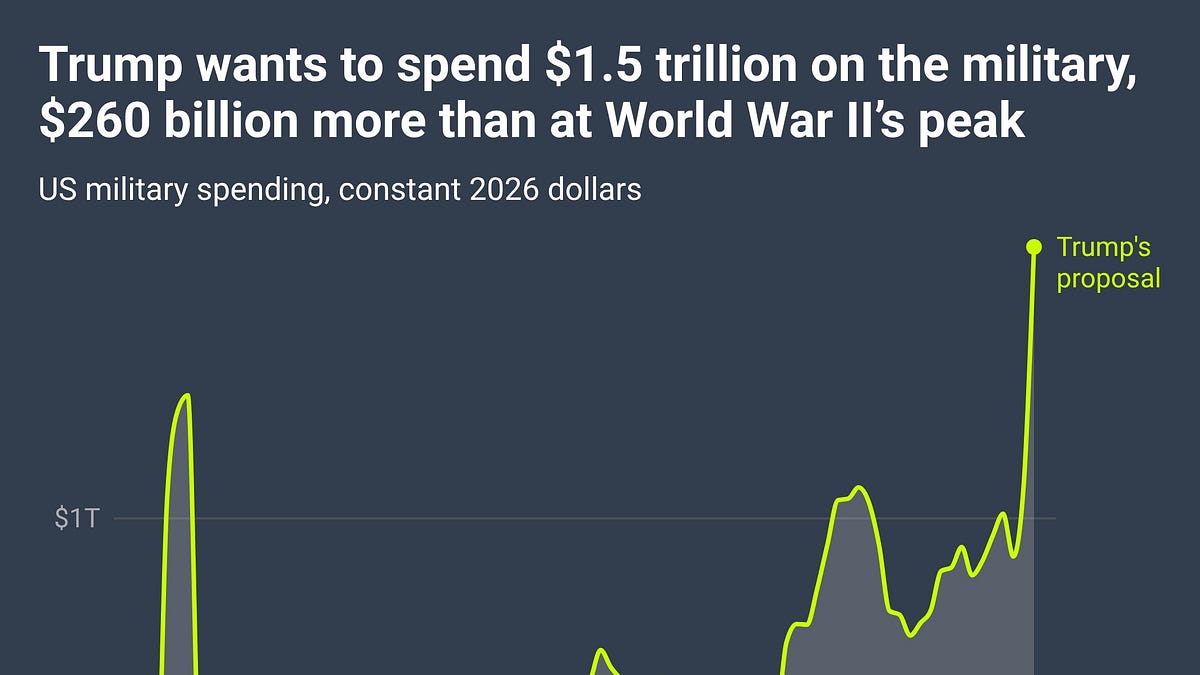
This last set of recommendations is really in my wheel house, having spent nine years as a congressional investigator of military programs for the House Armed Services Committee and Government Operations Committee (now Government Oversight). It correctly focuses on first cutting the bloated military budget. I am encouraged that the incoming chair of the HASC, Adam Smith, has said we should not have a budget over $1 trillion. That is still much too much, but freezing the budget now is a reasonable first step.
Further, he linked the excessive budget to the cost of living — just as CIP recommends:
"We must push for the development of a more realistic and sustainable approach to our national security, one that does not require a defense budget in excess of $1 trillion or one paid for with Draconian cuts to critical domestic programs," Smith said in a Nov. 4 statement.
That opens up the possibility of finally cutting the unnecessary and enormously expensive nuclear programs, like the new Sentinel ICBM and the ludicrous Golden Dome national missile defense system, as the CIP agenda urges.
I have found that if the military budget is growing, it is extraordinary difficult to cut a program, no matter how over-budget and behind schedule and unnecessary it is. But if you force the Joint Chiefs to chose, the do not chose nuclear. They want to preserve programs they actually use like planes, ships, and troop levels.
Finally, I believe the best way to inform the American people about the wasteful spending in the Pentagon is to link it to corruption. The Trump, Witkoff and Musk families have profited enormously from generous defense contracts given to companies in which they recently bought a stake. Start there. They link to the Golden Dome, to the Saudi nuclear deal, to AI, to nuclear and much more. These investigations will provide the on-ramp to expose the general corruption in our military procurement system, including the scandalous revolving door where well-paid government employees move freely to ludicrously-paid consultant and contractor jobs for the companies they once oversaw.
Below is the final section of this comprehensive plan authored by CIP Vice-President Dylan Williams. It focuses on how to cut wasteful military spending and improve the lives of average Americans. You can find Part One here. Part Two is here.
Overview
The new majority in the coming Congress should build its foreign policy agenda around the three concerns voters made clear in the midterm election: endless wars, unprecedented corruption, and the rising cost of living. The three are deeply linked, with Americans viscerally aware that the most severe threats to their security and livelihoods now come from within: a president who launches unauthorized wars while enriching his family and cronies, and an economy increasingly dominated by a handful of oligarchs and corporations threatening to destroy their jobs and financial futures.
Many of the most urgent and consequential issues of our time – like the rise of China, climate change, and AI – can and should be ambitiously addressed through this framework of stopping war, corruption, and rising costs. Most of these proposals will not become law in the next two years, but it is critical to propose and socialize them now so they can form the backbone of a governing agenda for Congress and a baseline for a new administration in 2029…
PART III
Reducing the cost of living and creating a fair global economy for workers
The anti-war and anti-corruption agendas will most resonate with voters if they connect with their top concern: the surging cost of living. The task is to define what follows the failed policies of both neoliberal market fundamentalism and Trump’s kleptocratic nationalism. An economic strategy built around “beating” China is costly and illusory: corporate concentration, tax avoidance, and attacks on organized labor have done at least as much damage to American workers as Chinese imports. A truly transformative and broadly supported affordability agenda will have the following international-facing elements:
Count the Iran war’s cost to American workers. Hold hearings on how the US-Israel war on Iran raised gas, grocery, and housing finance costs. Put the war’s cost in the context of possible domestic spending that could have relieved Americans of other financial burdens, like medical and education debt, and raised quality of life overall.
Reduce the trillion-dollar Pentagon budget as a cost-of-living imperative. US military spending has surged while peer nations invested in health, housing, infrastructure, and education, and now outpace us in life expectancy and quality of life. Americans’ futures are less secure, not despite what we spent on the military, but in large part because of it. Much of that spending is justified as the price of “beating China,” an endless rivalry mindset pressed hardest by contractors who profit from it. Congress should instead use the National Defense Authorization Act and the appropriations process to end and reverse ever-increasing military spending, starting with steps to:
Enforce the Nunn-McCurdy Act on projects like the Sentinel ICBM, now projected at 81% over its original cost.
Cancel Golden Dome and restructure the F-35, whose lifecycle cost is projected above $2 trillion.
Restore and strengthen requirements for contractors to provide certified cost and pricing data. Reverse the FY2026 NDAA’s increase in the threshold from $2.5 million to $10 million, and its exemption for “nontraditional” defense contractors. Close the commercial-item loopholes that let sole-source suppliers escape scrutiny.
Protect the Pentagon’s independent testing office, and redirect savings to service members, families, and veterans.
Begin converting parts of the defense industrial base to civilian and climate-friendly production, reviving detailed conversion plans first drafted in the 1990s.
Put Congress back in charge of tariffs. Require congressional approval for new tariffs, as the bipartisan Trade Review Act would within 60 days. Amend IEEPA to exclude routine trade disputes, and narrow the other delegations of tariff power. The neoliberal taboo on tariffs is gone; the question now is who decides and who benefits.
Trade that raises wages everywhere. Use congressional prerogatives on trade to make worker interests central to trade deals rather than side letters. The last generation of trade agreements left labor chapters rarely enforced and weaker than investor protections, and that hierarchy should be reversed. Keep fast-track trade promotion authority from being revived, so every trade agreement gets full congressional review and approval. Use market access as an incentive for partners to raise wages, expand collective bargaining, and improve workplace safety, building on enforceable tools like the USMCA Rapid Response Mechanism.10 Use trade remedies against wage suppression and weak labor and environmental enforcement, and give any protective tariffs defined phaseouts. Restore the labor-rights funding this administration eliminated, including for the Department of Labor’s Bureau of International Labor Affairs and the Solidarity Center.
Restore the global minimum tax. Legislatively reverse the early-2026 exemption of US corporations from the OECD global minimum tax, and direct US involvement in negotiations on a UN tax convention. Pair this with domestic reform objectives like equalizing tax rates on labor and capital income, funding IRS enforcement, and closing loopholes that let the wealthy pay less than workers.
Share
A US corporate accountability and due diligence law. Improve on the EU’s corporate sustainability due diligence directive by legislating that companies must identify, prevent, and remedy human rights and labor abuses in their global supply chains, and open them to lawsuits when they fail. The Uyghur Forced Labor Prevention Act shows how such a mandate can work in practice. Start sectorally with critical minerals and tech, and expand the scope and enforcement of forced labor import bans.
Check corporate concentration across borders. Direct and fund the executive to pursue an antimonopoly strategy coordinated with foreign partners, including joint merger review and investigations. Investigate how much US foreign policy now depends on infrastructure controlled by a few billionaires, as Elon Musk’s restriction of Ukraine’s Starlink access showed, starting with an antitrust review of SpaceX.
Cooperate with China on clean energy, on terms that build US jobs. Chinese firms lead in batteries, EVs, and solar, and walling them off raises costs for American families and cedes global markets. Move legislation that would amend the “foreign entity of concern” rules to allow pilot joint ventures in which Chinese investors take a US partner, transfer technology, accept union neutrality, and source components locally. Follow Canada in allowing a limited quota of Chinese EV imports, so families get cheaper clean cars while US automakers catch up.15 Keep guardrails where security demands them: for example, building critical minerals and rare earth supply chains that do not depend on China, and sourcing grid inverters from allies. Combine this with economic “arms control” talks to wind down export controls, blacklists, and other economic weapons on both sides.
Cooperate on climate finance and debt relief with China, not against it. The energy transition will be won or lost in the Global South, and joint US–China financing for grids and renewables there would do far more than rival programs. Direct Development Finance Corporation and Export-Import Bank support toward the cleantech where US firms lead, such as next-generation geothermal, so climate finance also creates US jobs. Urge the administration to work with Beijing through the G20 on fairer debt relief rather than simply blaming China for the debt crisis. Authorize IMF reforms that give the Global South more voice, back ending IMF surcharges and new Special Drawing Rights issuances, and support debt-for-nature swaps and clauses that pause debt payments after climate disasters.
Ensure that AI serves workers, not oligarchs. Codify the worker protections in the Biden AI executive order and build worker-based oversight with the NLRB. Restore the congressional Office of Technology Assessment. Require AI firms and data centers to publish their water, energy, and land use, and shift more of the cost of new power demand from households to the companies building data centers.