Rohingya survivors who fled Myanmar in 2017 have described the violence that drove them from their homes, including villages set alight, people killed while trying to escape and rivers filled with bodies. Accounts of their flight featured in the International Court of Justice ruling this week that Myanmar had carried out genocide against the Rohingya.
Survivors said smoke from a neighbouring village could signal an attack was coming next. In other places, people saw rivers run red, pulled bodies from the water, performed quick burial rites and fled.
The ICJ said it was not enough to describe what happened as ethnic cleansing: soldiers had also killed people trying to escape, and Myanmar was trying to destroy the group as a people.
More than 700,000 Rohingya refugees arrived in neighbouring Bangladesh after the violence in 2017, including reports of organised mass killing, sexual attacks and the destruction of villages. Many settled in what has become the world’s largest refugee camp. Survivors arrived from places including Tula Toli, where thousands were rounded up, killed and buried in mass graves.
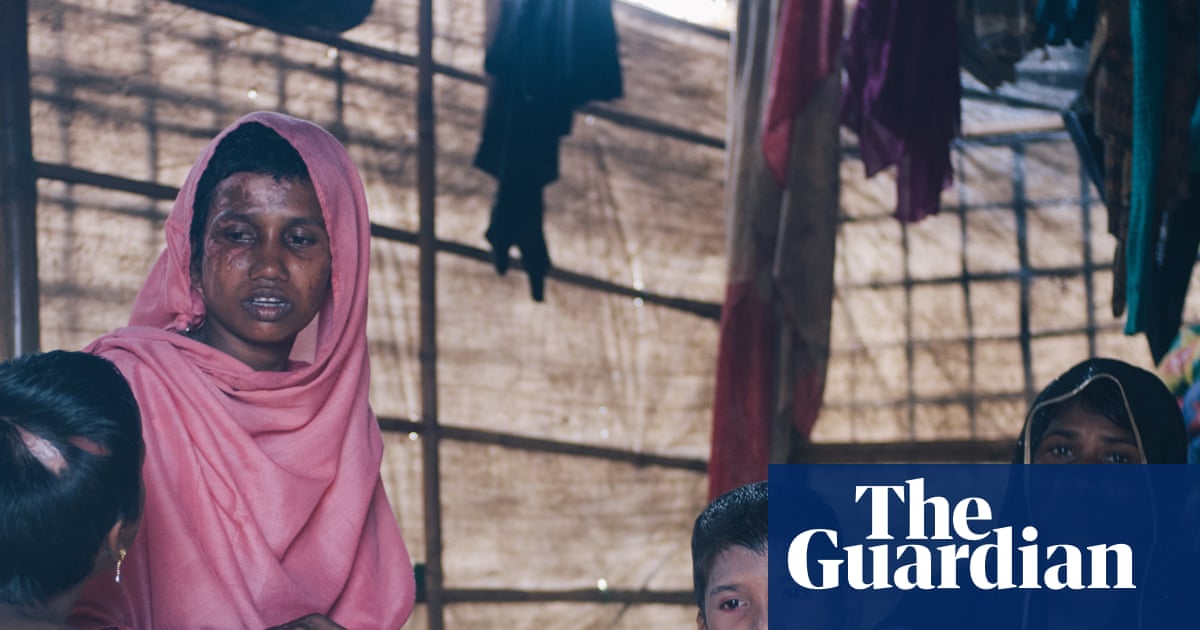
Almost a decade later, most Rohingya who arrived in 2017 remain in the camps, alongside people who fled earlier military operations and persecution. Refugees live in fragile shelters made of bamboo and tarpaulin and are denied the right to leave the camps, work or seek education.
The ruling comes as hundreds of Rohingya have died at sea trying to escape the camps, while countries such as Malaysia and India have spoken about returning Rohingya to Myanmar. Campaigners hope the ruling will put an end to that.
Momtaz and Dildar Begum, sisters from Tula Toli, each recounted being attacked by Myanmar forces. Momtaz said soldiers killed her husband and children and raped her in front of her only surviving child. Dildar had experienced the same violence. For months, each believed the other was dead; they later discovered they had both reached Bangladesh and were living in different parts of the camp. Each had one surviving daughter, both with similar scars along the backs of their heads.
Anwara Begum had twice previously lived as a refugee in Bangladesh: first as a child in 1978, then in the early 1990s as a young mother. She lost her son to a respiratory disease during a rainy season in a flimsy tent. After being forced back to Myanmar, where the persecution she had fled continued, she vowed never to become a refugee again.
She fled after seeing the river near her village filled with bodies floating from Tula Toli. Her husband pulled out and buried as many bodies as he could, then they gathered belongings and headed west to the River Naf, the border with Bangladesh. Anwara said she gave a Bangladeshi boatman all the gold she owned, worth US $200 (£150), to cross.
Nur Alam, an elderly man, was carried on his children’s shoulders on the journey to Bangladesh. His 10-year-old grandson, Mamoon, held his hand, and the two stayed together in the camp. Alam said this was his fourth time as a refugee in Bangladesh. He was first expelled from Myanmar, then known as Burma, during military operations in the 1950s, before Bangladesh became an independent country.