Spain's 'Austrian backpack' pension plan back at centre of 29N pensions debate
By Maria Muñoz Morillo ·

The so called Austrian backpack was created in Austria to replace traditional redundancy pay and build up a safety pot. Analysts disagree on whether it would work in Spain. With just a few weeks to go before the general election on 29 November, pensions are once again at the centre of the campaign.
Spain spends around 14,498 million euros a month on contributory Social Security pensions, according to the latest official data for September 2026, an increase of 6.3% on the previous year.
The more than nine and a half million pensioners are closely following the parties' proposals and every mention that might suggest a freeze or cut in these benefits. With an average pension of 1,380 euros (source in Spanish), retirees are watching closely what their future will be in the next legislature, something politicians know very well and use to win the votes of one of the most decisive parts of the population.
Spain's public debt is close to 100% of GDP, more precisely it stood at 99.7%, according to data from August 2026. In other words, 1.75 trillion.
In a country with a population already close to 50 million, an unemployment rate above 10%, where 22.8 million people are in work, earning on average 29,540 euros gross a year, (source in Spanish) workers, and especially young people, wonder whether they will ever receive the benefit they are paying into and whether the system will be able to hold up. In that climate an old economic idea has resurfaced: the Austrian backpack.
A campaign with pensions at its core
Political parties know the immense power of the pensioners' vote and have launched a battle to win those millions of votes that could prove decisive in a set of highly polarised and highly tense elections.
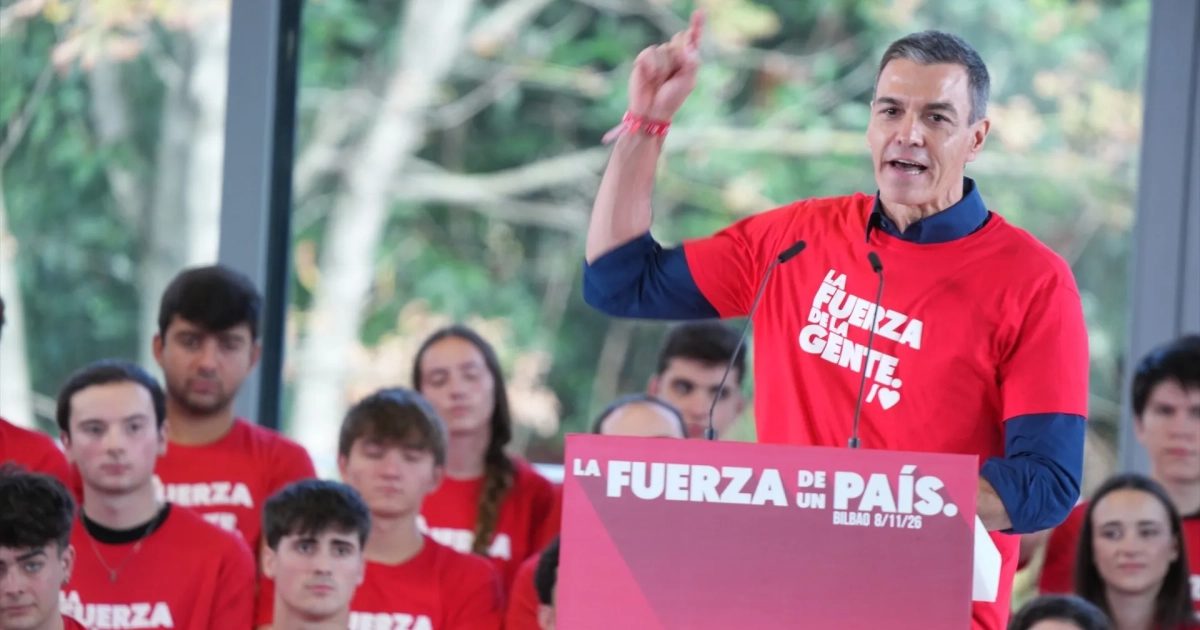
The debate on the sustainability of the system has heated up in recent weeks. The spokesperson for the Partido Popular (PP) in Congress, Ester Muñoz, questioned the viability of the public system, and the Socialist Party (PSOE) and Sumar responded by accusing the PP of wanting to privatise it. Prime Minister Pedro Sánchez has warned of the "sacrifices" that the leader of the opposition, Alberto Núñez Feijóo, would ask of the population if he were to become the next Spanish prime minister.
The PP leader, however, has promised that if he reaches La Moncloa he will uprate pensions in line with inflation and that "in no case" will he question the public system for these benefits. He has also pledged to "guarantee" the future of pension payments for young people.
The Partido Popular says it believes in a public system and maintains that the only party that has frozen pensions was precisely the PSOE during the Zapatero government.
The clash reflects how sensitive the issue is and the concerns of three groups:
On the one hand, there are the pensioners who fear that their benefits will be frozen or lose purchasing power. On the other side are workers, who see part of their wages cut and paid into a common pot, and wonder whether it will really provide them with a benefit once they retire, doubting that the system will return what they have paid in. Finally, there are the young people who enter a precarious labour market late, with low wages, and expect to retire ever later, with no certainty of receiving a pension.
What is the Austrian backpack?
Its official name is "abfertigung neu" and it works as follows:
Companies pay 1.53% of the worker's gross monthly salary into an individual account, a severance fund. That capital belongs to the employee. The fund tops up the public retirement pension, although it can also be drawn in the event of unemployment or if the worker decides to start a business or become self employed. If the worker dies, the fund is not lost.
In fact, this kind of system is not unique to Austria, Italy has the TFR, which is funded by contributions of 7% of salary. The money follows the worker even if they change employer, which is where the name "backpack" comes from.
This system was introduced in Austria in 2003 to replace traditional redundancy compensation. It is not just a pension fund. In fact, the Austrian backpack does not replace the public pension, as Austria maintains a pay as you go public system, like Spain. The fund was designed as severance pay, and the worker can leave it in their account until retirement in order to supplement their public pension. It is a way of guaranteeing some extra money once they stop working.
Its returns are modest. An Austrian MP from NEOS has said that on average the funds yield around 2%. Austria has approved that, from 2028, workers will be able to choose a model without a capital guarantee and with more equities so they can get more out of their money by taking on risk, or transfer the fund to a pension fund to receive a supplementary income.
What its supporters argue in favour of introducing the Austrian backpack in Spain
Economists from Fedea, José Ignacio Conde Ruiz, Florentino Felgueroso and José Ignacio García Pérez, analysed in 2011 (source in Spanish) how it might be introduced in Spain. Supporters highlight that its portability would make it easier to change jobs without losing rights and that it would create individual savings, a safety net for the worker.
The Bank of Spain defended the idea for years. Pablo Hernández de Cos, governor of the Bank of Spain until 2024, presented it as a possible solution to the long term funding problems of the pension system. In 2023, the bank proposed introducing it using 8,000 million euros of European funds.
Specifically, its proposal was to create a fund in the worker's name into which the company would advance part of the redundancy pay, and that this money could be carried from one job to another in the event of a change. In this way, the employee would receive the accumulated money either when they become unemployed or on retirement.
With this, the Bank of Spain aimed to combat job insecurity and temporary contracts in the labour market, benefit people who change jobs and generate that top up when they reach retirement.
What its critics say: the trade unions, its main opponents
Trade unions such as CC.OO. and UGT argue that it would make dismissal "predictable and financially neutral" for employers, a form of prepaid free dismissal. UGT argues that "it punishes companies that do not dismiss staff, as they have to pay funds into their workforce's accounts month after month, increasing their labour costs, and rewards those that resort more frequently to dismissals, by reducing their cost and ease of financing". They also maintain that this measure "would lead to an increase in the number of dismissals" and in staff turnover, by removing any deterrent effect from compensation.
There are also sceptical voices among expert economists, who point out that it would be difficult to apply because Social Security cannot do without contributions when it faces a structural deficit.
Employers themselves are not enthusiastic about the measure either, fearing that it would increase labour costs.
KPMG has calculated that with the Austrian rate of 1.53% it would not be more beneficial than the current redundancy pay, and that contributions of more than 5.48% would be needed in the case of fair dismissal and more than 9.04% in the case of unfair dismissal.
The key lies in the differences between Spain and Austria. In the event of dismissal, changing employer or becoming self employed in the latter country, the backpack follows the worker, which means it replaces traditional redundancy compensation.
What the parties say
The PP is looking at including the Austrian backpack model once again in its election programme for the 29 November election, as it did in 2023, and maintains that it would not reform the pension system. PSOE and Sumar have repeatedly warned that the PP intends to privatise the system, something the PP denies.
The economic team of José Luis Rodríguez Zapatero tried to introduce the Austrian backpack concept, but it ultimately did not go ahead. Years later, the PSOE tried to develop something similar with publicly promoted occupational pension funds under José Luis Escrivá at the Social Security ministry. The Socialist Party has included in plans sent to Brussels a variant renamed "mobility and training fund". This fund would allow workers to cash in the amounts accumulated in their favour in cases of unfair dismissal, geographical mobility, to carry out training activities or at the time of retirement.
Far left parties such as Sumar reject it outright, calling it a "free dismissal mechanism" that increases job insecurity for workers. For their part, the far right party Vox views it with suspicion because of the rise in costs it could mean for SMEs, and instead prioritises direct tax cuts.
The Austrian backpack would not by itself solve the demographic challenge facing the Spanish system and is not a substitute for the public pension. The analyses consulted suggest that its impact in Spain would depend on the percentage contributed, who pays for it and how Social Security is compensated for the contributions it would no longer receive.
Originally published by Euronews Business