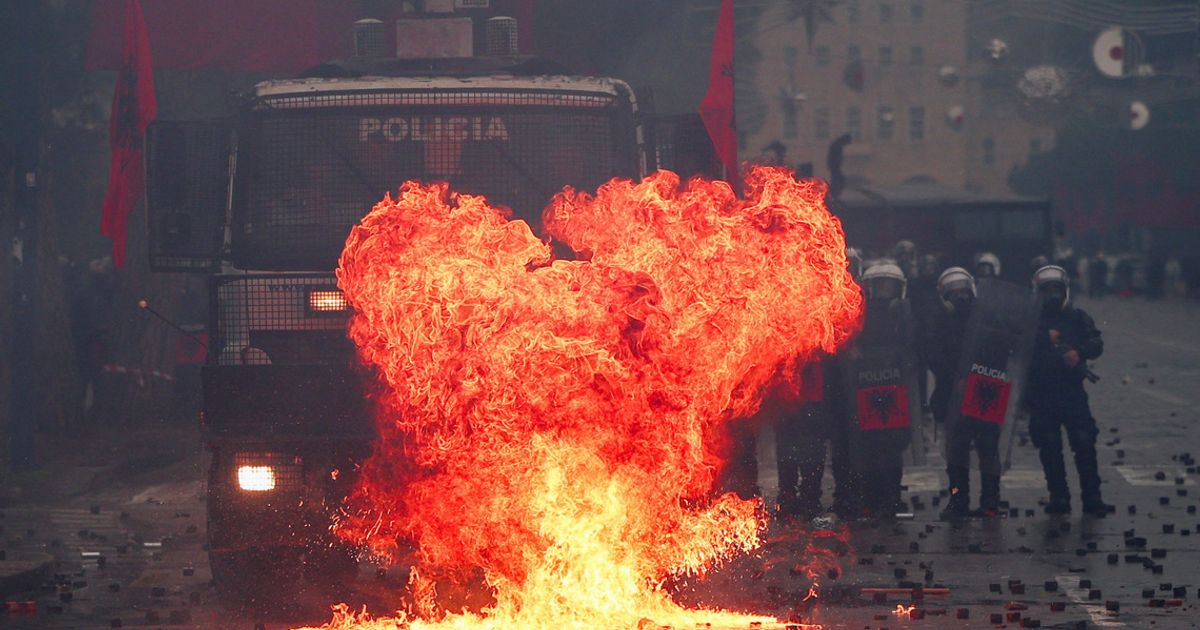
Violence broke out at a student-led protest in Albania on Saturday, as demonstrators called for Prime Minister Edi Rama to resign after months of anti-government demonstrations.
Protesters gathered in the capital, Tirana, on Independence Day and threw stones and petrol bombs at riot police. Police responded with water cannon, tear gas and rubber bullets.
Demonstrations have rocked Tirana since mid-October and spread to other cities, fuelled by anger over perceived government corruption, a lack of jobs and poor education standards. Protests have often turned violent, with demonstrators setting fire to government buildings and banks, smashing shop windows and pulling up paving stones to throw at police.
On Saturday, some protesters wearing masks pelted a government building with stones and tried to reach Rama's office, but police pushed them back, according to a Reuters journalist.
"Enough is enough; the corruption, the poverty, the immigration," said Eralda Baze, 45, an engineer who joined the rally. Other demonstrators called for a better life and healthcare.
Rama's government denies corruption and has called for dialogue on protesters' demands. It has also introduced measures including cheaper fuel and more money for poor families in an attempt to quell the protests.
The unrest followed months of largely peaceful summer protests against a luxury coastal development backed by US President Donald Trump's son-in-law Jared Kushner. It poses the biggest challenge yet to Rama, who has governed since 2013 and won a fourth term in office last year.
One banner at Saturday's protest read: "Albania is not for sale." Rama has said the development is legal and that habitats would be protected.
Corruption scandals have tarnished Albania's image over the years. Analysts say the country is a hub for gangs seeking to launder money from drugs and weapons trafficking. Rama has said his government is tackling corruption as never before.
Albania is leading a posse of Balkan countries seeking to join the EU and is aiming for entry by 2030. REUTERS