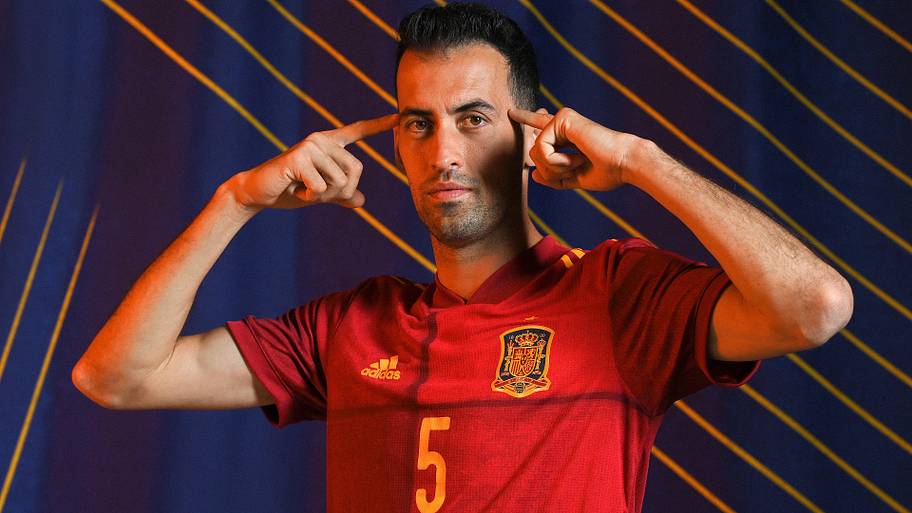
The defensive midfielder may not often score goals or claim the spotlight, but the role is central to a team’s balance. The best players in the position win the ball with well-timed tackles and interceptions, keep possession moving and control the tempo of a match.
Here is a ranking of 25 of soccer’s greatest defensive midfielders, from early pioneers to modern playmakers.
25. Dunga Dunga was the first of several Brazilians on this list, but his approach was notably different from the country’s traditional emphasis on flair and freedom. He favored European-style discipline, physicality and pragmatism, drawing heavy criticism early in his international career. Many fans blamed him for Brazil’s failure at the 1990 World Cup. Four years later, those qualities helped Brazil win the 1994 World Cup. As captain, Dunga helped the team find a balance between attack and defense, an issue that had troubled the national side for years. The former Fiorentina midfielder was a fierce tackler and an outstanding interceptor. He reshaped Brazil’s approach to the holding role and helped establish a model followed by disciplined defensive midfielders such as Gilberto Silva and Casemiro.
24. Javier Mascherano After impressing in the Premier League with Liverpool, Javier Mascherano—known as “El Jefecito” (“The Little Chief”)—joined Barcelona and became an important member of one of soccer’s most dominant teams. Although he was not always a guaranteed starter, the battle-hardened Argentine was Pep Guardiola’s trusted option in key moments. He could play in defensive midfield or at center back, and started in defense in Barcelona’s Champions League finals against Manchester United in 2011 and Juventus in 2015. Barcelona won both. Mascherano was rarely flashy or in the spotlight. He broke up attacks, threw himself into challenges and moved the ball on quickly and efficiently.
23. Joshua Kimmich Joshua Kimmich offers far more attacking output than many defensive midfielders. Along with shielding the back four and breaking up play, the German star has amassed over 200 combined goals and assists for club and country, with the total continuing to rise. A winner of countless Bundesliga titles and a Champions League with Bayern Munich, Kimmich has produced an exceptional return for a player in a defensive role.
22. Zito Pelé was the headline act of Os Santásticos, the legendary Santos side of the late 1950s and 1960s, but Zito wore the captain’s armband. He mentored the young star and anchored the midfield as Santos became one of the most dominant clubs in Brazilian soccer history, winning nine league titles and back-to-back Copa Libertadores trophies. Zito also played a central role for Brazil, serving as the midfield linchpin in the Seleção’s World Cup triumphs in 1958 and 1962. With Pelé sidelined through injury, he scored in the 1962 final against Czechoslovakia.
21. Pep Guardiola Before coaching some of the game’s greatest midfielders, including Sergio Busquets, Andrés Iniesta and Kevin De Bruyne, Pep Guardiola was one of the world’s best midfielders. The heartbeat of Johan Cruyff’s Barcelona side, Guardiola used his intelligence in the center of the pitch to help the team win four consecutive La Liga titles and the club’s first-ever European Cup in 1992. A deep-lying playmaker, he directed attacks from the back. His lack of pace and slight frame mattered little alongside his positional awareness, anticipation and soccer IQ. Those qualities later became foundations of his coaching philosophy and are reflected in the midfielders he helped transform into world-beaters.
20. Obdulio Varela Uruguay never lost in the seven World Cup matches Obdulio Varela played. He appeared in all four matches as Uruguay won the 1950 World Cup, including the decisive game against Brazil. Varela is widely credited as the mastermind behind Brazil’s downfall, using devastating tackles and a touch of the “dark arts” to neutralize its star-studded attack. He starred again as Uruguay reached the 1954 semifinals, though he missed that game after celebrating a goal against England in the quarterfinals. At club level, Varela lifted no fewer than 20 major trophies with Peñarol, chiefly as captain.
19. Graeme Souness Graeme Souness is remembered for planting a massive Galatasaray flag in the center circle of rival Fenerbahçe’s pitch after winning the Turkish Cup. He was a manager at the time, but the stunt reflected the fearless, fiery and slightly wild nature of his playing career. A hard-tackling, no-nonsense midfield enforcer, Souness was best known as a player for his seven-year spell at Liverpool, where he won five First Division titles and three European Cups.
18. Didier Deschamps Before becoming a World Cup–winning manager with France, Didier Deschamps captained Les Bleus to the 1998 World Cup and then helped guide them to victory at Euro 2000. Teammate Éric Cantona once dismissively called him a “water-carrier,” but Deschamps was more than that. He won the ball, distributed it to more technical teammates and organized the team through positional awareness and leadership. His tactical intelligence and organizational mastery helped France win those trophies. At club level, he also won Champions League titles with Marseille and Juventus.
17. Gennaro Gattuso “Sometimes maybe good, sometimes maybe...” Gennaro Gattuso’s blunt assessment of his Hajduk Split side in a now-legendary press conference could describe his hit-and-miss managerial career. On the pitch, however, he was consistent. A World Cup winner with Italy in 2006 and a two-time Champions League winner with AC Milan, Gattuso played with the same straightforwardness that later made him a meme as a manager. He was not flashy, but he was effective: relentless in winning the ball, ferocious in tackles and tireless in his running.
16. Edgar Davids Edgar Davids earned the nickname “Pitbull” from former Ajax coach Louis van Gaal. He tore around midfield at full throttle, tackling, muscling opponents off the ball and fighting to keep possession. A member of Ajax’s legendary ’90s side that won the Champions League, Davids also won Serie A three times with Juventus. He had spells at Inter Milan, Barcelona and Barnet. Alongside his defensive intensity, he was a regular goalscorer and a skilled technician, thanks in part to his street soccer upbringing.
15. Casemiro Casemiro’s mixed spell at Manchester United has sometimes overshadowed how dominant he was at Real Madrid. He helped the club win five Champions League titles, three La Liga crowns and a host of other major trophies. At the Bernabéu, he became known as a midfield destroyer for his bone-crunching tackles and frequent bookings. But at his best, he was also a superb ball-playing midfielder, able to thread precise passes, shoot from distance and time runs into the box for crucial goals—a skill he has refined as his career has progressed. He’s now enjoying his swansong in the Miami sun. A deserved twilight.
14. Xabi Alonso “The best passer of a ball I’ve ever played with.” That was Steven Gerrard’s description of his former Liverpool teammate Xabi Alonso, high praise from a player who shared the pitch with David Beckham, Frank Lampard and Paul Scholes. Alonso could send the ball from either foot with pace, precision and power, finding a teammate’s feet or the space ahead of them. His strength was controlling the game from deep, rather than running powerfully with the ball or tackling hard. He won the Champions League with Liverpool and Real Madrid and was a key figure in Spain’s golden era from 2008–12.
13. José Leandro Andrade Known as “The Black Marvel” or “The Black Pearl,” José Leandro Andrade helped Uruguay win two Olympic gold medals and three South American Championships in the 1920s, as well as the inaugural World Cup in 1930. Though soccer has changed enormously since then, Andrade was a pioneer: the world’s first great defensive midfielder and, in the view of soccer author (and journalist) Jonathan Wilson, “the first global superstar” the sport produced. He was the face of a dominant Uruguayan team not only for his charm, allure and charisma, but also for his remarkable talent.
12. Fernando Redondo Fernando Redondo combined elegance with toughness. On the ball, the Real Madrid legend moved like a playmaker, slipping past opponents, splitting defenses with precise passes and controlling the tempo. Without it, he was a menace, flying into tackles and using every part of his frame, elbows included, to unsettle opponents.
11. Falcao Falcão was part of Brazil’s 1982 World Cup roster, often hailed as the greatest team never to win the tournament. A deep-lying playmaker with exceptional vision and passing range, he also had a defensive edge, sometimes acting as an auxiliary center back and making last-ditch tackles. A legend at Internacional and Roma, Falcão was nicknamed “The Eighth King of Rome” during his time in Italy. He won a Serie A title and two Coppa Italia trophies there, and became the world’s highest-paid player at the time—a remarkable achievement for a non-attacking player.
10. Roy Keane Few players wanted to win as much as Roy Keane. He charged into tackles, covered every blade of grass and intimidated opponents with his fearsome demeanour. That intensity could obscure his technical quality. Keane passed precisely and scored his share of goals for a holding midfielder. His relentless commitment, and his insistence that teammates match it, made him special—arguably the greatest captain the game has ever seen.
9. Jozsef Bozsik In the 1950s, Honvéd—the Hungarian army team—dominated domestic football, winning four league titles and supplying the core of the Mighty Magyars. Hungary’s national team won Olympic gold and reached the World Cup final just two years later. József Bozsik was central to both teams. Renowned for his flair, precise passing and creative vision, he directed attacks from deep, controlled the tempo and linked defense with offense, setting a standard for later midfield maestros.
8. Claude Makélélé Claude Makélélé left such a mark on soccer that an entire position became known by his name: the “Makélélé role.” He mastered sitting deep and disrupting opposition attacks. His greatest strength was positional intelligence. Rather than rushing toward the ball, he often let play come to him, anticipating what would happen next. He could tackle hard when needed, but his skill lay in knowing when to act. Makélélé was first a linchpin of Real Madrid’s Galácticos in the early 2000s, with Fernando Hierro calling him the team’s most indispensable player. He later moved to Chelsea, where his influence helped shape a midfield that won consecutive Premier League titles while the Blues conceded a record-low number of goals.
7. Rodri Rodri is one of only two players on this list to have won the Ballon d’Or, and has already secured a place among the all-time great defensive midfielders despite having part of his career still ahead of him. The Spaniard won the award in 2024 after starring for Spain at Euro 2024, where he was also named Player of the Tournament—an achievement he’d match at the 2026 World Cup. For years, he served as Manchester City’s clutch linchpin as the team conquered all under Guardiola’s tutelage. Rodri never came through La Masia, but jumped at the chance to sign for Barcelona when his time with the Cityzens drew to a close.
6. N’Golo Kante N’Golo Kanté and Claude Makélélé are often compared as diminutive French holding midfielders who won titles with Chelsea, but they were different players. Makélélé excelled at reading the game; Kanté was a tireless engine, chasing the ball, closing down opponents and covering the pitch to force turnovers. He also drove forward after winning possession, using his low center of gravity and close control to glide past players. A World Cup winner with France in 2018, Kanté was every opponent’s nightmare and every manager’s dream.
5. Patrick Vieira Patrick Vieira had the athleticism and drive of a box-to-box midfielder, but made his greatest impact at the base of midfield, controlling games for club and country. He anchored Arsenal’s 1998 double-winning campaign and the iconic 2003–04 Invincibles season, providing a platform for others to flourish. He played a similarly pivotal role as France won the 1998 World Cup and the European Championship two years later. Vieira combined positional discipline with physical dominance. From deep, he broke up attacks, distributed intelligently and chose his moments to surge forward. His composure, power and tactical awareness made him more than a destroyer, a balance few have matched with the same authority.
4. Sergio Busquets When Sergio Busquets retired in 2025, shortly after winning an MLS Cup with Inter Miami, soccer said goodbye to the greatest defensive midfielder of the modern era. He played alongside former Barcelona teammates Lionel Messi, Luis Suárez, Jordi Alba and Javier Mascherano, who served as head coach. Busquets was neither a snarling pitbull like Davids or Gattuso, a deep-lying quarterback like Alonso, nor a box-to-box force like Vieira or Keane. His game was his own: he moved himself and the ball only when necessary. His passes were carefully weighted, his body feints left opponents grasping at shadows, and his off-ball movement created space for teammates. The dominant Barcelona and Spain sides of the 2010s simply would not have existed without his quiet, understated genius.
3. Frank Rijkaard Influenced by Dutch and Italian soccer greats Cruyff, Michels, Sacchi, Capello and Van Gaal, Frank Rijkaard combined Dutch intelligence with Italian grit. He was one of the most complete midfielders in the game and a relentless winner. Rijkaard could play almost anywhere: center back, fullback, his preferred holding midfield role or even as an auxiliary striker. He tackled like a hard-nosed Italian defender, passed like a Dutch playmaker and read the game with calm assurance. A cornerstone of two of soccer’s greatest club sides, he won everything with Ajax and AC Milan, including three European Cups. He also played a starring role in the Netherlands’ Euro 1988 triumph, the nation’s only major international title to date.
2. Johan Neeskens Rinus Michels and Johan Cruyff are credited with inventing Total Football in the 1970s, but Johan Neeskens was the engine behind it. His tireless work off the ball gave Ajax, Barcelona and the Netherlands room to attack. Playing higher up the pitch than a traditional holding midfielder, Neeskens pressed fiercely, tackled hard and ran constantly. His intensity helped the team surge forward while denying opponents time and space, anticipating principles that would later become central to the modern pressing game. Known in Barcelona as “Johan the Second,” Neeskens won over supporters wherever he went. Though he played in the shadow of his legendary namesake, his influence was just as profound. He became a model for the modern defensive and box-to-box midfielder.
1. Lothar Matthaus Lothar Matthäus was more than a holding player: he was a complete midfielder. The Bayern Munich icon could shield the backline, send long passes across the pitch, drive forward or score with powerful shots from distance. The range of his game lived up to his WWII tank–inspired nickname, “Der Panzer.” The third-most capped player in World Cup history, Matthäus won the tournament in 1990 and also claimed the Ballon d’Or that year. Diego Maradona once described him as the toughest opponent he ever faced.
This article was originally published on www.si.com as The 25 Best Defensive Midfielders in Soccer History—Ranked.