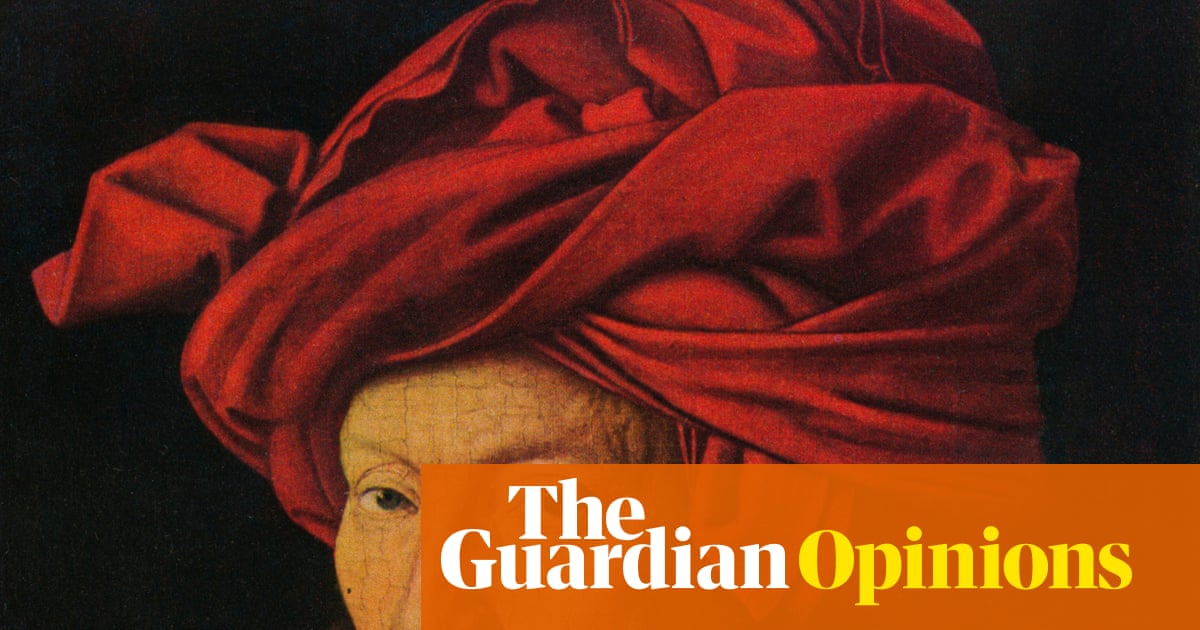
The National Gallery has brought together all nine of Jan van Eyck’s portraits for the first time, with paintings loaned from Berlin, Vienna, Dresden, Bruges and Sibiu in Romania. The exhibition’s close attention to human detail helps explain why the nearly 600-year-old works can still feel immediate, The Guardian’s editorial argues.
A tiny scar, bloodshot eyes, sagging jowls and dirty fingernails are among the features that make Van Eyck’s sitters seem recognisable today. Exhibition co-curator Nicholas Flory said visitors might “recognise them on the tube”, despite their extravagant headgear.
The art historian Ernst Gombrich wrote in Art and Illusion (1960): “While standing in front of a painting by Jan van Eyck we … believe he succeeded in rendering the inexhaustible wealth of detail that belongs to the visible world.” The editorial notes that an exact replica is beyond any painter, however patiently they work.
Van Eyck’s The Arnolfini Portrait, part of the National Gallery’s permanent collection, bears the inscription “Jan van Eyck was here, 1434”. The identities and meaning of details in the painting remain uncertain, including whether the woman is pregnant, who appears in the mirror and whether the scene includes a self-portrait of the artist and his wife.
The editorial connects the portraits’ enduring appeal with the stories they invite viewers to imagine, citing novels inspired by paintings, including Maggie O’Farrell’s The Marriage Portrait (2022) and Tracy Chevalier’s bestseller based on Vermeer’s Girl with a Pearl Earring.
The editorial concludes that Van Eyck’s portraits confront viewers with their own humanity and mortality. It says the exhibition offers a reminder of human creativity, “warts and all”. The Cambridge dictionary defined “human” as “having the qualities, faults, and feelings that people have, as opposed to gods, animals, or machines”.